The Tim Smal Show

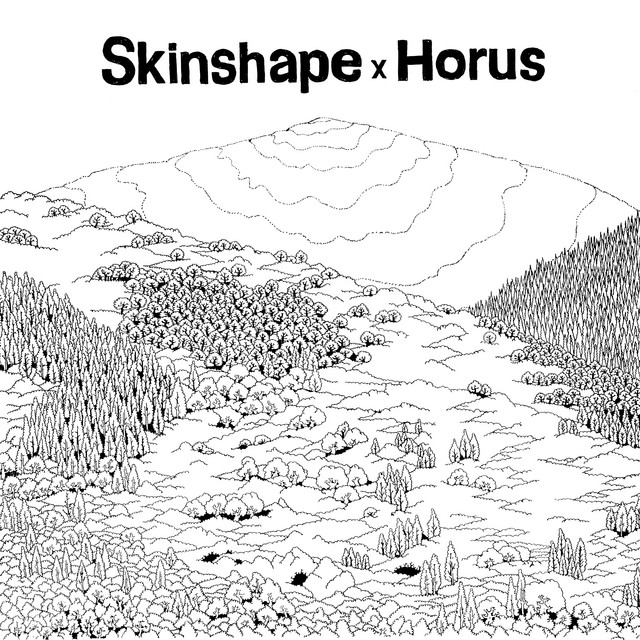
  • Will Dorey – Skinshape x Horus

    Will Dorey (Skinshape)
    The Tim Smal Show
    Will Dorey – Skinshape x Horus
    Loading
    /

    Will Dorey of Skinshape discusses his record, Skinshape x Horus.

    🎙️ Episode Summary

    In this episode, Tim sits down with Will Dorey, the British multi-instrumentalist and mastermind behind the acclaimed studio project, Skinshape.

    Known for blending vintage funk, soul, and psychedelic rock, Will takes a deep dive into his latest release, Skinshape x Horus. A collaboration with lifelong friend Ben Bell, this record serves as a love letter to 1960s and 70s Jamaican reggae and dub. Will discusses the unique process of creating a “collaborative” album compared to his usual solitary workflow, the intricate analog production techniques used to achieve an authentic vintage sound, and the story behind reworking the Interstellar theme into a reggae track.

    We also chat about a major milestone: Skinshape’s very first live performance after a decade of studio releases, including the surreal experience of debuting at The Lodge Room in Los Angeles.

    🎧 Key Takeaways

    • The Horus Connection: How Will’s reissue label, Horus Records, evolved into a space for original studio productions with collaborator Ben Bell.
    • Live Debut: Will recounts the surreal experience of performing live for the first time ever in October 2024, after a full year of rehearsals.
    • Reggae Interstellar: The story behind the album’s most surprising cover—a reggae dub version of Hans Zimmer’s Interstellar theme.
    • Analog Workflow: A look into the “mostly analog” recording process, utilizing vintage tape machines and a hybrid workflow to capture the warmth of classic Jamaican recordings.
    • Global Sounds: Will discusses working with Senegalese vocalist Modou Touré and his future interests in exploring music from Thailand, Vietnam, and China.

    ⏳ Chapter Markers

    • [00:00] Introduction to Skinshape and Horus Records
    • [01:35] The first-ever Skinshape live show (The Lodge Room, LA)
    • [04:40] Explaining the “Skinshape x Horus” collaboration
    • [07:01] Selecting covers: Act Like You Know, Interstellar, and Betina
    • [09:34] Working with Modou Touré on N’Téro
    • [10:59] Veteran Jamaican singer Winston Reedy on Looky Looky
    • [12:18] The collaborative songwriting process vs. solo work
    • [13:56] The meaning behind the instrumental track The River Effra
    • [15:05] Blending London orchestral players with Jamaican session musicians
    • [19:15] The specific analog & tape gear used to get the vintage sound
    • [21:20] The fan-made tour website and future plans
    • [22:48] Reflecting on Arrogance is the Death of Men

    🎶 Songs & Artists Mentioned

    • Album: Skinshape x Horus
    • Tracks: The River Effra, Stormy Night, Theme for Horus, N’Téro, Looky Looky, Act Like You Know, Betina.
    • Collaborators: Ben Bell, Andy Platts, Modou Touré, Winston Reedy, Jon Moody (Franc Moody).

    🔗 Connect with Skinshape

    • Tour Info (Fan Site): skinshapetour.com
    • Music: Stream Skinshape on Spotify / Apple Music

    📃 Transcript

    Tim Smal [host]: Hi there and welcome to the show. My guest today is Will Dorey, a British multi-instrumentalist and the mastermind behind the studio project, Skinshape. He’s known for his unique cross-genre productions, blending vintage sounds from funk, soul, reggae, and psychedelic rock. Drawing inspiration from the rich musical landscape of the 60’s and 70’s, Skinshape has captivated listeners worldwide amassing hundreds of millions of streams across platforms. 

    Will founded Horus Records in 2013 with lifelong collaborator and friend Ben Bell. Driven by a shared passion for vintage Jamaican music, Will and Ben originally launched Horus as a reissue label, focusing on rare and hard to find reggae gems, but it has since evolved into a space for original studio productions. Rooted in the rich traditions of 60’s and 70’s Jamaican reggae and dub, their deep connection to the genre has led to longstanding relationships with many of Reggae’s most respected musicians, several of whom contribute to their latest studio album.

    The new record is a fully analog reggae dub studio album, showcasing the duo’s production craft, and featuring guest vocalists Andy Platts, Modou Touré, and Winston Reedy. Blending classic influences with fresh interpretations, the album includes original compositions alongside inspired covers, such as a distinctive reggae reworking of the Interstellar theme tune.

    Will, welcome to the show.

    Will Dorey [guest]: Thanks, mate. Thanks for having me. Yep, good to be here and chat with you. 

    Tim [01:35]: Yeah, I’m glad to have you on the show and very excited to hear more about the new record. But first, I wanted to let the listeners know that I had the pleasure of meeting you when Skinshape played at The Lodge Room in Los Angeles back on October 9th, 2024, which I believe was Skinshape’s very first live show in the US.

    Will [01:51]: It was actually Skinshape’s very first live show anywhere, not even in the US. We didn’t do any shows at all before that. 

    Tim [02:00]: Yeah, it was an incredible show. I flew into LA on the day, so I was a little bit tired, but once I was at The Lodge Room, I had a lot of energy there. You described the show as “a beautiful experience and the crowd was wild.” What was it like for you to perform there? 

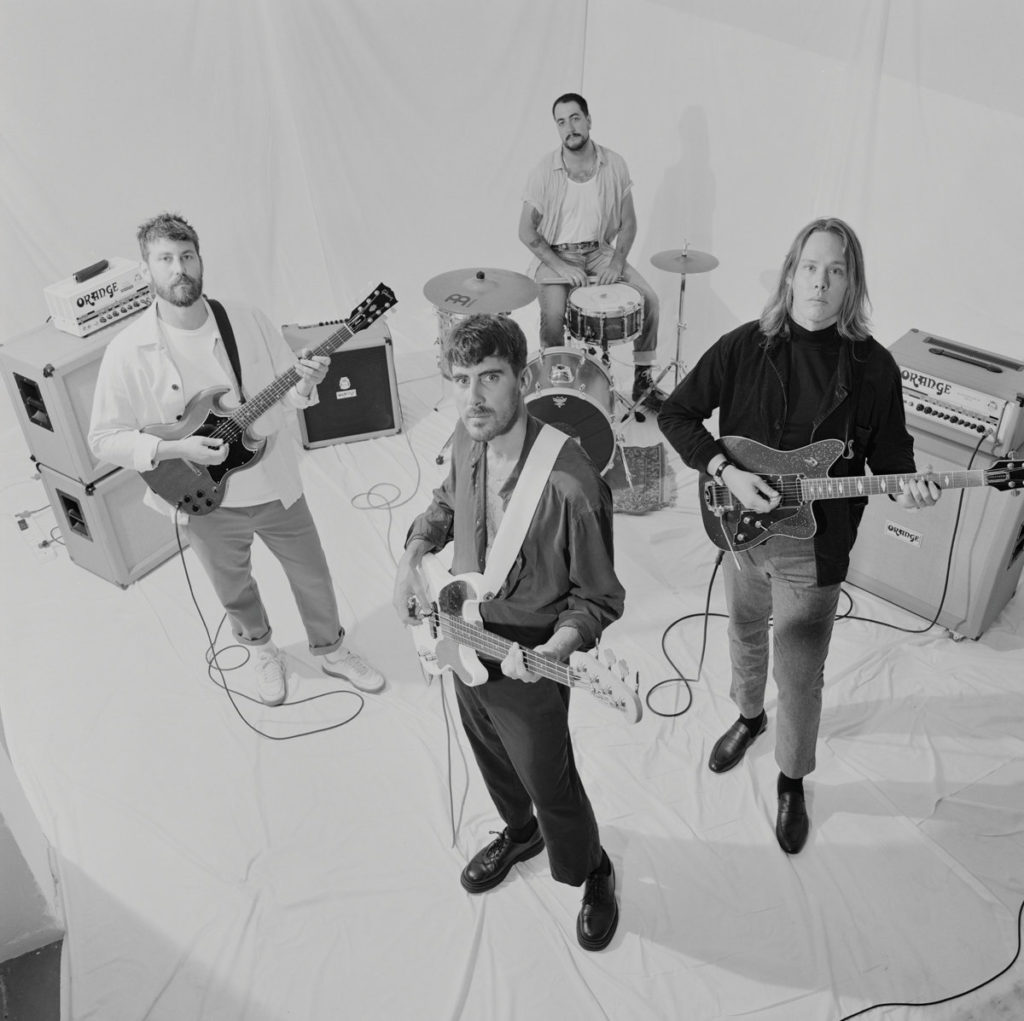
    Will [02:15]: I think being the first ever show that we’d done as a band, we’d done like a year of rehearsing. So just to clarify, they’re not involved in the studio side of things. So when it came to about 2023, I said “Let me get a band together.” And some of these guys I knew already, Paul and Ollie – bass and keyboards, respectively. And then I did some auditions and got the other two lads, Peter and Tom in the band. And then we rehearsed for about a year, because I’ve never done live, so I didn’t wanna go out on stage and feel like it was gonna be rubbish, you know? I had to… I had to do the best job possible.

    So, me and management spent a lot of money rehearsing for a year, but when we came out on the road finally, we could actually deliver to the level that was needed, if that makes sense. But yeah, no, the show itself was very overwhelming, I’d say. It was very surreal, you know, to… to not do any live music at all for, basically 10 years, since the project started – not to do a single show and for your very first show to be in LA, it was very surreal and amazing. The crowd were really good, it may be my most memorable show, you know.

    Tim [03:37]: Yeah, I was very lucky to be at the show. And for those that haven’t been to The Lodge Room before, it’s a beautiful venue. It’s actually a 1922 Masonic Lodge, and it’s just a really beautiful venue with amazing interiors and aesthetics. So I wanted to give a shout out to Peter Anderson on guitar, Tom Blunt on drums, Paul Wale on bass and Ollie Pash on keys, because it was truly a memorable show for me. In fact, I made friends with a whole bunch of other fans in the crowd, who of course, were very excited to see Skinshape perform live. And a couple actually drove from Mexico, so they were standing behind me throughout the show and I would often hear “We love you Skinshape!” throughout the show. So there was a lot of good energy. 

    Will [04:19]: That’s nice. 

    Tim [04:20]: So you’ve got a new album out now, and it’s actually a collaborative reggae dub album, which you’ve put together with your longtime friend and collaborator, Ben. So lots to chat about with regard to this new record – maybe you can tell me how you pronounce the title of this record and a little bit more about how it came together.

    Will [04:40]: So it’s kind of complicated. See, it’s… Skinshape has always been Skinshape. And then alongside Skinshape, I’ve been running this label with my friend Ben called Horus Records, which has been specifically doing re-issues of lost Jamaican music from the seventies. And then we started doing our own recordings as well. We worked with a guy called Ronnie Davis before he passed away, who’s one of the great singers from Jamaica. He was in a group called The Tenors and he did a lot of solo stuff. That was back in 2014. And we just kept doing things. And then, I think we’ve done about 25 releases on the label so far. And then I thought “Maybe in order for me to be able to give as much time as I want to Horus, instead of always prioritizing Skinshape, if we did together a Skinshape and Horus album, then I could focus on it because it’ll be my main focus for that time.”

    So in the last year, or year and a half I’d say, we came into the studio a lot and recorded new ideas, such as the Interstellar cover. And some of those recordings were actually about, maybe five or even six years old – maybe even more than that actually. I think there’s one called Stormy Night, which is one of the last tracks, and that was actually recorded at our old studio, maybe as far back as 2017. So we kind of brought things from our archive of recordings, as well as new things like Interstellar was recorded pretty recently, and some of the other ones were done quite recently. And put it all together as the Skinshape x Horus – Skinshape being me, Horus being me and Ben. So it’s like me, and me and Ben. So it’s a strange idea. 

    Tim [06:39]: Yeah, I didn’t realize that you’ve been working on it, I guess, for a couple of years now, If you consider the early tracks that were done about five or six years ago. But you’ve got a collection of mostly original songs, but a couple of covers as well. So let’s start with the covers. Tell me a little bit more about how you went about choosing these three covers on the record. 

    Will [07:01]: I think we like the idea of doing strange covers. I mean, some of them are just like “Straight up, that would be a good cover!” such as Act Like You Know, that’s an obvious one. And we said, “Well, has this one been done in Jamaica before?” and then we concluded, “I don’t think it has.” So we said, “Okay.” We recorded the rhythm section, and then we said, “Who’s gonna sing it?” And I thought of Andy Platts, who’s an English guy who is more of a soul singer, but he can tackle anything. He’s got the voice to deliver the power needed for that kind of song. And he did it perfectly, really, so that was that.

    And then the Interstellar one was Ben’s idea. And he said, “Should we do Interstellar?” And I was like, “Are you joking?” And he said, “No, I’m not joking.” Okay. Uh… I thought about it a little while and then we had a look into it. I said, “Okay, well if it works, it could be really cool. There’s no harm in giving it a try.” And, we kind of put it onto a reggae beat, decided a tempo, what kind of rhythm should be underneath. And that was it really. And then after that, you build it up bit by bit.

    Was there one other cover on the album? Oh yeah – Betina, that was my idea. So I love the original of that, the Bola Sete, this Brazilian jazz song. And I just thought it would make a really interesting reggae version. You’re sort of incorporating more jazz and stuff into reggae, which has been done before, but it’s just less commonly heard these days. And we went to town on the arrangements. A friend of mine called Jon Moody, who’s in a group called Franc Moody (also a childhood friend with Ben – we’ve been friends since about the age of 13), he did the arrangements for the strings, the choir, the brass. And then on Interstellar, he played all the keyboards, the piano, the synthesizers. So very much a collaborative effort. 

    Tim [09:05]: Yeah, what an incredible idea of reworking one of the songs from Interstellar into a reggae version, along with the other covers as well. Act Like You Know, was the first single off the record, so Andy did a great job on that. And now your second single is out, and this is a real banger on the album – I’m sure you’re getting a lot of praise for this particular track. I hope I pronounce it correctly, I believe it’s called N’Téro. Maybe you could tell me a little bit more about that one.

    Will [09:34]: Sure. N’Téro is a song we did with a guy called Modou Touré from Senegal, who lives here in London. I’ve known him since about 2019, and we’ve done two songs together before on my Umoja album. So the broader idea of this album was almost like a Umoja part two, but in reggae, like it’s a loose idea for the whole album. It’s like, Umoja, which was released in 2020, was, “How can I put my love of African music together with Skinshape?” And this is, “How can I do it with reggae, but also incorporating some of those world influences.” You don’t commonly hear a language like what he’s singing there, which is, I think it’s Soninke and Wolof – I can never remember this. He sings in about three or four different languages and he sometimes combines them, it may be one of those two.

    Tim [10:34]: Yeah, when I was doing research on this particular song, it said on your Instagram account that he’s singing in his native Senegalese language of Mandinka

    Will [10:43]: Ah, yeah, that’s right. Mandinka, yeah.

    Tim [10:46]: Yeah. Well let’s chat about another track on the album that is also really cool. It’s called, Looky Looky, with Winston Reedy on vocals. This has got an amazing tone to it. I’d love to hear more about this track. 

    Will [10:59]: Looky Looky. Winston Reedy’s a veteran Jamaican singer who also lives here in London. And Ben knew him before me – I don’t know him so well, but Ben knows him better than me. Ben runs a record shop in Brixton called Lion Vibes, which sells vintage Jamaican records and that kind of stuff. So yeah, we’ve done songs with Winston Reedy before on the Horus Label, which didn’t have an affiliation in name with Skinshape. Sometimes you hear Old King Tubby or Prince Jammy songs where it’ll be a dub track and you’ll just hear a bit of the vocal at the start, or a bit in the start and a bit in the middle, and you won’t hear the whole song. So people will be wondering, “Is there an original version of this?” There is actually, but it’s a dub version, and the original may never be released. It’s just this version with the little snippet of vocal at the start. 

    Tim [11:58]: Very cool. And in terms of songwriting for the album in general, did you write a lot of the songs yourself or did you collaborate with Ben? Because you’ve brought in a lot of different musicians to perform on strings and trumpet and sax and so forth. So what was the songwriting process like specifically for this collaborative album? 

    Will [12:18]: It depends. Some of the songs I will have gone home and written a part, literally sitting on the guitar at home and said, “Okay, here’s an idea, here’s some chords – how can this be put into a song?” The River Effra, so that was one of those which I wrote at home and brought it in and showed Ben and we recorded it. Stormy Night, we would’ve written together. Mostly it’ll be together, you know, sometimes spur of the moment.

    For a few of the later recordings, we will have gotten a couple of session musicians, like this guy called Alan Weekes, who’s a guitarist, and Ashanti Selah, who’s a keyboard player and producer. So they came in and on Theme for Horus they were playing with us. So I would be sitting here recording, Ben would be in the drum room, and we would record the rhythm track live. So it’d be keys, guitar, bass, drums, onto tape. And then later say, “Okay, well we’ve got the base track and then what can we put over the top?”, which was the horns on that one. It’s kind of like doing a ska track. So it varies, it just depends.

    Tim [13:30]: Yeah, and usually if I ask an artist about a song where there are lyrics, they can tell me more about the story behind the song. But of course, on a record like this where most of the tracks are instrumental, I was wondering what the song The River Effra was about. And the reason I’m asking this, is because it’s one of my favorite tracks on the album. It’s got such an incredible groove to it – it’s a standout track for me. So what would you say the song is about, given that it is instrumental? 

    Will [13:56]: There’s not a definitive sort of, “It’s about this.” I think when you’re coming up with instrumental track names, you just tend to reference things that mean something to you, and that may fit to the sound of the music as well. So the name was actually given by Ben. And it’s a lost river of Brixton, which is in South London. “Lost” meaning, it’s under the city effectively. And I think it’s still there, or… I don’t know actually – maybe it’s not. So he likes that ’cause it means something to him. To me it means less, you know, I live in North London, so I don’t live around there. He literally lives in the exact streets where that river would’ve been or is underground. But still, the connection with Brixton is deep in reggae as well, so that’s where the name came from. 

    Tim [14:49]: Beautiful. And just thinking about all the musicians that came in to perform on this album. You had some amazing background vocals, some strings, some brass – many different musicians – guitar, bass, etc. Can you tell me a little bit more about all the folks that contributed to the album? 

    Will [15:05]: Sure. There’s quite a big mix really. So there’s people who are friends (or friends of friends), just normal English musicians. A lot of the orchestral players will have been very high level guys who went to GuildHall School of Music and proper music conservatories and stuff like that. And some of them are straight up Jamaican musicians, so there’s a big variety. We didn’t wanna make it a fully English affair, we wanted to include Jamaican musicians to give this sort of sense of authenticity as well. The guitarist we often used, Alan Weekes, he was a producer and session musician on a lot of lovers rock in the eighties. And then we’ve got percussion players who regularly play on the scene in the reggae world. Obviously people like Winston Reedy – there’s a massive mix to be honest, and I think that’s the good thing. It gives it a sort of all encompassing feel. 

    Tim [16:05]: Yeah, and there are 12 tracks on the record. Are there one or two that are special to you in particular? 

    Will [16:13]: I’d say, funnily enough, I like The River Effra, it’s one of my favorites as well, just because I like the sound of it – It sounds so big. And Stormy Night, the one before that, I also really like. It’s the only one with a sort of “Augustus Pablo feel” and I like it ’cause it’s managed to survive for like, however many years since we recorded it and still made it onto an album, however many years later. So yeah, I’ve always liked Looky Looky. I mean, I like everything really – I’m pretty proud of it. 

    Tim [16:51]: Yeah, and you’ve got two tracks at the end of the album that you’ve done dub versions of: N’Téro and Act Like You Know. Can you tell me more about those two tracks and the dub versions? 

    Will [17:02]: They’re not really official tracks in a way, they’re kind of bonus tracks. They’re not technically part of the album, but it’s nice to just leave them there so people can enjoy them. And that will be on the CD. It won’t be on the vinyl though, because with a vinyl you’ve gotta squeeze on as much groove width on the actual pressing as possible. So especially with reggae, you want a chunky sound with lots of bass. And if you were to add six songs a side, you’re making the sound weaker sonically, so they’re not on the vinyl unfortunately. But they will be on the singles, vinyl on the B-sides. So if people really wanted them, they can get that. 

    Tim [17:46]: Great. And seen as you’ve released quite a number of albums in your career, I wanted to find out how recording this album in particular for you personally, was different to your approach that you take on other Skinshape albums.

    Will [18:00]: Recording this album was very different. It’s a completely different way of working. Normal Skinshape albums will be, for the most part, quite solitary. I’ll be in the studio and I’ll be recording ideas that are very personal and gradually put my album together. But with this, I couldn’t do it without Ben, pretty much, for most things. Maybe there’ll be some mixing stuff I could have done myself or Ben could do without me. Or occasionally there’d be a day where I couldn’t make it and we booked someone to come in and play something and I couldn’t make it and Ben will do it by himself. But in general, it was very much “a together thing.” So that’s one reason why it sounds very different. It probably sounds the least Skinshape of all the albums I’ve done, I would say. There’s a few bits of guitar that will be more distinctive, but it’s a very different thing for the most part. 

    Tim [19:02]: And with the production being fully analog, was this a deliberate commitment to honoring that specific kind of quality of the 60’s and 70’s Jamaican records that you very much enjoy?

    Will [19:15]: It’s not fully analog, but it’s mostly analog – maybe it’s been miswritten somewhere, but it’s for the most part, analog. So the basic track with the drums and the bass and some guitars and as much as possible will be done to tape. And then we’ll put it on the computer and add the other stuff that we don’t have enough tracks on the tape. So like the orchestral stuff and some other instruments, you know, and it just helps us to work on the track in the modern way, whilst getting the benefit of the tape sound.

    And then finally, once the song’s all ready, we would then mix it live again through the Trident mixing desk that I’ve got here, back onto a two-track tape machine, ready for mastering. And the one I’ve got is an old 1950’s Ampex, all valve tape machine, which I bought a few years ago, and it sounds amazing. So it kind of glues everything together and makes it sound very smooth and full and rich, which is definitely something you want for a vintage sounding reggae album.

    And even when we got it mastered, the mastering engineer has a tape machine there, which is also all valves. So I was able to give him my master tape and he was able to directly master it from the tape. 

    Tim [20:40]: Incredible. And in terms of the studios that you recorded at, I believe most of the album was recorded at The Library Studios in London, but you also visited one or two other studios. Can you tell me more about what it was like working in the different studios?

    Will [20:55]: There are no different studios, really. It’s just that my studio happens to be called The Library Studios, and the old studio that we had was called The Arch, which was a shared studio, but effectively they were both mine for the purpose of recording. The Arch was shared, and this library one is my own studio. So yeah, it has all been done ourselves, we’ve never recorded with anyone else.

    Tim [21:20]: Awesome. And I see that some fans have even put together a website for you called www.skinshapetour.com, which has all the information on your upcoming tour, and I imagine your activities in the future. How do you feel about that? 

    Will [21:34]: Someone did tell me about this, but I have no idea who put this together. It’s funny though. I mean, it’s pretty, pretty awesome, to be honest. I’d love to know who’s done this. Okay, yeah. “Made with passionate fans, not affiliated with Skinshape.” I mean, they’ve done an amazing, amazing job. It’s quite a nice website. Shout out to those guys, whoever you are.

    Tim [21:57]: Yeah, it’s just great to know what fans can look forward to in the future. You have a European tour in 2026. And as it says on the skinshapetour.com website, the next concert is in 130 days, 6 hours, 23 minutes and 5 seconds, so…

    Will [22:13]: Wow. 

    Tim: [22:15]: Lots to look forward to. Alright Will, and on my parting note, I’d also like to mention that, Arrogance is The Death of Men is such a fantastic album, my personal favorite. So I just had to slip a question in there and just ask you quickly, with all of these different albums over the years, isn’t it interesting how every fan will have a different album that they like, right? At the show at The Lodge Room, they were buying different vinyls and we were all chatting about our different records. But for me, Arrogance is the one that got me into your band. So any thoughts on that particular record as a fan favorite of that one? 

    Will [22:48]: Sure. Arrogance is the Death of Men was my lockdown album, if you will. You know, I was at home a lot. I couldn’t go to my studio because I wasn’t allowed, so I was just making the most of bits of recordings I had at home and it was all done in that way. And yeah, some people say that’s their favorite.

    Most people would generally go for the second, third, or fourth album being Oracolo, Life and Love, or Filoxiny. But then again, it does vary, you know. Some people say Umoja, ’cause they love the African stuff so much. So yeah, it’s nice to hear people enjoying different things.

    And yeah, I’m just gonna keep going with it really and just keep trying new things. And there’s lots of other parts of the world I want to explore and integrate. I’m interested in music from India, the Far East, Thailand and Vietnam, and even Chinese music, and incorporating all kinds of things like that, I think it’ll be fun.

    Tim [23:54]: Amazing. Great Will, well once again, thanks again for joining me on the show. The listeners are definitely gonna enjoy checking out your new record and of course, your back catalog as well. So all the best for 2026 and I look forward to catching you at another live show soon. 

    Will [24:11]: Alright mate, thanks for your time and speak to you next time.


  • Milton Schorr – Addict: A Tale of Drugs and Recovery

    Milton Schorr
    The Tim Smal Show
    Milton Schorr – Addict: A Tale of Drugs and Recovery
    Loading
    /

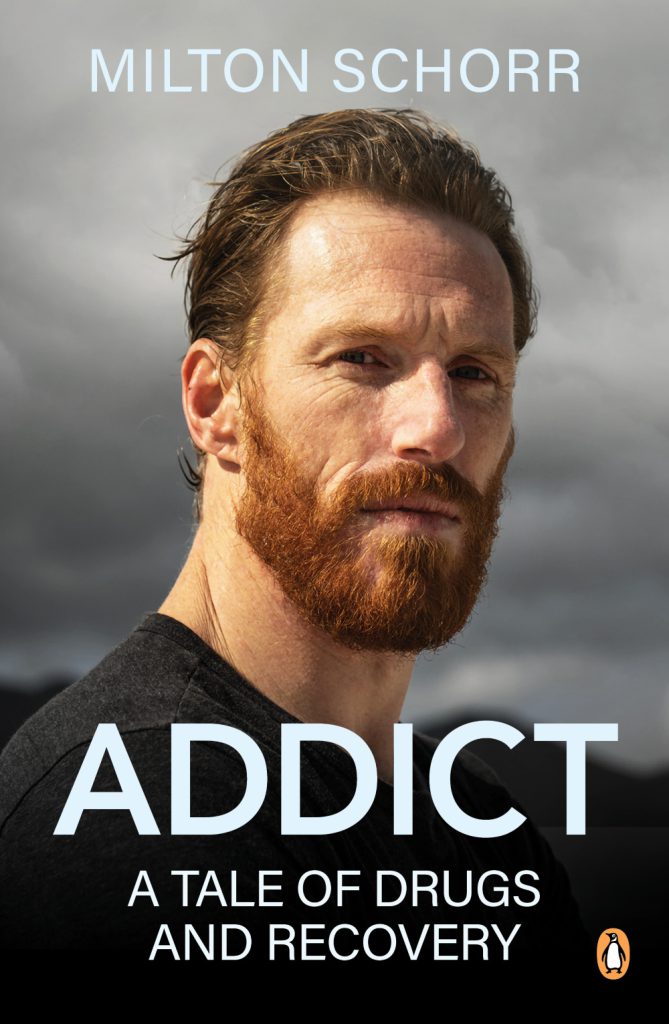
    Milton Schorr discusses his book, Addict: A Tale of Drugs and Recovery.


    🎙️ Episode Summary

    You might recognize Milton Schorr as the villain. He has battled with Milla Jovovich in Resident Evil, appeared in Tomb Raider, and acted in the hit Netflix series One Piece. He knows how to play tough guys and characters living on the edge. But for years, the most dangerous script Milton followed was one of addiction.

    In this episode, Milton joins host Tim Smal to discuss his powerful new memoir, “Addict: A Tale of Drugs and Recovery.” Milton opens up about why he finally decided to share his story after 20 years of recovery, the dangers of romanticizing drug use in pop culture, and why “fighting” addiction is a losing battle compared to the power of surrender.

    Whether you are in recovery, love someone who is, or are simply looking for a deeper sense of purpose, Milton’s insights on transforming pain into meaning are profound and practical.


    🗝️ Key Takeaways

    • The Reality vs. The Romance: Milton discusses how films like The Basketball Diaries and Trainspotting are cinematic masterpieces but often romanticize the “Icarus tale” of addiction. Real recovery isn’t sensational; it’s a daily practice.
    • The Three Drivers of Addiction: Milton breaks down addiction into three components: the disease (impulsivity), unresolved trauma, and—most importantly—a lack of purpose.
    • The Power of “Why”: Quoting Nietzsche, Milton explains that if you have a “why” (a purpose), you can endure any “how.” Helping teenagers find meaning is the most effective drug prevention.
    • The “Mike Tyson” Analogy: You cannot beat addiction with willpower or aggression. Milton compares fighting addiction to fighting Mike Tyson in his prime—you will get hurt. The only way to win is to surrender and stop fighting.
    • Pain as a Tool for Service: The minimum requirement for meaning in suffering is that surviving your pain allows you to help someone else survive theirs in the future.


    ⏱️ Chapter Markers

    • [00:00] Intro: From on-screen villain to real-life survivor
    • [01:22] Why Milton waited 20 years to write this book
    • [04:13] The Basketball Diaries: How movies influence young addicts
    • [08:26] The 3 factors that drive addiction (and the cure: Purpose)
    • [11:18] The difficulty of writing about family and being the “face” of the book
    • [15:54] Transforming pain into a tool to help others
    • [18:09] Why you can’t “fight” addiction (The Mike Tyson Analogy)
    • [21:02] The Hiking Metaphor: “You are the view”


    🔗 Connect with Milton


    🗨️ Memorable Quotes

    “If you’re an addict, you’re an addict, whether you’re sober or using – you don’t stop having that disorder. And it’s a daily practice that is very freeing, if you embrace it.”

    “It’s the masks that allow addiction to thrive. And if I can take my mask off, it can help others.”

    “At minimum, the meaning that is always available is: if you can get through this difficult process, you will be able to help someone else get through it.”

    “My message is: you do have a place in the world, and that place is you.”


    📃 Transcript

    Tim Smal [host]: Hi everyone, and welcome to the show. You might recognize my guest today as a villain. He has gone toe-to-toe with Milla Jovovich in Resident Evil, appeared in Tomb Raider, and acted in the popular Netflix live-action series One Piece. He’s a man who knows how to play tough guys, fighters and characters living on the edge. But for years, the most dangerous role Milton Schorr played was off camera, where a script of addiction dictated his every move. He’s here today to discuss his powerful new memoir, Addict: A Tale of Drugs and Recovery, which takes us from the stage to the streets and back again. Milton, welcome to the show.

    Milton Schorr [guest]: Ah, hi Tim. Thanks for having me, and thanks for that cool intro. I must just point out that, I was on Milla’s team – I wasn’t against her. In that movie, actually I wasn’t a villain.

    Tim [0:55]: There you go. It shows that I haven’t actually seen Resident Evil, but it’s probably about time I check it out.

    Milton [01:02]: If you are into zombies and video games, go for it!

    Tim [01:05]: Milton, you’ve authored two books, Strange Fish and Man on the Road, both are novels. So, Addict: A Tale of Drugs and Recovery, is your third book, and this time it’s an autobiography. Can you tell me more about how the idea came to you to write this book? 

    Milton [01:22]: Yes. It really cuts to the core of the intent of the book. The reason I never wanted to write about it is, I’ve been chasing a dream of being a writer or a storyteller. I studied theater straight out of school. I made theater works for many years, and then I moved into film and TV as an actor and also a writer. And then eventually transitioned to novels, always searching for the kind of format of storytelling, I think, that suited me best. And I never wanted to write about my addiction story ’cause I just felt it would be a little sensationalist and a little kind of cheap because I wanted to, you know, make it on my creativity, let’s say. And from what I have observed, popular movies and books on the subject for me are beautiful.

    Trainspotting is one of the great movies and The Basketball Diaries was a huge influence in my life, but I don’t think they tell the truth of addiction very well at all. It’s completely sensationalized and it becomes this sort of “Icarus Tale.” So I’ve been active in recovery for 20 years. In your introduction, you said, “Addiction used to rule my life.” The truth is, and this is the point of the book: it doesn’t stop. If you’re an addict, you’re an addict, whether you’re sober or using – you don’t stop having that disorder. And it’s a daily practice that is very freeing, if you embrace it.

    Because I have so much experience on the topic, you know, I’ve been working with other addicts for 20 years and telling my story in private to essentially help others and help myself for that long. I would get into conversations with friends, over time and intensifying in the last while where they would say, “Why haven’t you written about this?” There’s the sort of adage like, ‘write about what you know,’ and it just became clear that I was being silly resisting what really is something… If you agree with the idea that everyone’s born with something to give, some sort of talent, then addiction is, very securely, like in the middle of my wheelhouse. So eventually it just became clear that I should write about it. And I did, and it’s definitely been a good decision, because I know it’s been helpful to others and it’s – more than anything, it’s been helpful to me. So, that’s the story. 

    Tim [04:13]: You mentioned the film, The Basketball Diaries. Do you think that people are still susceptible to that kind of, romantic junkie persona that is displayed in a film like The Basketball Diaries, or do you think the conversation around addiction has changed since the film came out? 

    Milton [04:35]: Sure, that’s interesting. I see a lot of sort of facets to that. The first answer is, of course, they’re susceptible. We’ll always be susceptible to romance and story. I think that’s very human, that we try to simplify things to communicate things, and we try to make something beautiful. And The Basketball Diaries is a beautiful movie – very powerful and very hard hitting. And when I watched it as a 16-year-old, I was in a lot of pain and a lot of emotional pain and already a drug addict. And what I saw in the movie was this character that Leonardo DiCaprio plays experiencing what I was experiencing, which was this anger, and essentially martyring himself by eventually doing heroin and becoming a heroin addict and becoming homeless and losing everything. And, it resonated with me.

    Really my answer to this question is, if it resonates with you, then yes. And it resonated with me because that is how I felt. And I’m always attracted to the idea of ‘people wanna express themselves.’ If you think of like graffiti on a train, it says “Edna loves Joseph”, or “Mike was here,” in kind of spidery handwriting. That’s someone trying to tell the world “Look at me, see me, I exist.” And that’s what I saw in that movie, is that’s me, and I want that. But the world has changed a lot, because I’m very active in 12 step fellowships and I mentor and sponsor other people, and I can see, it’s amazing that times have changed, the kind of prevailing attitudes have changed. People now that come into recovery, let’s say people under 27 – sobriety today is cool. When I was a teenager in the nineties, being high was cool, so there’s a lot of difference. People today have much higher emotional intelligence. They have access to so much more useful information that I have found, like through, sort of, bitter experience.

    So the answer’s layered, but at its core, and this is also I think how addiction works, and it’s the answer to the sort of perception like: if you smoke crack or take heroin, then you’re done – which to me is absolutely untrue. If you are not an addict and you’re not in emotional pain, I would say there’s a 95 to 98% chance that you’re not done at all, that you might do it for fun and then just leave it because very quickly, the consequences are high if you abuse it and that person enjoys their life more. It’s someone who doesn’t enjoy their life, that’s looking for an out that things like that will resonate with. 

    Tim [07:51]: Yeah, so these days I think there’s a lot more awareness around helping, especially teenagers, as they’re searching for an identity and searching for a place in the world.  If they’ve got a good strong sense of self and a good, strong sense of community and they’re enjoying life, then they’re more likely to avoid falling into that trap. So my question to you is, would you say that helping teenagers to develop more of a purpose mindset would help them stay away from using at a young age? 

    Milton [08:26]: Yes. My experience from 20 years in sobriety, which means 20 years of slow healing and self-development, is that I think addiction is driven by three different factors, mainly. The first is the disease itself, which is debatable whether it’s a disease, but what is even a disease? But for me, the word is a good fit because it is a personality type that is so specific, it’s pathological and it has very specific traits. And the main trait is impulsiveness and an inability to be moderate. It’s an attraction to a lot. But that is only one aspect.

    The next aspect is unresolved trauma, which fuels addiction. It’s not the cause of addiction. Of course, you can have two siblings that grow up in the same home and have exactly the same experience, and the one becomes an addict and the other becomes a CEO.

    But then the last thing, and I think probably the most powerful aspect of it all, the one that really is at the core of taking care of the other two, is having some sense of purpose or meaning in your life that makes your life make sense. I’ve discovered this – it’s really as simple as: know your “why” or if you have a why, you can endure any “how.” I would fully agree with you, and it’s something that I’m really involved with at the moment and thinking about a lot. Like it’s – that’s the main thing. I might have an invitation to go speak with some kids in a poverty stricken area, and I’d be very hesitant because I wouldn’t want to just arrive as someone who’s previously advantaged, number one and number two, then just tell my drug tale and recovery because, really that’s nothing. I would need to be offering them a meaning. And if I don’t have a meaning to offer them, I feel like I wouldn’t want to even open that can of worms because, that’s what you need. Does that make sense? 

    Tim [10:46]: Absolutely. And initially when you started writing the book, was it difficult for you, in the sense that you may have been apprehensive about disclosing personal information or talking about family members? Was it difficult for you in the beginning and then it got a little bit easier? Or what was the journey like for you when you realized you’re going to be bearing your soul to the world – did you see a greater purpose at the end of the tunnel with being open about everything? 

    Milton [11:18]: Yeah, this goes back to this conversation about purpose and meaning in life. I was resisting writing about this for so long until I could see, “Yeah, but this is what I know, so let me do it.” And then parts that were difficult to write about were certainly myself, but more so from the point of view of: I didn’t wanna be milking something or, I don’t know, looking for sympathy, or because that wouldn’t be helpful to the message, which is: this is the truth, and so therefore it can be helpful to someone else. But because, you’re truncating a life into 60,000 words, I had to make decisions for, call it ‘poetic license’ or just for meaning. So essentially, my father became the villain in the book, ’cause really a story needs some kind of villain to drive it, to drive the main character. Which of course in real life, it’s not cut and dry, it’s not black and white, everything’s gray. That was difficult, writing about these things and then choosing to not give him a voice in the book, choosing to go: this is my subjective experience because that is gonna be helpful – it’s not about the true anthology of my family.

    So those were milestones, just figuring out how do I feel like people are gonna think about me and how do I want to control that process? But then ultimately realizing, “No – the story and the purpose of the story needs to be in charge. And the purpose is: show a life developing in addiction.” And then there was a big moment with the publisher saying, “Yeah, but the cover should be my face”, ’cause that wasn’t my choice. And realizing, that’s true. That’s what you put on a cover of an autobiography – you put the face of the guy.  And that was something to deal with, but I dealt with it before the book came out. I dealt with it when we decided “this is the cover.”

    But now what’s been interesting is, I’ve been doing talks. I’ve been touring around the country doing, call it “book launches,” but really just talks about the topic, aligned with the book. Because this is this thing that I have to offer and I’ve written this book, so that’s what you do: you market it and try and get it out there.  And every time it’s… yeah, it’s a fairly big deal. I sit down in front of a crowd and tell them about my darkest and weakest and most vulnerable moments, but always knowing that this is worthwhile. Really, without exception, the people that come are people that have been affected by addiction in some way, and they’re looking for answers. Most of the people that come are maybe over 60 and have a child or a family member that is still lost in addiction and they’re so hurt by the experience and they don’t know what to do. And I’m able to give them real, practical advice because I’ve been involved in it for 20 years – I really know the answers just by default. And so that always just trumps everything. Like why would I try and hold something back.

    And it’s also freeing to me because – yes, like you introduced me: I play tough guys in movies, but it’s got utterly, pretty much nothing to do with who I really am. That’s how I’ve made money from time to time, and my face works in that way. But it’s alluring to hold onto that – people do that, they have masks on. It’s the masks that allow addiction to thrive. And if I can take my mask off, it can help others. But it helps me too, because I don’t have to pretend. “Yeah, I am that guy, that did happen to me and I did do those things, yes. And here we are, and if you want to talk about it, I’m available.”

    I have this thing when I’m trying to sponsor others. For me, at minimum, if someone’s dealing with something very painful and you’re trying to find a meaning – at minimum, the meaning that is always available is: if you can get through this difficult process, you will be able to help someone else get through it, at minimum. Nevermind how it will probably contribute to a greater understanding of life later on, or any of those positive things, or lead to some unexpected outcome. Just at minimum… like I’ve got a friend dealing with an autoimmune disorder and she’s been going through fantastic amounts of pain… just pain from a certain condition she has, that is almost phantom pain. And it blows my mind – I can’t understand how she’s managed to stay alive in those circumstances. And what I’ve been able to say to her is: “I can’t relate to the amount of physical pain you’re experiencing, but I can tell you, that if you’re able to hold on and keep following the path that it is showing to you (because that’s all that happens – all we are doing is discovering or rediscovering ourselves through our experiences), if you can follow this path, there will come a point where you are able to help someone else who is going through what you’re going through, in a way that I can’t help you because I haven’t gone through it.” 

    Tim [17:36]: You mentioned “pain” and it got me thinking about that “tough guy exterior” that you mentioned, in the movies and so forth. We see this a lot in the world and of course, you’ve even worked with MMA fighters, so in that kind of world, it seems that people are working through their pain, through aggression and discipline, but the recovery journey requires a different approach. It seems like it’s more about surrendering than fighting. So I was wondering what your thoughts are on that?

    Milton [18:09]: Yeah, I fully agree. It’s really one of the first messages you’ll receive in a rehab center or in a 12-step program, which is: your addiction is stronger than you. It’s not a question of self-will or strength of character and the analogy is: you’re gonna fight Mike Tyson in his prime. Okay, so what do you want to do? You can either go out there and try and fight him and you’re gonna get hurt over and over – you can’t fight Mike Tyson in his prime. Or you could throw in the towel and then find a different way. That is really the essence of recovery. You have to agree to change because, living a life of addiction is fighting all the time. You’re fighting to maintain your status quo of being in control of your emotions, but the world does not agree because it doesn’t work that way. You have to be open and a part of – you can’t be closed off and taking all the time, ’cause that’s what addiction is: it’s self-destructive, so it must feed off of everything around it.

    And the only way to change, and the reason people don’t change is they’re afraid. So the only way to do it is to go, “Okay, I surrender. I’m gonna stop trying my way now ’cause it’s just not working.” So in some sense, I’d say recovery is sort of impossible without it. In some way you’ve got to surrender – you’ve gotta surrender the keys to controlling everything.

    Tim [20:13]: Yeah, I guess we’re all on our own road to healing and self-understanding, but I’m really glad to hear that you are doing well and that you’re enjoying your book tours and that you’re able to speak with a lot of folks around the country and meet them where they’re at. And I’m sure that they enjoy speaking with you and find a lot of hope in your story. So I’m sure it’s been very rewarding seeing the impact of your work. And I’m certainly very grateful to have you on my show today, so I want to thank you for your time. And as we wrap up the interview today, I was just wondering if you had any words of encouragement, perhaps to anyone that might be struggling in this area. Any thoughts that you’d like to communicate with them? 

    Milton [21:02]: Yeah, I would say that, it comes down to making and finding a meaning that fits. And a favorite one of mine is: life is like hiking in the mountains. And it’s hard – you’re going up sections where it’s very bushy and it’s even thorn bushy, and you can’t quite see and it’s steep and it’s difficult. But always you get to this viewpoint that is spectacular. And in that moment, there’s satisfaction in having reached it. And that satisfaction… you just know that feeling of looking at the view and going, “Wow, I’m glad I came, ’cause I wouldn’t have seen that otherwise.”

    And then there’s… in real life, you can get to the top of the mountain but in the analogy you don’t. There’s always… you can always then look up and there’s another viewpoint, there’s another peak further on. And then, if you keep going and you keep reaching viewpoints, it doesn’t ever get easier. But what does change is, each time you reach a viewpoint, you’ve also come further and that adds to the view. It’s “Wow, I can’t believe I got through all of that. And I had all those experiences and geez, I contained that in myself… like, I did that.”

    And that would be my parting shot, is: I relate so much to someone who actually just doesn’t want to be here anymore, who actually does not feel like they have a place in the world. And my message is: you do, and that place is you, because you get to go on this journey. And if you can find your way through whatever difficult thing you’re dealing with, the view is worth it, there’s no doubt – it can’t not be.  And it’s because of you – you are the view. I hope that’s simple, just to be easily felt. That would be my parting… my last word.

    Tim [23:44]: Thanks Milton. Yeah, that was very encouraging and very moving. I’m very appreciative of you joining me today on the show. It was great speaking with you and hearing more about your book, Addict: A Tale of Drugs and Recovery. For the listeners, you can pick up a copy of Milton’s book on amazon.com or visit Milton’s website at miltonschorr.com – So once again, Milton, thank you so much, really appreciate your time and I wish you all the best for the future. 

    Milton [24:12]: Thank you, Tim. Yeah, I really appreciate it. That was a good chat.


  • Jonathan Stephen Simons – Time Flows Like Water

    Jonathan Stephen Simons
    The Tim Smal Show
    Jonathan Stephen Simons – Time Flows Like Water
    Loading
    /

    Jonathan Stephen Simons discusses his record, Time Flows Like Water.


    🎙️ Episode Summary

    In this episode, Tim sits down with Jonathan Stephen Simons, the frontman of the South African indie/folk trio, to discuss their sophomore album, Time Flows Like Water. Released on November 14th, 2025 via Popup Records, this record is the culmination of two years of intentional collaboration with drummer Ray Adam Morgan and bassist Stephen de Souza.

    Jonathan opens up about the journey from his debut album to this new release, describing the recording process in his Kommetjie home studio and the philosophy of “channeling” lyrics rather than writing them. We dive deep into the stories behind standout tracks like I’ll Wait For It and Man Before, exploring themes of masculinity, spirituality, and the pressure of productivity in the modern world.

    Whether you are a musician interested in self-production and alternate tunings, or a listener looking for music that explores the human condition, this conversation offers a beautiful look into the mind of an artist in his flow state.


    🎧 Key Takeaways

    • The Art of Letting Go: Jonathan discusses the meaning behind the album title, Time Flows Like Water, which serves as a personal mantra about accepting life’s currents rather than reacting emotionally to every obstacle.
    • Productivity vs. Worth: In a standout segment, Jonathan breaks down the concept of the “Midnight Wasteland”—the quiet hours between 1:00 AM and 3:30 AM—and how he learned that his worth as a human is not defined by his productivity in a corporate sense.
    • Home Studio Magic: The entire album was recorded in a small room in Kommetjie. Jonathan shares how a non-soundproofed room can still produce magic if the energy is right, referencing Jack White’s philosophy: “Everything crazy starts in a small room.”
    • Sonic Architecture: Guitarists will love the breakdown of Jonathan’s setup. He reveals his use of Tanglewood and Ibanez acoustics tuned down a full step (Standard-D and DADGAD-C) to create the album’s deep, resonant vibration.


    ⏱️ Timestamps

    • [00:00] Intro: Welcome to the show & the release of Time Flows Like Water.
    • [00:44] How Tim discovered the band at The Sound Garden (Imhoff Farm).
    • [01:20] The two-year journey of making the album & partnering with a German label.
    • [02:09] I’ll Wait For It: A song about patience in relationships.
    • [03:05] Evolution: How this differs from the debut, To Change The Weather.
    • [06:51] Production: Recording in a Kommetjie home studio & the “small room” philosophy.
    • [08:11] Man Before: Discussing fatherhood, manhood, and the lyric “Love is all that we are.”
    • [10:15] Midnight Wasteland: Finding peace in being different and the trap of productivity.
    • [12:17] The Balancing Act: Running “All We Are” (audio post-production) while being an artist.
    • [13:25] Future Plans: Touring Germany, finding booking agents, and the dream of Kirstenbosch.
    • [15:53] The Artwork: Combining painting and photography to create depth.
    • [18:11] Visual Storytelling: The community effort behind the music videos.
    • [22:11] Gear Talk: Lower tunings and acoustic guitar choices.
    • [24:19] Outro: Upcoming shows and where to find the music.


    🔗 Connect with Jonathan

    • Buy the Album: Jonathan Stephen Simons on Bandcamp
    • Watch the Videos: Check out Midnight Wasteland, Man Before, and Growing Pains on YouTube.
    • Follow on Socials: Search for Jonathan Stephen Simons on Instagram and Facebook.
    • Studio: All We Are (Jonathan’s boutique audio house).


    🗨️ Memorable Quote

    “We know nowadays, [productivity] is not the truth. We’re worth our actions and our beliefs and our morals. Our productivity simply enables us to have a tool to live a life.”Jonathan Stephen Simons


    📃 Transcript

    Tim Smal [host]: Hi everyone and welcome to the show today. I’m thrilled to welcome the frontman of South African indie/folk trio, Jonathan Stephen Simons to the show. Their brand new album, Time Flows Like Water, just dropped on November 14th via Popup Records, and it’s the impressive result of two years of collaboration. The combined talents of Jonathan Simons on guitar and vocals, Ray Adam Morgan on drums, and Stephen de Souza on bass, have created a record that truly lives up to its name. Like a constantly flowing river, this album takes listeners on an unforgettable emotional current, exploring themes of reflection, pain and knowledge. Jonathan, welcome to the show.

    Jonathan Stephen Simons [guest]: Thank you, thank you. What a lovely intro, dude. Thank you.

    Tim [0:44]: Well, I’m very excited about the new album. We were just chatting off mic about how I first heard about your music. I was walking through the Imhoff Farm, I believe. And you were playing a show at The Sound Garden and I heard this beautiful music floating through the air, and I was trying to get a peek of who was playing because it was kinda difficult to see inside The Sound Garden.

    Jonathan [1:04]: Yeah, it’s kinda tucked around the corner.

    Tim [1:06]: Yeah, a very narrow entrance. But I saw the poster on the outside, and then I made sure to follow you online. So I’ve been listening to your music over the last couple of months and you’ve just released a brand new album, so yeah, tell me more about it.

    Jonathan [1:20]: Oh man, Time Flows Like Water has been such an amazing journey. Two years of really dedicated work and definitely a step up in terms of how we as the musicians that play together and make music together. It was definitely a step up in the level of intention and self investment as well. That’s why we partnered with a German label as well, they’re good friends of mine. It all just kinda happened at the right time and I couldn’t be more happy with how it came out.

    Tim [1:49]: Wonderful. Well, I want to just start off by chatting about my favorite song on the album because before the album came out, I was watching a few of your music videos online. And there’s a track called I’ll Wait For It, which has this beautiful riff on guitar and this awesome melody, so this has gotta be my favorite track on the album. Can you tell me more about it?

    Jonathan [2:09]: So that’s actually probably the oldest song on the album as well. We’ve been playing that song for about three years now. There’s personal meanings, but the way that I write my lyrics is, I want it to be able to be interpreted for the listener to take their own meaning from it. But for me personally, in a loose term basis, it’s about the friendships and the relationships – be it family, friendships, love life. It’s about the relationships that… You reach a point where there’s not much more you can do to change the state of how things are now. And sometimes you have to just take your hands off the situation and go “You know, no matter what, I’ll be here when you figure things out. So I’ll wait for that.” Yeah.

    Tim [2:51]: Great. Well, let’s talk a little bit about your songwriting process, because I believe this is your second full-length album after your debut that came out in August 2022. So how has your songwriting process evolved since the first album?

    Jonathan [3:05]: Well, it’s been quite a journey. Ray, Steve and I have been playing together for a long time. The lyrics always kind of come from me, but that seems to be changing now as well as we move forward. The guys are getting more involved with lyric ideas and helping me structure songs.

    But that first album I released, which was To Change The Weather, was very much… It was post COVID. And what COVID had done was, the lockdown and everything had hit the reset button on a lot of projects I was involved in. So we were building up momentum in old projects, other projects we were writing other music, I was playing in other bands. And we were starting to build up a lot of momentum and a lot of hype around it. But yeah, lockdown came on the day that there was a massive announcement coming from an international partner.

    That album To Change The Weather, was a way of me rediscovering what I actually wanna do with music. And reconnecting with something I had lost track of, which was the drive, you know, the reason I do it, the reason I wanna write music and share music, which has always been about me using music to heal through stuff when I was younger and then wanting to provide that service for other people and thinking I can do it. So To Change The Weather was very much a discovery period and I treated it more like a full length EP than an album. So I did a lot of experimenting and Ray and Steve were only involved on about three songs each on that. So it wasn’t quite a full scale “Okay, we’re a band now.”

    So coming into Time Flows Like Water about two years ago, I had been talking with Popup for about five years. We’ve had our first conversation in about, at the end of 2020 or something, and it was through a mutual friend of mine, Mark, that was helping us with an old bands press. And we had a meeting with Popup and the possibility came about that, there was a team in the European market that was keen and ready and interested to work with us. And that was a possibility that had only been presented to me in a very impersonal way before, so I didn’t feel comfortable with this level of self-investment when I don’t really know the people.

    So Time Flows Like Water was freedom, that’s what it was. I’ve never felt so easily driven and determined to see something out, and I’ve never felt such a weight of importance on how I do things, but not in a pressure sense. So the Time Flows Like Water writing was very much songs we were playing, ’cause we used to play a lot more shows. There’s unfortunately not a lot of venues in Cape Town nowadays that satisfy the best serving of our performance.

    But the writing has always been the same. It’s always been, something personal happens in life. I don’t sit and write down like, “Oh, I need to write a song about this,” you know, it’s very much a… without sounding too airy-fairy, it’s very much a channeling, is how I see it. Because the songs just kinda come out in the heat of the emotion in the moment and it’s very journalistic for me. So there’s a lot of catharsis for me. And then that catharsis gets multiplied and amplified when the guys come in and immediately play the perfect thing. ‘Cause we’ve been playing together for about 10 years now, and I can write a song knowing that Steve and Ray are gonna serve it.

    Tim [6:27]:
    Yeah. Well, the guys must be very proud of this album because you can really hear their influence on the different tracks. So if you look at a track like Beauty of My Age, for example, the drums sound absolutely incredible on that track from Ray. So let’s chat a little bit about how you actually recorded this album, because I believe it’s self-recorded or self-produced, but it sounds incredible.

    Jonathan [6:51]: So I have been working in music studios for 11 years now. I used to do a bit of advertising work, pitching for ads. I’ve produced some super low-budget friend albums across the years. Just basically, it all felt like it wasn’t clear at the time, but it all is clear to me now that it was preparing me for this. So we recorded everything in the little studio that I’m sitting in now, which is my home studio in Kommetjie. I’ve landed very luckily here in Kommetjie, because a year after moving into this place and establishing a nice music room, getting the treatment in the room sounding good… it’s not fully soundproof, so it’s not like “recording-ready” and we had to work around noisy neighborhood environments. But it’s a great room with a great energy, and like Jack White says, “Everything crazy starts in a small room.”

    So I’ve been learning and prepping and discovering new ways to do things and understanding from my mistakes over the years, how I want to record things and what the best way is. With this album, I was surrounded by so many lovely people that were so happy to just lend me microphones and lend me advice and lend me their ear. So this album really has a lot of people’s love in it, which is – wow, that is so special to me. I couldn’t hope for more, really.

    Tim [8:11]: Yeah, it’s an incredibly emotive album, and I wanted to reference the one track Man Before. I was listening to the whole record now on bandcamp.com and following along with the lyrics. And I just love this song, particularly when that line comes in where it says, “But love isn’t hard, it’s all that we are.” That point in the song just gave me goosebumps. Can we chat about this track and what it means to you?

    Jonathan [8:34]: Yeah, so I’m turning 30 next year. It’s definitely been an interesting 15 years of coming into manhood. My parents’ relationship was kind of complicated and they separated early in my life and I didn’t see my dad much. And when I did see him, it was more of like a “fun dad” than a dad situation, you know what I mean? So Man Before is really about figuring out what it means to be a man. And the point that gave you goosebumps represents a shifting point in my personal spirituality, where I have discovered like a peace, knowing that everything is love. And so long as I’m in the world giving love out, I’m serving my purpose.

    Tim [9:18]: Awesome. And I’d love to know how you go about writing your lyrics. Can you tell me a little bit more about… do you come up with the melody first on the guitar? Do you write the lyrics first? What’s your process in terms of music and lyrics?

    Jonathan [9:29]: Well, it always starts with the guitar. Like I said earlier, most of the time I’m not looking to write a song when it happens. I’ll be going through something, I would’ve been slightly triggered by something or there’s something weighing on my mind at the back and I just have this frustrated feeling in my body until I pick up the guitar and start playing around. And then, when we’re in the thick of the emotion and the thick of the feeling of the day-to-day, it’s really easy to understand what part of the guitar is making you feel good. So I’ll just tinker around, play around on different keys, different chords, eventually something will grab me that I’m playing. It won’t necessarily be like, “Oh, I’m gonna try and play this.” Like I said, it’s very spur of the moment, it’s very out of nowhere.

    Tim [10:15]: Great. And I just love this video for Midnight Wasteland, it’s a very interesting video and a beautiful song. So I love how whenever I listen to any of your songs on the record they feel very authentic. So every song has got its own feel, and you can try to understand what it’s about by reading the lyrics. But what is this particular track about?

    Jonathan [10:38]:Midnight Wasteland has such a special place in my heart, man. When you’re an artist in today’s day and age, and especially when I was growing up and the people around me, the role models around me, there was a lot of – it wasn’t necessarily their fault, but there was a lot of pressure on “your worth is your productivity,” right? And we know nowadays, that’s not the truth. We’re worth our actions and our beliefs and our morals. Our productivity simply enables us to have a tool to live a life, right?

    So, Midnight Wasteland, for me, the midnight wasteland is like between 1:00 AM and 3:30 AM where I used to find a lot of peace. I’m a bit more of an early riser now, but I used to find a lot of peace in the quiet time at night. And the song is really about coming to terms with being different, coming to terms with being okay with not being productive in a conventional sense. I’m a busy guy, you know, I run a business All We Are, so I’ve found my productivity. But even to this day, it’s nothing like my friends that work 9 to 5’s. So Midnight Wasteland was about coming to terms with “Okay, my way of doing things is a little different. I’m not gonna beat myself up about it. I’m gonna thrive in this space, in this midnight wasteland, and I’m gonna make art.”

    Tim [11:57]: Wow, it’s a very interesting concept because many of us have worked in corporate and we know the pressures of the working world. And you mentioned your business, which you’re running on top of doing this work. So can you maybe tell me a little bit about your business and what you do and how you manage to kind of bring the music side of things into it while doing all these different things?

    Jonathan [12:17]: My company that I run is a boutique audio house. I do post-production, music production, mastering. So my day to day – which is why it felt so easy to get this album out and to spend so much time on it – my day to day is music. I live music, I don’t really do work other than music work. You know, I do voiceover stuff for people, I do assisted meditation stuff, I do music production, I do music for short films. I’m doing a TV show next year, I’m doing a full season of a TV show. It’s always been very music-centered and that’s why it’s allowed me the space to have this recording room, which enabled the album in the first place. ‘Cause if I didn’t have all this other stuff, bringing money in and keeping my life going, I wouldn’t have been able to do any of this.

    Tim [13:05]: Yeah, that’s amazing because you’re able to harness all of the learnings from your work in your day job and bring that into your creative work and you can hear it. I mean, the album is incredible, I’m sure it’s gonna do amazing things out there. But considering how busy that you are with all of your different projects, how are you gonna find the time to go on tour to Europe next year?

    Jonathan [13:25]: With enough foresight and good planning. So we’re gonna be in Germany next year June, the three of us are going up. We’re waiting to hear back about some booking agency options over there. We’re actually currently looking for a booking agent in South Africa as well, because there’s not a lot of shows to go around in South Africa, and there’s this very specific type of show we’re trying to play to serve this album the best. So we’re trying to find someone here that can help us bridge that gap because, when you’re not represented by someone you don’t really get a lot of correspondence back and that’s not good.

    But you can’t change the world in a day, so we’re trying to find ways to work around it. With enough foresight and enough planning, it will be easy because we’re working with the record label, because we’re tight with SAMRO. There’s funding options, there’s assisted funding, there’s a lot. You know, if you find yourself in the right conversations, there’s a lot of options to help you do things, but it’s about staying steady and strong and keeping yourself in these positions where you could get into these conversations.

    Tim [14:26]: Absolutely, I could totally see you guys playing at Kirstenbosch Gardens and you’d go down really well, right?

    Jonathan [14:32]: Oh, that’s a dream for sure. We hope that going to Germany and playing some festivals and some really nice shows in Germany, we hope that when we come back, people will take us a bit more seriously here. And Kirstenbosch is definitely something… Steve’s already – the bassist’s already played Kirstenbosch a couple times with Mandisi Dyantyis. But I would love to play Kirstenbosch, wow.

    Tim [14:54]: I am sure your time will come. This new record of yours is… it’s definitely gonna make waves for you, excuse the pun. The name of the record is Time Flows Like Water, so I wanted to ask a question around, what are your thoughts on how the album is structured, right? Did you put the songs together in a way to kind of represent the flowing of a river?

    Jonathan: Yeah, that was very intentional.

    Tim: Yeah, tell me more about that.

    Jonathan [15:18]: Yeah, so Time Flows Like Water, is a personal mantra, I suppose. It’s a personal thing I’ve taken into my life in the last two years of just “go with the flow.” You can’t let yourself be affected by everything that happens to you in life and then just react emotionally. You have to go with the flow, you have to be ready for things. You have to be ready for anything. So Time Flows Like Water is about… that’s what it means, is that: we’ve waited, we’ve stayed busy, we’ve stayed making music together, and now the flow is starting to give it back a little bit.

    Tim [15:49]: And the album artwork is beautiful, can you tell me more about that?

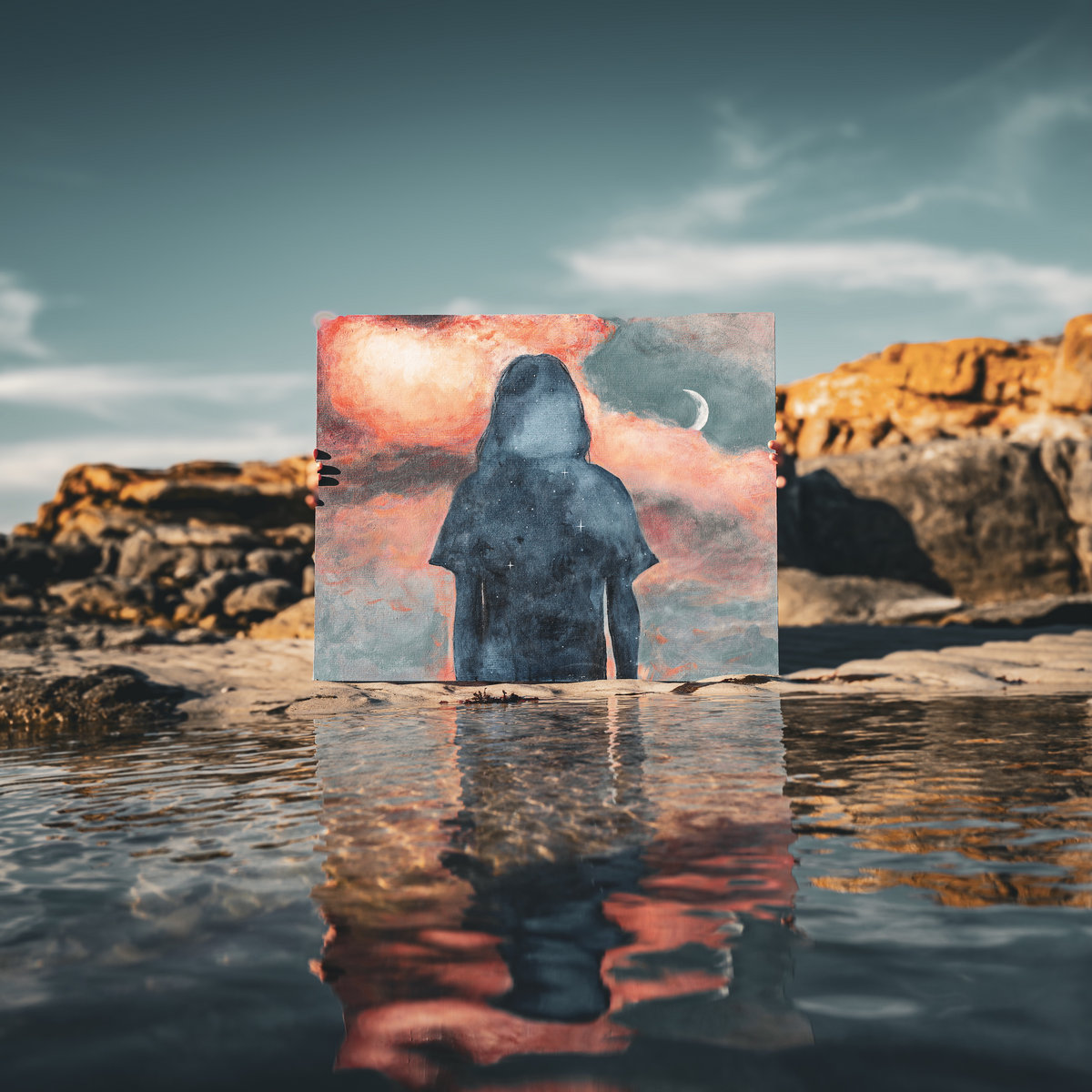
    Jonathan [15:53] Oh, the album artwork as well, so special. The artwork is a picture of a painting. So the painting was done by an amazing artist friend of mine from Kommetjie, her name is Sarah Fell-Aherin. She painted this and the song that she used as reference for the artwork was actually a very early version of Midnight Wasteland. It’s an outline of me, with space inside me. And the idea was to have the painting, scan it and be the artwork, but it just seemed a bit too centered in one aspect of the album.

    So I spoke to another good friend of mine, Ian Miller, who’s a fantastic photographer from Kommetjie as well. He has worked Survivor for years. His photography in Kommetjie of all the wildlife and the ocean and stuff is just incredible. So I spoke to him about it and we chatted and, what can we do? What can we do? And eventually we came to the conclusion that the depth of field trick with the painting would be amazing because to someone – this is some feedback I got from the label as well – to someone who doesn’t know where that beach is, the rock behind the painting could be a mountain.

    So the goal with the artwork was really just to paint an interesting picture, to catch your attention and to tie it into real life and the life we live inside our minds. So the painting represents the inside, and everything around the painting represents the outside. And it’s my personal belief that the best way to be a human being is to balance those two things perfectly.

    Tim [17:23]: Wow. Well, it’s definitely a memorable album artwork. Do you think you will press up any vinyl copies of the record?

    Jonathan [17:32]: Yes, the goal is to press vinyl. We were maybe gonna do it this year already, but it makes a lot more sense to do it a bit closer to our tour, because ideally, we would be selling most of the vinyls on our tour. Vinyls are an expensive investment, but they’re a good return as well, so we’ve just gotta build up some funds. We’ll probably do one or two shows in February/March to raise a bit of funds to help print them, and then we’ll ship some over to South Africa as well, for sure.

    Tim [17:58]: Great. And as I mentioned earlier, you guys have put a lot of effort into your music videos. You’ve got at least four on your YouTube channel: Midnight Wasteland, Man Before,I’ll Wait For It and Wayward Water, which are all off the new record. Which is the new video coming out?

    Jonathan [18:11]: Growing Pains. So there’s aGrowing Pains music video coming out tomorrow. Well, tomorrow being the 21st of November, 2025. So the music video was supposed to serve a very specific purpose. It was another aspect of the self investment and serving the art. And if I’m gonna take myself seriously and put myself forward seriously in the space of creativity and art, I need to back it up, right? You can’t just give people 12 tracks and expect them to do all of the work on association. So we did these five music videos. Every music video fulfilled a specific purpose.

    So Wayward Water, the first music video that came out, was this huge community effort from Kommetjie. No one charged anything, it was just everyone coming together for a day and making some amazing art. And that was supposed to serve as a showing for how cinematic our music can be when there’s a narrative going, when there’s visible emotion and beauty on the screen. Look, our music can cater it to this, you know what I mean? So that was Wayward Water.

    I’ll Wait For It was supposed to be a bit more personal, ’cause it is a personal song. But that video was supposed to serve the purpose of, even something with a little bit less intensity and effort can still be represented beautifully by the art and the music. So we started with those two. Then we got to the second two singles. So the first two singles from the album were supposed to be a bit more contemporary, show people what’s coming in a bit more of an accessible sense. And then the second two singles, which were Man Before and Midnight Wasteland, were supposed to show off some of the more artsy and a bit more flowy aspects of the album that were coming out. ‘Cause I feel like the four singles that we released, are a good representation. If you heard them first and then heard the whole record, I think they’re a good representation of the whole thing.

    So Man Before was, again like, how beautiful can we make this really deep and personal song, and how can we tie it into all three of the guys going through a similar journey? ‘Cause the three of us are the same age, we’re all born in ’96. Ray is from Durban, Steve is from Joburg and I’m from Cape Town. So we formed a South African triangle and triangulated here in Cape Town. But we ended up putting some baby videos in that Man Before music video as well, all three of us. And that was just supposed to be a representation of what we’re singing about. It’s personal to us and it means something. And it’s not just Jonathan’s meaning, you know, it’s all three of ours.

    Then one of the more rewarding music videos, Midnight Wasteland, was just… again, knowing people in Kommetjie and being confident enough to reach out and ask someone to see if they would feel comfortable expressing upon my expression. So there was no direction from us to Isabella. She teaches my fiance dancing, so it’s all very close and close connections. I just asked her to do it, she was keen instantly. I sent her the song and two weeks later she came back and she had this whole insane dance. So the purpose of that music video, in short, was to serve as a showing that someone else can express upon my expression as well. And look, it makes sense and we are connected and this is a collaboration now. So each of the four videos had a very specific purpose and Midnight Wasteland was especially special. I remember crying a little bit on the morning at the shoot just because I was so blown away by the meaning that someone could take out of the writing and the expression of dance that they could apply. It was incredible.

    Tim [21:56]: It’s really beautiful work and I encourage the listeners to go and check out these music videos and of course, the new one dropping on November 21st. As someone that’s very interested in guitar specifically, I wanted to know what kinds of guitars you’re playing?

    Jonathan [22:11]: Yeah, well, I haven’t got a crazy acoustic yet, you know, I don’t have a Martin or something amazing yet. But I got really lucky with a Tanglewood and an Ibanez, two beautiful acoustics. The Ibanez is maple, the Tanglewood is spruce top, but has such an insanely beautiful tone. But again, here I must shout out our mixing engineer. So we produced everything and recorded everything here. And when the songs were as good as I could make them, we decided they deserved another 10%. ‘Cause I still think to this day now, you can’t mix your own vocal because your decision making is too affected by how your voice sounds in your head.

    So, André Hough, our incredible friend and incredible mixing engineer, came in and really just made everything sound amazing. But this Tanglewood and this Ibanez, I only used two guitars on the whole album for all the layers. And the only interesting thing I do really is on my standard tuning guitar, ’cause I play in a standard tuning and an open tuning. So on my standard tuning, which is the Tanglewood, it’s tuned all the way down to D. So it’s not drop D, but the whole guitar is tuned a full step down. So it’s D, G, C, F, A and D again. Yeah, and then the other guitar is DADGAD, but also a full step down, so DADGAD in C. So I found that I really enjoy having my strings vibrate more, having deeper tones come outta the guitar. And that’s something that really filled me with confidence in terms of singing, because it helped me find a really sweet spot in my vocal.

    Tim [23:49]: Incredible. Your friend André did a great job mixing parts of the record. Did he mix the whole record?

    Jonathan [23:54]: Yeah. Yeah, he did final mixes on the whole thing.

    Tim [23:57]: Wow. Well, yeah guys, you gotta pick up a copy of the new record, it’s called Time Flows Like Water from Jonathan Stephens Simons. You can visit bandcamp.com to buy a digital album there and take a look at the lyrics. And of course, Jonathan is on all the various socials, so you can check him out there too. And if you can catch a live show, you’re gonna be in for a treat. Any shows coming up anytime soon?

    Jonathan [24:19]: No, I’m off to Europe again for Christmas and New Year’s, just doing some family stuff with my fiance’s family. So we were thinking of trying to do some shows before, but nothing really lined up. Look, it’s always difficult as well, with Steve and Ray because you can hear how phenomenal they are as musicians, they are phenomenal. I still am so grateful that they play with me and that we’ve formed this relationship and this musicianship together. But they’re busy guys, so there’s a lot that goes into consideration for these live shows. Do we have enough time to rehearse? Are we gonna do a good enough performance? Yada, yada. But we plan to come back hard in January, February, March next year with a lot of shows.

    Tim [25:01]: Awesome. Yeah, so keep your ears to the ground if you wanna catch them live. And who knows, maybe if you’re wandering around the Imhoff Farm, you might catch them feeding some animals at the petting zoo there.

    Jonathan [25:10]: Yeah, man. It’s just up the road, isn’t it?

    Tim [25:13]: Absolutely. Well, Jonathan, thanks for joining me today, I really enjoyed the chat. Have a great New Year’s and we’ll catch you live next year and all the best for the release of the album.

    Jonathan [25:23]: Hey, thank you so much, Tim. What a pleasure and what a blessing. Thank you for showing interest in our art, we are eternally grateful. Thank you.


  • Stephen ‘Spling’ Aspeling – The Essence of Dreams

    Stephen 'Spling' Aspeling
    The Tim Smal Show
    Stephen ‘Spling’ Aspeling – The Essence of Dreams
    Loading
    /

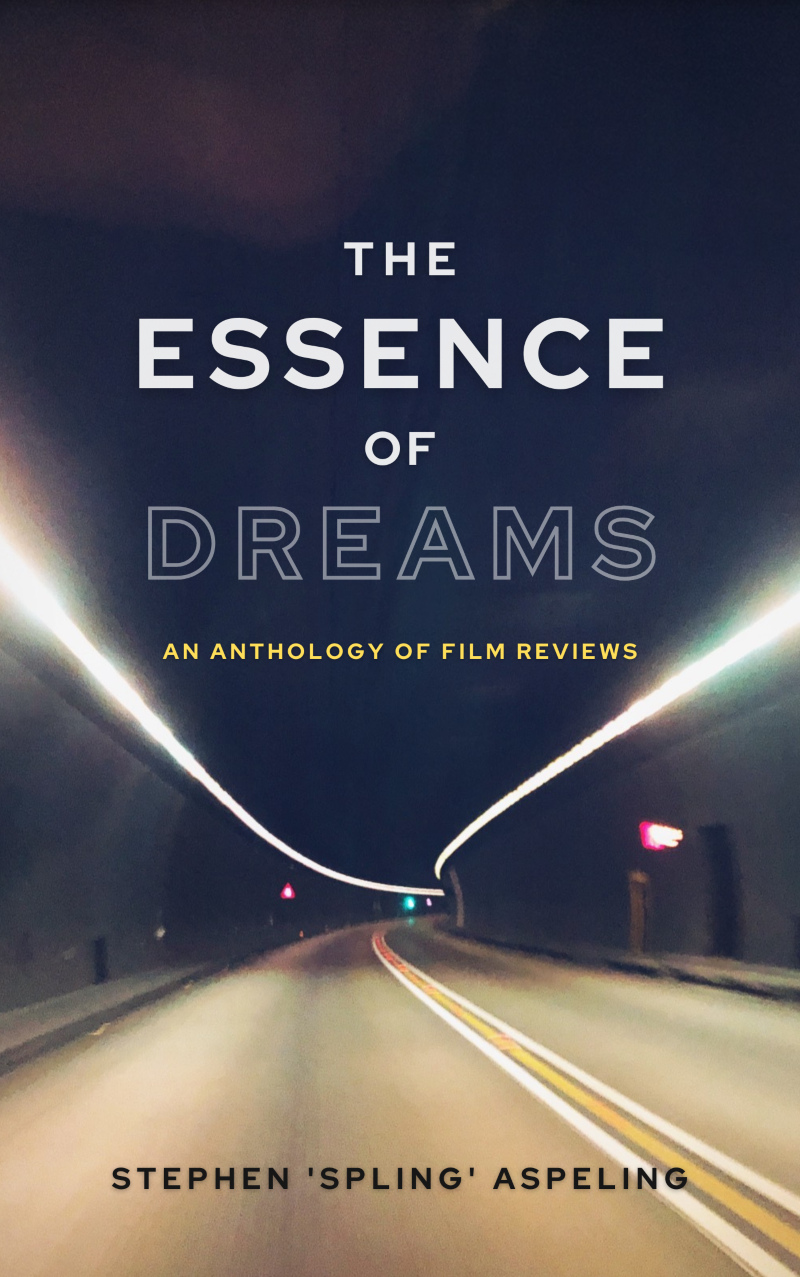
    Stephen ‘Spling’ Aspeling discusses his book, The Essence of Dreams.


    🎙️ Episode Summary

    In this episode, Tim sits down with renowned South African movie critic Stephen ‘Spling’ Aspeling to discuss his latest book, The Essence of Dreams: An Anthology of Film Reviews.

    Spling shares the 17-year journey behind this collection, explaining why he chose to illustrate the reviews with surreal sketches rather than traditional movie posters. The conversation dives deep into the philosophy of film criticism, the role of the director as a “dream architect,” and the state of the South African film industry.

    Whether you are a casual moviegoer or a screenwriting aficionado, this episode offers a fascinating look at how we get lost in the magic of cinema.


    🗝️ Key Takeaways

    • The “Bucket List” Book: The Essence of Dreams features 97 reviews of films Spling has rated 8/10 or higher over the last 17 years. The criteria? Films that are so immersive they feel like living in a dream.
    • The Art of the Review: Instead of navigating complex copyright laws for movie posters, Spling collaborated with illustrator Alan Lamprecht to create abstract, dreamlike sketches that capture the “essence” of each film.
    • The Critic’s Mindset: Despite his background in script consulting, Spling reveals that he tries to watch movies as an “end user.” If he starts analyzing the lighting or script structure during the movie, it usually means the film has failed to immerse him.
    • South African Cinema: Spling discusses the unique challenges local filmmakers face—specifically budget constraints and lack of development time—and how sound design can elevate a low-budget film to international standards.


    ⏱️ Chapter Markers

    • [00:00] Introduction and the 17-year journey of writing the book.
    • [01:22] Why the book uses sketches instead of movie posters.
    • [03:47] How to use the book as a curation tool for what to watch next.
    • [05:38] The selection criteria: Immersion and “The Essence of Dreams.”
    • [07:04] The Director as the Architect: Auteurs and unified visions.
    • [09:28] Spling’s personal “Top Tier” favorite films of all time.
    • [13:44] Balancing the Screenwriter’s brain with the Critic’s heart.
    • [15:49] When movies go wrong: Disruption and “Switcheroos.”
    • [18:02] Analysis of the South African film landscape and the film Toorbos.
    • [21:49] The future of funding and distribution for South African creators.


    🎥 Mentioned Films

    If you are looking to build your own watchlist based on this episode, here are the films discussed:

    • 127 Hours
    • The Truman Show
    • Inception
    • Enemy & Arrival (Denis Villeneuve)
    • Excalibur (John Boorman)
    • Chinatown
    • Sunset Boulevard
    • Monty Python and the Holy Grail
    • District 9
    • Toorbos


    🔗 Connect with Spling


    🗨️ Memorable Quotes

    “I describe it as ‘The Essence of Dreams’ because each of these films in my mind is a very full and complete dream. It’s like you are living in the director’s world for a while.” — Spling

    “I try to let it wash over me, I try to let it enchant me rather than trying to dissect it or analyze it. I think when I start to analyze… that’s when I realize that it’s not a good film.” — Spling


    📃 Transcript

    Tim Smal (host): Hi everyone and welcome to the show. My guest today is Stephen ‘Spling’ Aspeling. He’s a South African movie critic whose work is essential for any film enthusiast. His latest book, “The Essence of Dreams: An Anthology of Film Reviews”, focuses on cinema’s ability to create immersive worlds and transport us, making the experience feel like living vicariously through someone else’s dream. Spling, welcome to the show.

    Stephen ‘Spling’ Aspeling (guest): Thank you so much, Tim. Really great to be here.

    [0:30] Tim: Great to have you on the show. How did you come up with this idea of writing this book?

    [0:36] Spling: I think I have always had the idea of writing a book on my bucket list and I’ve got a bucket list that’s up in the air somewhere. It’s not really a list, very much like my movie bucket list, which I think this book is really, for a lot of people. It could be that.

    And in terms of the genesis of writing this book, it’s been a book of 17 years in the making. And the reason I say that is because I didn’t know I was going to be writing a book 17 years ago when I started reviewing films. But the idea came to me when I realized just how much work I’d covered in those 17 years and decided that I would put it to good use and try and share some of the pearls that I’ve gathered over this time.

    [01:22] Tim: And I see that every review that you’ve done in the book is also accompanied by a sketch. Can you tell me more about the illustration?

    [01:30] Spling: Yeah, so when you are approaching a book, you obviously need to think about things like images and licenses and all of that jazz. And I thought to myself like, “What is going to be the easiest thing to do here? Because I could approach the studios and try and get permission for posters and all of that sort of thing.”

    And then I thought to myself, “What would be more personal is if I actually sketched everything in the book.” And I decided to go that route and even got one of these “sketching tablet things” to do that, and then realized that I may have bitten off more than I could chew, because to get 97 illustrations to accompany the book is no small feat.

    And I also realized, that even though I did art at school and I did quite well, my sketches were not quite coming off as well as I would’ve liked. They were a little bit scary, a little bit nightmarish, and I just thought I needed to get an illustrator whose work was a little bit more agreeable, a little bit more surreal, but not on the nightmarish side.

    And because it’s “The Essence of Dreams”, I wanted to keep it in the dream world rather than the nightmare world. And I approached my staff writer named Alan Lamprecht, and I was actually wanting to give him more work and I was saying to myself like, “What else can you do, Alan?” I was saying to him, and he showed me that he does these doodles and I was very impressed. And that’s when I pitched the idea of him doing the illustrations and he went full steam ahead and I am so pleased with the result.

    [03:11] Tim: Yeah, it’s interesting how for each film review you have the sketch because that individual sketch encompasses the movie. So for example, I’m looking at your book now and I’m looking at the review for “127 Hours”, and of course I’ve heard of this film, but I haven’t seen it.

    But just looking at the sketch of the chap that is, I guess you could say stuck between the boulder, it makes me want to see the film. So it’s a great way for folks to get the feeling of the film and go and watch it. Because I guess that’s the idea behind the book is to encourage folks to go and watch films that they haven’t seen.

    [03:47] Spling: Yeah, it’s to basically serve as a book that could be on your TV room table or your bedside table, and you could just look through it, page through it and go like “All of these films have been rated an 8 out of 10 or higher by Spling, so in my mind, all of them are worth seeking and watching.”

    And if you’re not quite sure what to watch, which is a classic story these days, with so many things and so little that we feel that is really on the table, especially with these streamers, it’s one of those situations where you can actually get a sense for the film based on the illustration.

    And in the case of “127 Hours”, that is inspired by the poster. So The Essence of Dreams is also trying to capture the essence of the films that we are talking about with these illustrations. They’re the kind of sketches that you could see on a wall, and they’re just… they’re not perfectly proportioned, they are interesting. They’re not fully formed, in terms of there’s just sometimes an abstract quality to them that you need to fill in the gaps a little bit. And I just love the simplicity of them and how these things blend into the actual reviews themselves.

    And I actually wanted to have them more integrated into the text itself. But I think it just keeps it from being too much of a wall of text and it breaks up the book a little bit. There’s some nice white spacing here and there. Just to give the eye a little bit of a break, but I really love what Alan did with these illustrations.

    [05:14] Tim: Yeah, it must have been an interesting process for you, considering that you’ve seen so many films over the last few decades. And if I understand correctly, all of the reviews in this book are from the year 2000 onwards, and as you mentioned, they’re all 8 out of 10 and above. So tell me more about how you selected these films, because I’m sure you had quite a lot to go through.

    [05:38] Spling: Yeah, it’s 17 years of movie watching is what informed the book, and that is why most of the reviews fall within that sort of frame. And it’s basically whatever inspired me to review a film, whether that be for a press screening or if I picked up something that I found in the video store.

    Like I think I’ve got The Truman Show, which doesn’t quite fit within that parameter, which is featured. But it’s any film that has really transported me, that has been so immersive that you finish the film and you feel like you have to reacclimatise yourself to the real world. Obviously the darkness and the cinema is already something working for you, but when you feel like you’ve actually been in that world, that’s the kind of films that I’m trying to relay.

    And that’s why I describe it as “The Essence of Dreams” because each of these films in my mind is a very full and complete dream. It’s like you are living in the director’s world for a while. And yeah, that’s what I love about film is that illusion, all those artistic elements are coming together to create this grand illusion, this way to escape from wherever you are and enter this different world. And when that’s done accurately and that’s done consistently and reaches the full potential of the vision, then that’s when you end up with a film that’s going to score high, like an 8 out of 10 or higher.

    [07:04] Tim: So the director of the film plays a really big role in creating that world, because as you watch the film, you’re living vicariously through someone else’s dream. So how do you see the director, in terms of the role that they play in sharing that dream with the viewer?

    [07:20] Spling: It’s a little bit like “Inception”, which is one of the films that is featured in this book, arguably the greatest heist film ever made. And in “Inception” they treat the characters almost like a film.

    You’ve got Leonardo DiCaprio, who’s the director and in a similar way, he is like an architect which is one of the other characters. But they all kind of share – and that’s the whole thing with filmmaking, it’s very much a team sport – and they are all sharing in this vision. And obviously the director is the one that sort of calls the shots and is the one that’s solving the problems on the day and is ensuring that the script and the treatment stays as clear and as aligned to that vision as possible.

    So for me, the director is the one whose eyes we see things through, and obviously it’s a team effort. So there is a whole lot of people behind that effort to do that. But when you see an auteurs work like Denis Villeneuve, who is featured I think a couple of times with “Enemy” and “Arrival”, then you can see what I’m talking about.

    It’s a very unified signature thing that’s happening. And when a director really has that overarching influence over a film, then it very much becomes a personal thing, it becomes like a dream. And obviously he’s done “Dune”, which is based on Frank Herbert’s book, which is a little bit more widespread in terms of it not being his own work, but he really makes it his own. And you can see that sort of signature flare and very Denis Villeneuve thing coming through in all of his films.

    So yeah, the director, if they are very much aware of the vision they’re trying to translate to screen, are there every step of the way and ensure the quality every step of the way.

    [09:13] Tim: Yeah, you mentioned “Arrival”, that was an incredible film, certainly unforgettable for me. I was wondering, are there a handful of movies that for you are unforgettable, in other words, your top-tier films in the book?

    [09:28] Spling: In terms of the book, yes, I would probably say that the films that I’ve scored a 9 are the real top tier ones, and I could go through that and tell you which ones they are.

    In terms of my personal favorite films of all time, I would have to say, and these are not necessarily included in the book because they range across the ages, but for me it’s been in ascending order, I would have to say it’s “Excalibur”, which is the John Boorman film. He wanted to do “Lord of the Rings”, but realized that the visual effects weren’t up to scratch at the time, and obviously a massive budget and undertaking to do that. So he switched to Arthurian legend and went with the story of King Arthur, and it’s just such an iconic and beautiful film. It’s dated, but there’s that, sort of, timelessness that comes through it, as well as with Carl Orff’s O Fortuna theme, which echoes throughout, and it’s one of those films that you can’t really forget, it’s just so powerfully visual. And Patrick Stewart, Helen Mirren and Liam Neeson are just a few of the names in that film that you forget that they were actually in it.

    And then another film that I really truly appreciate is “Chinatown” with Jack Nicholson and Faye Dunaway. It’s a Polanski film and I just really appreciate the detail and the nuance to this film that’s swathed in mystery and intrigue. And at two and a half hours you are just captivated by what’s happening from this drought situation to this private investigators investigation going into a woman that’s apparently having an affair. And it just is so clever, from the little things where he is using his detective skills, all the way through to this massive story of intrigue.

    And then I really love Billy Wilder’s “Sunset Boulevard”, which is the film that I think inspired David Lynch’s career about Old Hollywood versus New Hollywood, and the glitz and glamor and the sort of black and white thing there, but the unreal versus the real, all kind of playing off against each other, creating this interesting tension. And it’s just so surreal and beautiful, and a black and white film from Billy Wilder.

    And then right at the top, it’s a strange one for a lot of people, but “Monty Python and the Holy Grail”, which is like a sketch comedy which doesn’t really have an ending, but is just so hilarious and rewatchable and brilliant in its own way.

    [11:52] Tim: Wow, I’ll certainly be looking up some of those films. Now, in your book you noted that “Everything, Everywhere, All at Once” dials back to its human essence. So for you, what is the single most important essential truth that a film must communicate to be truly successful and worthy of an 8 out of 10 or higher on the SPLING-O-METER?

    [12:13] Spling: I think what most of the successful films do, is they manage to resonate with audiences and on a human level where universal themes are really timeless. And that’s why some of the old classics still hit home today because they weren’t centered on technology. They weren’t centered on very specific things to their time. They are actually grappling with the struggles that we have as humans, whether it be a couple of centuries ago or today, they are really just tapping into something that is just so much more bigger than all of us and the sort of specificity of a year, or a moment in time. And they’re able to capture the realness of it with a sense of honesty. And they’re also able to speak to people on a level that you can’t help but connect with. So I think those are the elements that really come together to actually make a film go from good to great.

    [13:17] Tim: Yeah, and over the years you’ve been involved in so many aspects of the film industry, from radio broadcasting, consultancy, judging, podcasting, serving as a panelist, a juror, and a host. So given your work in various aspects of the industry, including your website reviewmyscript.com, how does understanding a screenplay structure affect your ability to review the final film?

    [13:44] Spling: That’s a great question, Tim. I think that when you are so close to film like I am, that you are inevitably going to be thinking about some of the aspects to the direction, to the cinematography, to the performances, to the script writing. Those elements are all present and they’re all at the back of your mind.

    But I try to go in, when I review a film as an end user, I try to forget all of those things. I try to let it wash over me, I try to let it enchant me rather than trying to dissect it or analyze it. I think when I start to analyze and start to notice the various components of a film, that’s when I realize that it’s not a good film, because if it’s distracting you enough to start drawing you out of that dream space, then it’s not doing its job well enough.

    The same can be said for a soundtrack or CGI, it’s whenever something is distracting you and it’s not elegant enough to actually continue the flow of that story, or the flow of that visualization, that it suddenly becomes a problem. So it’s when things stick out that you become taken out of that dream, you become alienated in a way.

    That’s why bad CGI is terrible and distracting soundtracks and over-the-top performances can really ruin a film, because it reminds you you’re watching a film and unless it’s a “breaking the fourth wall moment,” a mockumentary or a comedy where they encourage you to do that, it’s totally against the flow and storytelling flow, and flow in terms of consistency and performances and maintaining that world is critical. Yeah, that’s the short answer.

    [15:23] Tim: Yeah, it’s interesting because, I’m sure you’ve probably seen some films where it starts out very well and then by the second half you’re a bit frustrated because it could have been something else, it could have been better. And then I guess that’s when your screenwriting skills come into it because you think “I could have maybe done a different job,” but with so many people working on a film, the end product is a bit difficult to know how it’s gonna turn out until right at the end, hey?

    [15:49] Spling: Yeah, there’s a perfect example: I was at the Stockholm International Film Festival recently, and one of the films that was screened there – I’m not gonna mention its name – but it did something like that where it became incredibly distracting, because halfway through the film, the lead actor basically changes from one actor to another.

    And in a similar way to the “The Imaginarium of Doctor Parnassus” where Heath Ledger passed during the making of the film and they ended up substituting him for one or two other actors, something like that happened, but it was more in a, sort of, “Fight Club” way where they were trying to just do this handover from one character to the next. And unfortunately, it just – as ambitious as it is – it doesn’t quite work.

    It’s a bit confusing to begin with and because the level of acting changes from the one actor to the other, it became something that you weren’t really on board with and because you didn’t feel like they’d done this in an elegant enough way, it really changes the dynamic of the entire film. You are like totally invested in it, and then they do this little switcheroo and then you’re confused because you’re like, “Why did they do that? It was going so well” and having this other actor suddenly, like taking the place of the other one is so confusing because all the other actors in the cast are acting as though there’s nothing that’s changed. And because they didn’t communicate it well enough, it suddenly just throws the film.

    So if you were thinking it was great up to that point, it really hinges so devastatingly on this switcheroo thing that they do, and I don’t think they did it well enough to actually to make it a smooth transition. And because it’s so disruptive, it really is a film that becomes divisive, going for something quite wild in a “Fight Club” kind of way, but not really landing it.

    [17:42] Tim: It’s great that you’re able to see films around the world and go to different film festivals like the one you mentioned in Stockholm. Now, your book includes reviews of South African films like “District 9” and “Toorbos”. How do local stories and regional dreamscapes achieve the same universal transport of power that you celebrate in global cinema?

    [18:02] Spling: With South African film, I think one of the biggest issues affecting us is budget and we make pretty amazing films on next to nothing in terms of that comparison on a global level. We don’t really have the luxury of time when it comes to filmmaking, so with actors and writers in terms of drafts, the screenplay doesn’t have enough development budget to really take it through the amount of drafts and rewrites that it really needs to have, in order to become amazing.

    Sometimes you get one hit wonders where it gets done in two or three drafts, but that is a rarity. So on the front end of the production, we don’t have that much time to do that. And then in terms of performances with actors, they don’t really have that much time to sink into their characters, and there’s often not that much time to rehearse. So we are like “on-the-fly” when it comes to filmmaking. And so when you have a great South African film, it really is even much more of a miracle then having a great film from one of these, sort of, more established filmmaking destinations.

    And in terms of South Africa, I think what really helps is when a film is working brilliantly when it comes to story and character. Like this is advice for anyone, because you can have a very low budget film and have it still work on the basis of just getting the character and story because that’s what really connects with an audience. Even if it’s not as visually spectacular or beautiful in terms of its oral landscape, you are able to do so much with so little to begin with.

    That’s why the screenwriting process is so important, and that’s why I keep wanting to help screenwriters get to the full terms of their vision and reach the full potential of that vision. Because you can do so much with one person and writing a script.

    So yeah, I think I’ve diverged a little bit from your question, but in terms of South African films that have landed their way in “The Essence of Dreams”, they are the films that really took it up a notch and have done enough to succeed on an international level. And an example of “Toorbos”, which is a film I actually did some work on, the screenplay was really just an opportunity for a film a little bit like “My Fair Lady”, but “The Grapes of Wrath” to try and do something much grander than we are used to seeing on screens. It’s a period piece drama with some really excellent performances. And Rene van Rooyen did such a wonderful job in directing this, I really hope that she will be able to do more of these kind of films.

    But what elevated that film in such a big way was the soundtrack and it’s got such a lush soundtrack. What people don’t realize, is that sound is almost like 50% (I know the percentage kind of varies depending on who you speak to), but without great sound, you quickly realize just how average a film comes across.

    So when you are completely immersed in these films, it’s often because of the sound. And there are like 8 to 11 different layers of sound that get catered for in the biggest budget films. And when that’s missing, it really de-escalates the experience because it doesn’t feel as real or as lush.

    [21:22] Tim: Yeah, it’s amazing that as a South African film critic, you have so much experience across the various aspects of the industry. You even founded the Film Critics Association of South Africa, or should I say you were a founder of FCASA, so what do you think is the most significant change you hope to see in the South African film landscape over the next five years, or even in the film critic landscape in South Africa?

    [21:49] Spling: I think that one of the biggest things for us as a filmmaking destination is we’ve got everything that a film would need. We’ve got amazing crews, we’ve got brilliant locations. I think there’s a little bit of an issue at the moment with incentive around being here rather than going to another destination to create a film.

    And then I think we also get a bit swamped in terms of studios being booked out by one production, which sort of hampers things a little bit, in terms of the growth. But from what I understand, there’s another studio that’s going to be built and hopefully that will open things up even more.

    In terms of our industry, I think what we might be struggling with at the moment is funding, which we’ve always struggled with, even more so these days where filmmakers are just trying to scramble to get the financing together to make that possible. And there are lots of different ways you can improve the local industry. Like in France, they’ve got a percentage of each movie ticket sold, goes back into the industry. And I think something like that would really work well. But then the problem is that when you’ve got organs of governments that are meant to be supporting the industry and are trying to find their own feet, then everything destabilizes.

    So I think certainty, in terms of funding, would be the biggest thing that’s really affecting us at the moment. Because if you can’t be guaranteed that you’ll be able to pay your actors and crew, and everyone’s struggling to get by, then you are just going to be scrambling the whole time and things are going to be self-imploding.

    Because without that consistency and reliability, shortcuts get taken and then that affects the ultimate quality of the film. And sometimes people get to a point where the film is basically made, but because the post-production isn’t quite there, the net result is a little bit average and doesn’t quite hit the mark as much as it would.

    And beyond that, when it comes to distribution and marketing, a lot of people think that just making the film is the step, but they forget that they actually need to disseminate that film and get it across to audiences, and how do you do that effectively?

    So it’s all about structure and platform in my mind, in terms of funding, in terms of execution and in terms of reaching the intended audience. And I think globally we’ve come to a situation where it just seems as though the formula’s being rewritten at the moment, because everything’s in a bit of state of flux – you can blame AI, you can play blame streamers for disrupting the market – but we are just trying to wait for the dust to settle. And I think now is a brilliant time for people that are very entrepreneurial and very creative to take the reins and try and find a way for their product to exist and find an audience for it as well.

    [24:33] Tim: You’re certainly a creative yourself and the new book, “The Essence of Dreams”, it’s been out for a few months now – when was the official release date?

    [24:42] Spling: That’s a good question. I think I had a screening, which I would consider the official release that tied in with the book launch at The Labia. It was last year, I think it was around August, so it has been out for a while now. But it’s one of those books that I’m gonna just keep talking about, because the films in it are films that I consider timeless, that’ll still have value in a hundred years. And I think that maybe a good idea for me would be to include more recent films as I go along. So maybe I need to re-release it every couple of years with expanded entries.

    [25:17] Tim: Sounds good. If you wanna pick up a copy, you can visit amazon.com or Spling’s website splingmovies.com – Stephen, great to have you on the show today, and I look forward to catching a film with you again soon.

    [25:30] Spling: Thanks, Tim. It’s been wonderful, really appreciate it.


  • Maya Spector – Honey & Heartache

    Maya Spector
    The Tim Smal Show
    Maya Spector – Honey & Heartache
    Loading
    /

    Maya Spector discusses her record, Honey & Heartache.


    🎙️ Episode Summary

    In this episode, Tim sits down with the multifaceted singer-songwriter and musical theater specialist, Maya Spector. They discuss the journey behind her 2020 album, Honey & Heartache, a self-funded project that explores the complexities of love, loss, and tumultuous relationships.

    Maya opens up about the stories behind her most evocative tracks—from the romantic view of hikers on Lion’s Head in “City Lights” to the emotional family tribute in “Tiny Little Bird.” She also reveals how she pivoted during the lockdown by attending business school, leading to the creation of The Papaya House, a new collaborative production company bridging art and entrepreneurship.

    Tune in to hear about Maya’s upcoming orchestral pop shows, her deep dive into Flamenco dancing, and her behind-the-scenes work on the Cape Town jazz documentary, Breath of the Blues.


    🗝️ Key Takeaways

    • The “Three-Chord” Jazz Challenge: Maya explains how one of her most complex-sounding jazz tracks, “Every Time,” was actually a challenge to herself to write a song using only three chords in five minutes.
    • Life Inspiring Art: The touching story behind “Tiny Little Bird,” written after Maya’s mother lost her voice at a family funeral, and how a chance encounter with a Hadeda bird became a metaphor for helplessness and resilience.
    • The Business of Music: How the lockdown pushed Maya to pursue a postgraduate degree in business, realizing that the “creative mind” is an essential asset for entrepreneurship.
    • Interactive Performance: Why Maya prioritizes “singalongable” moments in her live sets to make the audience feel like part of the band.
    • New Ventures: A look at Maya’s upcoming projects, including the Hopefully Romantic EP and her work with the Bailaora Flamenco show.


    ⏱️ Chapter Markers

    • 00:00 – Introduction to Maya Spector
    • 01:33 – The journey of creating Honey & Heartache
    • 03:13 – “City Lights”: Hiking Lion’s Head and Latin influences
    • 06:17 – “Every Time”: How to write a jazz standard in 5 minutes
    • 08:30 – “Tiny Little Bird”: Grief, family, and finding strength
    • 12:44 – New Single: “You’re Always On My Mind” & Game of Thrones inspiration
    • 15:35 – The Papaya House: Merging creativity with business
    • 18:09 – Orchestral collaborations at Youngblood Gallery
    • 20:15 – Dancing and singing for the Bailaora Flamenco show
    • 21:49Breath of the Blues documentary and District Six history


    🔗 Connect with Maya

    • Album: Honey & Heartache (Available on all streaming platforms)
    • New Single: “You’re Always On My Mind”
    • Production Company: The Papaya House
    • Venues: Youngblood Art Gallery, The Masque Theatre
    • Documentary: Breath of the Blues


    📃 Transcript


    Tim Smal [host]: Hi everyone and welcome to the show today. My name is Tim Smal and here on the show I speak to amazing musicians about their awesome records. Today my guest is Maya Spector. She is a musical theater specialist and singer songwriter whose artistic roots are derived from the wonderful worlds of jazz and soul music. A global citizen by heart, Maya is well versed in the distinctive cultural attributes of communities and audiences in Asia, United States of America, South Africa and Africa. And to this day, Maya’s parents are both active and revered contributors to the political and cultural landscape of the globe. Maya’s career includes solo performances at the esteemed Kennedy center in Washington, D.C., alongside the highly respected television industry, veteran and puppeteer, Jim Henson. A graduate of the University of KwaZulu Natal, Maya has left an indelible mark in the world of musical theatre through delivering powerful performances in classic musicals and her debut album, Honey & Heartache, was released in 2020. Maya, welcome to the show! 

    Maya Spector [guest]: Hi, Tim. Thank you so much for having me. 

    Tim Smal [01:07]: Yeah, it’s great to have you on the show today. And I’m really excited to speak with you about a number of different interesting topics. You’ve got a brand new single coming out on September 8th, as well as many other shows that you’re involved in and even some documentary films. So lots to talk about today, thanks for joining me. Let’s kick off with chatting a little bit about your debut album, Honey & Heartache that came out in 2020. What can you tell us about it? 

    Maya Spector [01:33]: I’m sure that a lot of the musicians that you speak to say that they’ve either worked on an album for a very long time or a very short period of time. Honey & Heartache took me quite a long time to begin and finish. And unfortunately, it sort of happened that I was done with it just before lockdown. I was going to have a whole launch and everything. And then all of that happened and then we were transformed into a new way of living for a while. So it didn’t get the same sort of momentum into the release of it that I put into creating it.

    But I’m very, very happy that it’s out there because it’s been able to give me, I wouldn’t say accolades, but that sort of representation of a musician where you have a body of work where people can come back to and reflect upon and you yourself can also reflect upon where you were – that’s what an album is, of course. Yeah, it’s not the longest of albums. But it was a self-funded album and I was very excited to work with all the people that were able to work on it with me over time and it just takes you through the journey of having loved, having lost love, and tumultuous relationships as many songwriters may tend to have. I don’t know if we’re always searching for the drama or searching for the new song, but I’m trying to change my ways, I’m trying to change my ways. 

    Tim Smal [02:48]: Awesome. Yeah, well, I’ve listened to the album a number of times and I really enjoy it. Of course, the songs are very varied. Some of them are nice and chilled and relaxed and soft, and others are more upbeat and very expressive and very creative. So it definitely takes you on a beautiful musical journey, and I’d love to chat about a number of those tracks quickly. Let’s talk about the opening track City Lights, because that really sets the tone for the album, right. 

    Maya Spector [03:13]: I wrote that song a number of years before I actually went into studio to record it. And I actually wrote it for a different reason than the way that it was actually presented on the album. I was collaborating with some electronic music producers and they sent me a loop – this one guy sent me a loop and he’s like, “Oh, can you just write to this loop?” And I came up with this melody that was sort of Latin-y in a sense, a sort of, romantic in a sense. And then I forgot about it for a number of years and then it came back and I was like, “That was a great melody. That was a great story.” So, it is a reflection upon a relationship that I started when I first came to Cape Town.

    And I had this little flat in a place called Oranjezicht, that some people may know in the CBD in Cape Town. And, my balcony could look out at Lion’s Head. And I was a fresh blood to Cape Town, I didn’t really understand that people out here do this thing called hiking. I didn’t understand why people want to run up a mountain, but I’ve hence done it a few times. And I saw out there, and it was one of those summer nights, I remember, and there was the full moon, and there was all these wonderful little lights going up the mountain, and it looked like a Christmas tree, almost, to me. And then I realized later that it was hikers. But, I thought it was quite a romantic view. And to look out upon that and to see all of those little strings of lights, especially in the summertime, there’s about 2000 people that go hiking on a full moon night in the summertime, especially if it’s still and warm. And it just set the scene for a very romantic song. And that’s basically where it came from.

    So I wanted to take a little bit of a Latin influence in the way that I created this song that reflected upon the rhythmical elements that Cape Town brings out of someone or for me. And I could hear a little bit of the hooting of the traffic in Long Street and all the sort of craziness that was going on. So I wanted to give it this sort of romantic moody feel that that whole scenery was giving me and it turned into City Lights. It’s actually supposed to be “Hikers With Lights on Their Heads”, but City Lights sounded cooler. 

    Tim Smal [05:19]: Amazing. Yeah, there’s nothing quite like coming to Cape Town for the first time and experiencing all the magic that the city has to offer. But I loved your story about hiking because of course, Capetonians love to hike, myself included. But typically I keep to the more relaxed routes like Pipe Track and Kloof Corner and so forth. But many of my friends are always hitting up Skeleton Gorge and Devil’s Peak – that’s maybe something I’ll do in another lifetime 

    Maya Spector [05:45]: I’m much more happy by the water. If there’s the reward of water at the end of the hike, I’m all for it – but if there’s no water, why are we doing it? Sorry to all the hikers, okay. 

    Tim Smal [05:56]: All right. Yeah, so City Lights is the opening track to Honey and Heartache. Of course, many other really cool tracks on the album, but a standout track for me is a track called Every Time, because I feel like there’s a lot going on in that song and it’s very emotive and very expressive and there’s a lot of cool production things going on in that particular song. So can you tell me more about that one?

    Maya Spector [06:17]: It’s an interesting song that so many people gravitate towards that. I think maybe because in the lineup, it’s a little bit further on in the track list. And that song was actually one of those five minute writing songs that just happened. Sometimes it takes me a while to write a song and sometimes it takes five minutes. And I wanted to challenge myself to write a song with three chords. So that’s what I actually did. So that song has three chords. And it sounds a whole lot more complicated than it really is. And I think that is something that a lot of… let’s say, jazz musicians, aim to have, is something that’s simple at its core, but it sounds much more complex. And I think that the years and years of experience in making music and creating music and performing music, in the performance of the song, is able to tell a story really well.

    Because like I said, it’s kind of based on these tumultuous relationships that I’ve had in my life. And, I’m not saying that an exciting relationship is a bad relationship, but that excitement – I wanted to feel that “butterfly moment” of everyone is telling you this person is not good for you and you’re saying “Oh, but I like trouble so much.” So that’s basically what that song is about. And it’s an interesting song, in the sense that, a couple of friends of mine that teach at different universities around the country, in the jazz departments, have asked me to use that song for their students. And they’ve been singing it in their recitals and singing it in their exams, and I think that’s really cool. And I feel very, very proud that a song that wasn’t meant to be jazz, is the most jazz song on the album. So, yeah. 

    Tim Smal [07:53]: Yeah, that’s an amazing story because it’s clearly a standout track and very popular with many fans. And even from my perspective, I listened to it and interpreted it as quite a complex song. And so it’s so interesting to hear that it’s actually quite simple and you wrote it quite quickly. So it’s super interesting to discover that and think more about the journey of a musician through all of their songwriting when they’re working on songs that take a long time and working on songs that take a short time, and then you put them all together and you have this journey of songs on an album, so I’m glad we spoke about that one. What about Tiny Little Bird, that’s a really beautiful song. I’d love to know more about that one. 

    Maya Spector [08:30]: So, it’s a song kind of about my mother. So my mom is South African and my dad is from the U.S. originally. And, my mother is from quite a big family in Cape Town and Jo’burg. So she’s one of seven siblings. And then her father was one of 14 siblings from Paarl. So I have this expansive, wonderful family in Cape Town. And when one of my mom’s sisters passed away – her eldest sister passed away, and because my mother is also a singer, and many people in my family are singers and musicians and actors and artists. But in a sort of like coloured family, when you have a funeral or a wedding or any kind of thing, you must now be singing for free. So, I say that as a joke, but I say that seriously too.

    So at the funerals we always have to sing and because it was my mom’s sister who had passed away, we were both supposed to sing at the funeral. So when we got up to the altar and we had to sing together, my mom just absolutely lost it. And she wasn’t able to sing and I had to sing a duet basically by myself. And when I came back to Cape Town after the funeral, which was in Joburg, I was driving on the road and I saw a hadeda on the road. And it was stretching out its wing and my heart feels very deeply for animals. And I didn’t know how to help this bird and it was raining and it was evening time. And I was thinking, “Oh my gosh, must I just put this hadeda in my car and take it to the vet? Or what must I do? Is it going to kill me while it’s in the car?” So I made the decision to sort of leave it cause I didn’t know what to do. And then I came home and I was bawling, bawling, bawling, bawling.

    So it must’ve been a little bit of the build up of emotion from the funeral, as well as seeing the bird. And then I wrote this song about my mom losing her voice at the funeral and me not being able to save everyone. So that’s basically what the song is about. It’s about finding the strength again to be able to go on and yeah… Also, “Big Hadeda Bird on the Road” didn’t sound as cool as “Tiny Little Bird.” 

    Tim Smal [10:34]: Yeah, some would say hadedas are not tiny little birds, but I certainly understand the story, so it makes complete sense. Are there any tracks on the album that you’d like to mention perhaps, favorites of yours? 

    Maya Spector [10:48]: As probably most musicians will say is that, every track is a little piece of their soul. So there’s something in every song that’s really special to me. Some of the songs I reinvented after an EP that I had done before. So I re-recorded songs like My Simple Little Song and Eyes for You. Yeah, so I sort of reinvented them with a producer that was doing the album for me that basically got the feel that I really wanted from them in the first place on this album. And, yeah, I think every song is definitely a piece of me, of some kind, and I can’t say that there’s a favorite child that I have. There are songs that I would say are crowd favorites because they’re much more singalong-able. I like to engage with my audience when I’m on stage, so I’m not the kind of artist that performs the song in the exact same way as it is on the album.

    So I’m much more of a theatrical kind of person in the moment, and I think that that is why a lot of people will come back to my gigs because they feel quite involved in the process of being acknowledged, being seen, being part of the musicians, in a sense. I want everyone to feel like they’re part of the band. So songs like Eyes for You and My Simple Little Song, have these singalong-able moments in it where I want everyone to sing and to not feel like you sound horrible, or you sound bad, or you’re singing the wrong thing. And even in the song, My Simple Little Song, I say, “It’s a silly little song, I don’t mind if you sing it wrong.” You just keep doing whatever you do, and it doesn’t matter to me as long as you’re having a good time, you’re enjoying the moment, and we’re creating memories together. 

    Tim Smal [12:32]: Wonderful. And you’ve got a new single coming out on September 8th called You’re Always On My Mind. I’m sure you’re very excited about releasing this track. Do you want to tell us a bit more about that? 

    Maya Spector [12:44]: So I have recently in the past couple of years, have learned the real value of funding, and funding is an incredible thing to get. And I was privileged enough to become one of the SAMPRA Development Fund recipients. And so I got some money to put towards an EP, so which I haven’t actually finished the whole EP, but I was able to finish two of the songs. So this song that’s going to be coming out, is coming out as a single, and then the rest of the songs will come a little bit later. And then will be lumped together as an EP as well called Hopefully Romantic. I’m not a struggling, sad person, it’s just – I’m a songwriter and I’m always looking for a story. So the sort of aloneness, of coming out of a relationship and trying to go out there back into the world and see what else is out there and sort of making your way back to the same point you were before, but being “hopefully romantic” about it, instead of being a “hopeless romantic”.

    So this song, You’re Always on My Mind, was something that I wrote during lockdown. So one of the things that I was watching quite a lot of was Game of Thrones. And there’s a line in the song that goes, “Dun, da, da, dun, dun, da, da, dun, dun, da, da, dun, dun.” So that’s the theme song of Game of Thrones, so I’ve sort of injected that into the song. And then I was remembering times of being part of musicals like Rent and those classic musicals. And there’s got a sort of musical theater-esqueness about the song. So this song is about when you have lost the love and you’re always constantly thinking about them. And I thought that – because Game of Thrones is quite an intense series and Rent is not the most… I mean, essentially it’s La Boheme at the end of the day, the opera. So everything is quite tragic. And so I wanted to write something that was, first of all, a quite a tragic sounding song and again, challenging myself to write something that was quite poppy. So when you hear it, you’ll hear I wrote a pop song and I’m very proud of the fact that I wrote a pop song, yeah. 

    Tim Smal [14:50]: Cool. Wow, a lot of influences going into the new single, especially the Game of Thrones influences.

    Maya Spector [14:56]: I’m not sure if they can actually hear it, but it’s there, yeah. 

    Tim Smal [15:00]: Cool. Awesome. All right, so I’m very excited to hear that there’s a new EP coming out soon – well, in the near future. So if the listeners get a hold of Honey and Heartache, don’t worry, that’s not all that there is. There’s a new EP coming out soon. And of course the first single is out September 8th for you to listen to. As you mentioned, you’re a singer-songwriter with a lot of work in the musical theater that you’ve done and so forth, but you’re also a new business owner. You’ve started The Papaya House and you are putting on some amazing shows where you’re exploring all different kinds of genres. Can you tell us more about that? 

    Maya Spector [15:35]: So, also something that was very interesting during lockdown is, many of us didn’t have things to do and one of things that was said to me by my dear parents was “Why don’t you go back to school?” And I was like, “I don’t want to go back to school.” So I applied to business school as a joke, and I got into business school. And then I thought it was a joke again. And then I applied because I didn’t have money to study. So I ended up getting a full scholarship to study through Henley Business College and I did a Postgraduate in Business there, in Management Practice. And it’s taught me an immense amount of things that are so applicable to being a creative. And I also learned that the creative mind is such an important mindset for entrepreneurs to have. And creatives are… instinctually, we are entrepreneurs in everything that we do. So I tried to step into my entrepreneurial mode and try to take on all the projects that I have been doing over the years and  streamlining them into a business. And it could be a little bit separate from Maya Spector, but it is very much underneath The Papaya House.

    And the reason why I’ve called it The Papaya House is ’cause my name is “Maya Papaya” to many people. And I wanted to sort of recognize the feminine in it, and the many seeds that you do through collaborations by being fruitful in the way that we collaborate with each other, planting seeds with each other and hoping that everyone takes from their excess and not takes from their bucket. So I encourage people to be part of the collaborations that I’m doing. And I’m very interested in cultural connections and educational connections, as somebody that comes from working on cultural programs and educational programs throughout my career. And I wanted to find a way of bringing together art, music, culture, and education together. And I was lucky enough to be pushed in the right direction because I started collaborating with a group called The Fulbright Scholarship program from the United States. And so I was sort of “kicked in the butt” to say “Open up your company!”, which I did. And so now I have the separate entity that I have, that houses a lot of my creative projects for collaboration that are outside of just making my own music. So that’s basically what The Papaya House is.

    Tim Smal [17:50]: Yeah, so the listeners can find out more about that by visiting your Instagram account. You’ve got The Papaya House, as well as your own Maya Spector account, and all of the information is on those two different accounts. You actually have a show coming up on the 25th of November, which is quite interesting at Youngblood Gallery. Do you want to tell me more about that?

    Maya Spector [18:09]: Yeah, so this is going to be the first show that The Papaya House is actually going to do – I mean, as the production house side of it. And I have decided that I wanted to showcase a lot of my peers – I mean, everyone in the music industry to me is my peer – so I would like to hold a space for everyone to come with their original music, but to be able to perform it in a different way than they’ve ever performed it before – or most people have performed it before – by taking original music and getting it scored for string quartet and then having piano in the background, so that people are stretched in their artistry, stretched in their creativity and placed in an environment where they get to explore a little bit more of their songwriting through a different genre as such. 

    Yeah, and I want everyone to be dressed in ball gowns, and we’re gonna have a great backdrop and it’s going to be beautiful because, I don’t know if you’ve ever seen a performance of people singing with a string quartet or with an orchestra – it brings absolute tears to you. And it’s so beautiful to be able to hear the actual songwriting of a song – to hear the lyrics of a song, and being accompanied by these beautiful instruments that sound very much like human voices themselves. So that’s basically what it is. I’ve got different arrangers, different instrumentalists and different songwriters that are coming onto that, which I want to turn into a quarterly event that will most likely be happening at Youngblood Gallery for each one of them. And then hopefully getting some funding where I can take it to Joburg, take it to Durban, take it to Port Elizabeth, take it to other parts of the country – maybe even Kirstenbosch Gardens. I mean, we don’t know, something like that. 

    Tim Smal [19:46]: Wonderful. Yeah, so the details for that show again are the 25th of November, 2023 at the Youngblood Art Gallery in Cape Town, it’s going to be an amazing show. And of course, there’ll be many more shows in the future too. But Maya, you are involved in a lot of different activities and projects – not just your solo work and The Papaya House. You’re also doing some work in film, as well as a flamenco show that’s running at The Masque Theatre in September. Can you tell me more about that? 

    Maya Spector [20:15]: I sound very, very busy. I don’t feel that busy, but I sound very busy. So again, like I said, much of my family is involved in the arts and I have an aunt who passed away last year who was a very well-known Flamenco dancer in Cape Town, her name was Veronica Williams. And she always said to me before she passed away… I’m not laughing at the fact that she passed away, I was laughing at the fact that she always said, “You have to do this before I die,” and I just didn’t do it. So I signed onto Flamenco lessons with one of her former students and I’ve been dancing Flamenco and I have now been asked to be a part of the show as a Flamenco singer.

    So I’ve been trying to learn a little bit of Spanish in order to deliver the songs well. Yeah, and it’s going to be an incredible show. I wouldn’t come particularly to come watch me dance, but I would come to watch the advanced dancers dance and they are incredible. I have never seen a dance form that I have been so emotionally connected to. And I think that everyone needs to experience a flamenco show at least once in their life, it will make you feel alive – it really, really will. So I’ll be dancing in the beginners group, but I’ll be singing for the advanced dancers.

    Tim Smal [21:31]: Awesome. So the dates for that show are the 21st to the 24th of September, 2023 at The Masque Theater. The name of the show is called Bailaora, if I’m pronouncing it correctly, so check that out – it’s going to be amazing. What about the documentary that you’re working on as well called Breath of the Blues, that sounds very interesting. 

    Maya Spector [21:49]: Oh, yes. So, I was asked by a lady, her name is Ben Linderoth, to sort of help her to connect her with Cape Town musicians that come from the brown, black and coloured community, whatever you want to call in, whatever way you want to. And how music and jazz came out of District Six and has moved into different kinds of ways and transformed into the art form of choice for people from the community. And using that as the vehicle for expression and creativity, and how it’s transformed and morphed into different kinds of things. So I somehow have this talent of collecting contacts, and I’m always giving my contacts out to people. And this lady said, “Oh, you know, so many people, can you just help me to fix the people for interviews?” So I actually called many, many musicians that I know in Cape Town.

    Unfortunately, they weren’t able to feature all the people in this documentary, but we have had interviews with about 20 musicians in Cape Town, and it’s really gonna be a beautiful documentary exploring the journey that many people had, and how it’s morphed and changed into this different cultural phenomenon that’s happened in Cape Town, where it’s sort of like in the hip-hop thing where – you get jazz music and you get jazzing, dancing – where in the hip-hop culture, you have the dance, the music and the art. So it’s that same sort of thing of finding that a group of people that felt displaced as such, were finding connection through the displacement of loving one art form and how it’s created an expansion of creative expression for many people out of the community. So it’s called Breath of the Blues and I wrote a song as their theme song. And yeah, so it’s my first time working on a film set, where I wasn’t in front of the camera – behind the camera and making sure that everyone was coming on time. “Musicians are hard cats to…” You know, what did they say? What’s that expression? Anyway, nevermind. 

    Tim Smal [23:50]: Yeah, well, thank you so much for your time today. I know you’re super busy and you’re running between castings and documentaries and flamenco dance sessions and so forth, so thanks so much for joining me on the show today. The documentary film sounds incredible. It’s a Cape Town based jazz documentary exploring musicians from District Six, so I’m sure everyone’s going to really enjoy that and hopefully it’ll be out November or December 2023. So certainly a lot to look forward to in the world of Maya Spector. Do you have any final words for the fans before we wrap up today?

    Maya Spector [24:24]: I’m very, very honored to be on your show as well, first, before I speak to everybody out there. Thank you so much for reaching out and making me part of your platform of people that you’re showcasing. And to the people out there, I just hope that, if you’ve got something you want to collaborate on, come over to The Papaya House and we’ll make something happen. You know, we’re all about just creating, collaborating, and continuing. So, yeah. Thank you very much for having me and thank you to everybody out there for listening and, I appreciate it. 

    Tim Smal [24:54]: Oh, you’re more than welcome Maya. And of course, as you’ve mentioned, everyone can get hold of you. You’re very well connected and you’re happy to receive messages from anyone. So if you’re listening to the show and you’d like to get hold of Maya for any reason, maybe performing a show with her or whatnot, feel free to get hold of her, she’ll definitely return that email. All right, thanks for listening today, I’ll be back soon with another episode, so I really appreciate the support. Maya one last time, thanks again and enjoy the rest of your busy day and week. 

    Maya Spector [25:24]: Thank you so much.


  • Gary Thomas (Moodship) – Incandescent

    Moodship
    The Tim Smal Show
    Gary Thomas (Moodship) – Incandescent
    Loading
    /

    Gary Thomas of Moodship discusses his record, Incandescent.


    🎙️ Episode Summary

    In this episode, Tim sits down with the enigmatic South African musician Gary Thomas, now operating under the moniker Moodship. Known for his unique blend of moody songwriting, alternative guitar techniques, and precision multitasking, Moodship discusses his latest release, the Incandescent EP.

    They dive deep into the reasons behind his rebranding from “Gary Thomas” to Moodship, the creative freedom found in his recent five-EP series, and the intricate process of recording in his Cape Town home studio. Gary also shares insights into his celebrated live performances, his work in film scoring, and how he captures his stunning nature-based content.


    🗝️ Key Takeaways

    • The Evolution to Moodship: Gary explains why he retired his birth name for the stage. It wasn’t just about SEO and standing out in the streaming age; it was a license to explore diverse musical styles without the constraints of his previous acoustic-heavy reputation.
    • The Incandescent EP: This record explores two distinct themes: being deeply in love and dealing with overwhelming anxiety. Gary breaks down the contrast in tracks like Hounds, which pairs uplifting music with dark lyrical content.
    • Solo Production & Collaboration: While Gary thrives in his “cave” (home studio) working alone, this EP features special contributions, including artwork by his partner Amber, and instrumentation from Gene Kierman (French horn) and Daniel Zachariah Franks (Violin).
    • Cinematic Influence: There is a strong cross-pollination between Gary’s original music and his career as a film composer. His practice of filming performances in secluded nature spots acts as both content creation and a way to channel cinematic energy into his songwriting.


    ⏱️ Chapter Markers

    • [00:00] Intro: Who is Moodship?
    • [00:54] The origin story of the name “Moodship” and the necessity of rebranding.
    • [02:15] The 5-EP Series: From Disembark to Incandescent.
    • [04:14] Track-by-track deep dive: Solar Sigh, Hounds, My Reach, and Overboard.
    • [07:54] The art of collaboration: Album artwork and guest musicians.
    • [08:46] The “Work from Home” discipline of self-producing.
    • [12:02] The philosophy of live performance: Managing energy, breaking strings, and “running the play.”
    • [15:41] Filming in the wild: How nature influences Moodship’s aesthetic.
    • [18:29] Film Scoring: Composing for Cape Helena and malaria documentaries.


    Mentioned in this Episode

    • Artist: Moodship (formerly Gary Thomas)
    • New Release: Incandescent EP (Available August 4, 2023)
    • Previous EPs: Disembark, Orienteering, Liberosis, Amalgamation
    • Collaborators: Amber (Artwork), Gene Kierman (French Horn), Daniel Zachariah Franks (Violin), Damian Samuels (Filmmaker).


    🔗 Connect with Moodship

    • Instagram & YouTube: Search for Moodship to see his latest nature sessions and tour updates.
    • Streaming: Listen to Incandescent on Spotify, Apple Music, and all major platforms.


    📖 Transcript

    Tim Smal [host]: Hi everyone and welcome to the show. My name is Tim Smal, and today my guest on the show is Moodship, also known as Gary Thomas, who is a highly celebrated award-winning South African singer and musician. His enigmatic style blends rich, moody songwriting with a vast array of alternative guitar techniques and precision multitasking. Moodship has toured all over South Africa, Kenya, England, Spain, the Netherlands, Germany, Denmark, Czech Republic, Belgium, and France. He’s an award-winning live performer and music producer for film, documentary, TV and theater. And his new EP Incandescent is out on August 4th, 2023. Moodship, welcome to the show.

    Gary Thomas [guest]: Hey, Tim. Thank you. Thanks for having me.

    Tim Smal [0:45]: I’m glad to be speaking with you today. I think the first question I’d love to ask you, is tell me more about your artist name, Moodship and where that came from.

    Gary Thomas [0:54]: So, a few years ago I had to change my stage name which was my name, Gary Thomas, simply because it’s such a common name and it’s impossible to stand out as a brand on the internet, especially in the age of streaming. So I decided to change a lot of my musical style in a way, and sort of branch out. And I was hunting for an artist name that not only sounded cool, but also didn’t exist in the world. And I found that Moodship – those two words put together – kind of has a couple of cool sounding, ambiguous meanings and just wasn’t taken on the internet, so that was like a plus for me. And most people who I’ve mentioned it to said, “Oh, that’s a cool name and hopefully I will never have to change it again.

    Tim Smal [01:45]: Awesome. Yeah, I really dig the name, Moodship, and I was wondering to myself if you ever wear mood rings yourself? I’m not sure, you don’t have to answer that question… But, what’s very cool is that you have a brand new EP coming out on August 4th called Incandescent, and it’s actually the fifth EP in a series of five that started around 2019 with Disembark and then Orienteering, Liberosis, and Amalgamation. Can you maybe tell me a little bit more about the previous four EPs before we discuss the new one?

    Gary Thomas [02:15]: So again, with a sort of slight rebranding of myself and taking on a different stage name, I wanted to feel quite free in the ability to just make whatever I want musically. So in the past, I did these five albums under Gary Thomas, where I would write a lot of stuff that would be mostly similar to the live show that you saw, with a few bells and whistles added on top – which would be a singer, guitar, a stomp box and then some backing vocals or extra horns or strings. But in 2019, I decided that I just wanna make whatever I want, because I have a very diverse music taste. I listen to lots of styles of music and if I felt like recording a heavy alternative song, or a really stripped down slow, cinematic piano and string song, I wanted to do that. I think diversity is very key in music. So yeah, it’s just really me capturing what I feel like writing in the studio and what comes out. One of those EPs is an instrumental bowing EP, and the rest of them are pretty all over the show, in terms of tone and instrumentation. Yeah, but I think it’s fun to just kind of see what I can do and just get weirder and weirder.

    Tim Smal [03:43]: Awesome. And when I spoke to you earlier on in the year, you had the intention of releasing a single and then it turned into another EP, so I’m very excited that we now have four new tracks from Moodship, which of course includes Solar Sigh, Hounds, My Reach, and Overboard. These are the four tracks on the new EP Incandescent out on August 4th. You’ve actually played steel string, nylon string, banjo, bass, and percussion on this EP. So yeah, let’s chat about it and tell me more about the new EP.

    Gary Thomas [04:14]: These four songs are obviously new tracks that I’ve written in the last few months – some of them longer than others. Sometimes I’ll lay something down, and some of these tracks I sat with for quite a while, maybe the beginnings of it musically for over a year and then came back to it, and after some space I thought, “Oh, okay, this needs a bit of this – what if I added banjo or what have I added like bass.” And, yeah, to be honest, at this stage, when you are finished recording a bunch of tracks, you are happy with them and you’re proud of them. But I’m really just excited to get them out of my life now and move on.

    But they have quite a range of style – they have two general themes in the whole EP: One is being in love, and the other one is dealing with overwhelming stress and anxiety, that’s basically it. There’s a track on there called Hounds where the music’s very uplifting and happy and energetic, but the lyrical content is quite dark and somber, and I really enjoy that kind of contrast because people don’t really know how to gauge it, or they’ll have a different view of what that song is or what it’s about, just because the lyrics are completely different to the music.

    Tim Smal [05:27]: It’s really cool to hear more about the tracks because of course there are four on this record. You mentioned Hounds, can you tell me more about the other three, Solar Sigh, My Reach and Overboard?

    Gary Thomas [05:39]: Yeah, so essentially all of those three tracks are straight up love songs. And they are written about feelings that I have for my girlfriend. But Solar Sigh is kind of like being suddenly distracted or attracted, and out of the blue and just kind of turning your direction to face something that is quite inescapably captivating and all consuming. And it’s about that desire to stop at nothing. It’s very “Scorpio” to stop at nothing, to be able to share that world with someone.

    And, another song, My Reach, the chorus is basically, “You’re not so out of my reach.” And that means… it’s like nodding to myself thinking “Wow, look at this person that I’ve got, or look at this person that I get to be in their life” and saying, “You’re not very out of my reach – you’re actually like, right here.” Yeah, that one has like quite a dreamy soundscape flow to it, with the extra violins and horns from Daniel Zachariah Franks and Gene Kierman.

    And then the other one, Overboard, is two banjos, a bass and vocals. It’s called Overboard because it’s just like man overboard, like, “No, I’m out – like this is the person that I want – I’m off the ship.” And that song is essentially saying that there’s this feeling of love or connection with someone that I’ve kind of been looking for my whole life and never really found in certain ways in a relationship before, until now. And it’s interesting to think that it was there all along, or that feeling was possible all along. And maybe I’d given up on that in some way.

    Tim Smal [07:36]: Awesome. Well, I’m glad to hear that we have a record full of love songs, I know the audience will certainly love that. And what’s interesting to note, is that your girlfriend Amber, actually contributed to the album in the form of providing the album artwork, right?

    Gary Thomas [07:54]: Yeah. I’m very happy and honored, and it feels very special to me. I’ve sent her some of the tracks and she’s an amazing artist and illustrator and painter and ceramicist and photographer and designer. And I just trust her eye and her aesthetic so much that, yeah, I was really happy. She did a painting and then did some digital work to it, and I think it’s beautiful. And, yeah, it’s really special to me.

    Tim Smal [08:23]: Great. And of course you’ve collaborated with other individuals, you mentioned Gene Kierman who played French horn on My Reach, as well as Daniel Zachariah Franks who played violin on My Reach. And what I wanted to quickly find out was, where you recorded this? I assume that you hunkered down in your studio in Cape Town and essentially recorded it yourself there. Can you tell me more about the recording process?

    Gary Thomas [08:46]: Sure. So I just have a home studio and I mostly work alone. I produce all kinds of music for albums or for film by myself. And if I’m collaborating with someone who’s playing or singing or contributing, then it’s great to have people around. But otherwise I need and like to be alone in my little cave. It has its drawbacks and after a while you kind of get in your own head too much and you start hating the music and you need space from it. And it really is quite a “work from home” discipline kind of way of thinking.

    But yeah, Gene’s a good friend of mine, he played on an album I did in 2012 called Midnight Atlas, so I got him to do some French horn. And Daniel laid down some violins on this track, My Reach, quite a while ago that I started reworking. I really like working with people where sometimes I can guide them and say, “Okay look, it’s an A minor, and then, you know, it has this chord change.” But essentially, I like working with people the most where I can just say, “Here it is, do your thing – bye”. So it takes a level of musical intelligence, but also emotional music capacity, to just feel their way through, because I think that translates best when you have someone’s own style come through. And then I get the samples back and Gene’s created these awesome French horn lines that sound really pretty.

    And yeah, I think most musicians have this internal drive where they want to be very prolific and to be churning out music as often as possible, because everyone has this fear of dying with only an album under their sleeve or something. So I’m trying to just snap out of it and work better and be more prolific. And I’m immediately thinking about recording the next set of songs right away – like tomorrow.

    Tim Smal [10:53]: Yeah, so if you’re only discovering Moodship now, there’s certainly a lot to look forward to. We have the brand new Incandescent EP, which as I mentioned is the fifth EP in the series. Plus this new compilation release, which will be out soon. And if that’s not enough, then of course, another EP in the works as Moodship starts to write his new material. So lots to look forward to – I’m certainly very excited on my side. But let’s talk about the live show because you love playing live. You put on an absolutely incredible show.

    As you mentioned, you listen to so much different kinds of music, in the sense of studying jazz and listening to alternative and so forth. So coming to a Moodship show really is a spectacular experience. I was at a very special house concert in Sea Point in Cape Town in April this year, and boy was I in for a treat – I got to sit in one of the best seats there, it was really comfortable, the mood was great, the lighting was great, and you put on an exceptional show. So tell me more about what it’s like to play live. You’ve toured all over the world, you have an incredible energy on stage, sometimes to the point of even breaking strings, which I believe is your worst nightmare. So tell me more about what it’s like to play live as Moodship.

    Gary Thomas [12:02]: I love playing live. Going on tour is one of the funnest things to do. For every 10 shows, 3 of them are weird, but 7 are really fun. You go and you meet a whole lot of people, you make these friends for five hours.You leave the next day, you go somewhere new, see beautiful places. Playing live has a certain attractive disconnect to it, because when you’re in a studio or playing at home, you can stop whenever you want and you can just say, “Oh, I’m over this.” 
    But when you’re live, there’s something about being there in front of a whole lot of people where you just have to run the play and you actually just have to let go. And I find that quite a cathartic experience, especially playing live heavy, fast kind of music.

    So yeah, I think a lot of people when they come to my show and they’ve never heard me or seen me before, I think it’s quite unexpected for a lot of people. Obviously playing with the bow, most people haven’t seen before. And I like to explore a whole lot of different types of techniques on guitar and I like to be versatile. And I like to think that that’s enjoyable for people in a live show. I think about a set list, I think about dynamics and, “Okay, well, if I do this heavy metal song now, then I should do a super quiet ambient one afterwards.” And essentially I’m just there to have fun. I think about the audience – I do, and I do my best, but first and foremost, I’ll play the songs that I wanna play. And I think it’s ultimately more enjoyable for an audience to watch a performer who’s really enjoying and in love with what they’re doing. And so I just focus on that and I write a set list like half an hour before each show, depending on what I wanna do. And, yeah, I wanna do a lot of shows this summer and just keep going. Yeah.

    Tim Smal [13:50]: Well, let’s talk a little bit about your summer tour. You’ll be playing throughout South Africa. Can you tell us a little bit more about that?

    Gary Thomas [11:57]: Yeah, I can tell you so much about it. It’s just an idea that I have and I haven’t booked any shows, but it’s gonna be great. I would like to go all the way up the Garden Route and the Eastern Cape and the Transkei and the South Coast, North Coast, inland, Kwa-Zulu Natal, Johannesburg, Pretoria, maybe something in the weird middle of the country. But there’s always a lot of places to play. Because of the short shelf life of venues in South Africa, there’s always something new that pops up.

    And what I like to do when I go on tour is to, in conjunction with a whole lot of the main towns and cities that you wanna play in South Africa, I like to go to a lot of beautiful places. So, I’ll play Grahamstown and East London, but then I’ll stop up in Hogsback and I’ll play a show there and then stay for a few days or I’ll turn off to the Transkei and play a show there, and then stay for a week, and then carry on… stuff like that. So, yeah I’m really looking forward. I haven’t planned anything yet, I need to work out some dates but I’ll do it, and, yeah, there’s a few more Cape Town shows. I think I wanna do another big Ernie Ball String Collective guitar show and maybe another house concert. But, life is short, you know, let’s play basically.

    Tim Smal [15:15]: I notice that you do play a lot of really amazing shows in terms of the actual location. So can you talk to me more about your work that you do on YouTube and Instagram where you go outside into nature, you shoot the most beautiful videos. I’m just really wanting to learn more about the method that you use when you go out into nature. And I guess the point behind that for all the new fans that are discovering your music.

    Gary Thomas [15:41]: So I do a lot of music for documentary and film and TV and sound design and mixing stuff. And I’ve noticed in the past few years how, as I’ve sort of developed that style, that instrumental guitar bow and playing with the violin below, that kind of music is very attractive for filmmakers. And so I do quite a lot of work like that. So I like to go out to make content where I’m doing that and I’m recording live, and it’s really just so much fun. I did a session on Saturday and I just go out myself and take my little tripod and my gear and I record to a little Zoom microphone in my back pocket. And I set up, make sure there’s no one around. If I can see anyone, I don’t do it, basically. And if anyone comes, I like, strike and leave.

    So it’s really fun to be out there by myself. And I feel like, especially with that kind of music being very exploratory and cinematic, it’s that feeling of being out there and just looking around. And when I press record and start playing, it really lends itself to whatever music comes out, which is similar to film scoring in a way. And I use a lot of elements of it in my albums. It ticks a whole lot of boxes: make good content, get out of the house, be in nature, have some thinking time and some solitude. And I love collaborating with people. Every once in a while, I’ll take a friend with and we’ll do something, whether it’s another musician or a dancer. But yeah, those are so much fun. And I think, when I look at my social media accounts and I see all these cool places, I have a sense of satisfaction with how much I’ve left the house, really. But, I live on the peninsula, so a lot of it is… it’s not very far at all. You know, I’m not traveling. I just know a lot of semi-secret places, as you do when you are like a loner out in nature. And yeah, so they attract a certain audience for the live music world, but they also attract a certain audience in the filmmaking world, and they’re just so much fun. So, that’s basically it.

    Tim Smal [18:00]: Yeah, that’s very cool. I can see how there’s a cross pollination between the work that you’re doing in terms of film scoring and so forth, and then your own original music, which is great. So I never thought about it like that, but it makes so much sense because one is influencing the other all the time, which is really cool because you get to learn in the one field, bring it into the other, and so forth. So, on that note, have you worked on any interesting films or television shows or anything like that recently?

    Gary Thomas [18:29]: I’ve just finished a score for a documentary by Damian Samuels called Cape Helena, which is a very interesting film that he’s made about the island St. Helena and its connections to, not only his personal heritage, but the heritage of many South Africans. I think a lot of people don’t know about it. And that was purely guitar bowing – very somber, cinematic, and moody stuff, which is just a dream for me. Lots of epic shots of mountains and talking about a rough history. And now, I’m doing a documentary with my brother’s film company. I’ve done some sound designs and some music on that. We went to Kenya and he’s been all around the world shooting for it. It’s essentially malaria orientated. I’ve done a lot of cinematic music for that and then there’s some more stuff coming in the next couple weeks and stuff.

    Tim Smal [19:29]: Awesome. Yeah, well, it’s great that you get to work on so many creative projects and incorporate nature into so much of your work. So it’s super inspiring and I’m looking forward to all the output that will flow from the Moodship in the next year or two. So yeah, it’s been really great to have you on the show today, Gary and certainly looking forward to the South African summer tour of 2023, as well as all the new releases that will be coming out, so I certainly will catch you at a live show. But, before we wrap up today, do you have any final words for the Moodship fans?

    Gary Thomas [20:03]: Um, sure: Live your dreams! Yeah, just find me on social media. Look for Moodship and come to shows and be a good person out there.

    Tim Smal [20:14]: Well, there you have it folks: The great entertainer that is Gary Thomas of Moodship. Of course, there’s nothing quite like a Moodship show, where he performs and entertains – sometimes breaks strings, but repairs them with great composure and in between crack some amazing jokes. So if you haven’t seen him live, I highly recommend it. Listen to the new EP, Incandescent out August 4th, 2023 on all platforms. Check him out on Instagram and YouTube, and of course, there’ll be lots more material coming out in the future. So look out for the next compilation release, as well as the South African Summer tour. Moodship, it was great to have you today.

    Gary Thomas [20:53]: Thank you man, it was great to be here as well. Thanks for talking to me, it was awesome.


  • Brittany Dilkes – Walking In A Storm

    Brittany Dilkes
    The Tim Smal Show
    Brittany Dilkes – Walking In A Storm
    Loading
    /

    Brittany Dilkes discusses her record, Walking In A Storm.

    🎙️ Episode Summary

    In this episode, Tim sits down with Cape Town-based musician Brittany Dilkes to celebrate the Spotify release of her debut album, Walking In A Storm. Brittany shares her journey from “plink-plonking” on the piano as a six-year-old to studying jazz at The University of Cape Town and UC Santa Cruz. We dive into the stories behind her songs, the “cupboard” recording sessions with Brydon Bolton, and her upcoming ocean-inspired project.

    🎧 Key Takeaways

    • Nature as a Muse: Brittany’s songwriting is deeply rooted in her environment, from the train lines of Glencairn to the luminescent “nudibranchs” of the Atlantic Ocean.
    • DIY Excellence: Learn how Brittany recorded her best vocal takes while hiding in a cupboard full of shirts to achieve the perfect sound.
    • Collaborative Spirits: The importance of finding the right creative partners, like bassist Brydon Bolton and guitarist Chris Cape, to bring a vision to life.
    • The Balancing Act: A look into the life of a modern musician—balancing teaching, live residencies at iconic spots like The Piano Bar, and original composition.

    ⏱️ Timestamps

    • [00:00] Introduction to Brittany Dilkes and her jazz background.
    • [02:04] Early Beginnings: Writing songs at age six and the “Stars For Africa” showcase.
    • [03:56] Walking In A Storm: The journey from Bandcamp to Spotify.
    • [06:00] Meeting the “International Man of Mystery,” Brydon Bolton.
    • [07:06] Recording Secrets: The vocal cupboard and long-distance collaborations.
    • [08:48] Track Spotlight: Tears Like Rain and What Do You Do?
    • [11:08] The Story behind the title track Walking In A Storm.
    • [12:35] Future Sounds: Free-diving, nudibranchs, and an ocean-inspired album.
    • [14:50] Live in Cape Town: Residencies at The Piano Bar and rooftop vibes at The Sky Bar.
    • [18:54] Studying in California: Redwood forests and Santa Monica sunsets.
    • [20:39] The Life of a Music Teacher: Finding the balance between work and art.

    🔗 Connect with Brittany

    🗨️ Memorable Quote

    “For the ultimate vocal quality, I kind of hid amongst [Brydon’s] shirts in a cupboard… we got some good vocal takes, so it was quite fun!”Brittany Dilkes


    📃 Transcript

    Tim Smal [host]:  Hi everyone, and welcome to another episode of The Tim Smal Show. Of course, I am your host, Tim Smal, and here I chat to amazing musicians about their awesome records. So welcome, glad to have you here today. I’ve got an amazing guest on the show today, her name is Brittany Dilkes. She’s a dynamic multifaceted musician who graduated with an honors degree in music at the University of Cape Town in South Africa in 2014. Here she majored in jazz voice and piano, and in 2011 she traveled to the US to study music in California at Santa Cruz on a three month study exchange. This was through the International Abroad Program organization and the University of California’s Exchange Abroad program.

    Brittany’s style is rooted in blues and jazz and includes influences from Diana Krall amongst others. She grew up in Cape Town and was compelled to compose songs from a very young age, while accompanying herself on the piano. Inspired by nature during many camping trips, she has written songs about the beauty of full moons rising, as well as her love for nature and the sea on her debut album, Walking In A Storm. Ladies and gentlemen, I welcome Brittany Dilkes.

    Brittany Dilkes [guest]: Hi Tim.

    Tim [01:16]: How are you doing today, Brittany? It’s a little bit cold in Cape Town.

    Brittany [01:19]: Yeah, it’s chilly. A little bit more overcast than I was hoping, but there we are.

    Tim [01:24]: Well, I’m very excited to have you on the show today and I’m looking forward to chatting about your debut album, Walking In A Storm – I’ve been listening to it a lot lately. And of course, yesterday I actually went to the grocery store here in Constantia, in Cape Town, and it was pretty stormy outside, so I was enjoying listening to the record while I was shopping for some wine. So yeah, it’s a great record and I think before we get into that, I’d love to just find out a little bit more about your background, because you grew up in Cape Town, you’ve always been very interested in music. You’ve been composing songs, I guess, from a young age, so let’s talk a little bit about your background in music.

    Brittany [02:04]: Yeah, so from very little – I think about six – I would “plink plonk, plink plonk” on the piano. And of course, my folks were like, “Oh wow, she can write songs.” And then when I was a little older, about 12, I actually then started… those sort of progressed into nice little chordal songs and I’ve added some lyrics. And so from sort of junior school, I wrote these songs where I was quite inspired by, it was a lot of like full moon and the night will never stay. I dunno why, I dunno where this came from, but lots of kind of natural elements and all these sort of things.

    And then Jonny Blundell and Julie Blundell hosted this talent showcase called Stars For Africa, and they… I sort of auditioned for that when I was 12 and got in. And so that was this really amazing experience to be on the stage in front of thousands of people. And it was this little taste of the performing world and I thought, “Oh, this is so awesome. I think I’m hooked.” So then from there, I just carried on writing some songs and just kept up singing and playing. And then when it came time to deciding what to study, I thought, “Okay, no, I think we should just try music, see where it takes you.” So that’s when I did some jazz vocals at The University of Cape Town.

    And yeah… Then from there, I’ve just been continuing to write. And then of course, these songs that I had been writing since I was little, I thought, “No, let’s just make a… let’s make a record. Let’s just put it down, have a record of these tunes.” And so, yeah, finally it happened and it all came together in Walking In A Storm.

    Tim [03:56]: Wonderful. So what’s really interesting is that Walking In A Storm actually came out a few years ago and it’s been available on Bandcamp, but just recently it’s been released on Spotify, which is fantastic. So I guess this is the Spotify interview release episode. So I’m interested to find out a little bit more about how this album came together, because I imagine you were writing songs for many years before the official release of Walking in A Storm in 2017. So how far back do these songs go, in terms of when they were composed? And can you tell me a little bit more about how you started gathering these songs together, deciding which ones to put on the record, and of course, who you worked with in putting this record together.

    Brittany [04:43]: Right. Yeah, so I think when I was a teenager I was living in Glencairn, down south, and we lived in a house that overlooked the sea. So in the first track, Tears Like Rain, was this sort of romanticized song about how I think this person goes on the train. And so when you were sitting in the house, you could see this train line and you could hear the train in the mornings. And so that was an influence, and then the sea, and then Tears Like Rain was just this kind of romanticized, I dunno. And then it kind of created this little story about this person.

    And then, yeah, Over You, then I think I was a little older, and I think it was based on like a crush. So some of them go back to when I was 12, but I don’t think those are on this album. But I’d say yeah, 16 and then into my twenties. So when I started writing some more songs, I think. Walking in A Storm actually was a little bit later. And then it all kind of started coming together as an album when I met this double bassist. I was looking for a double bassist because I had this gig and I just recently met this mysterious looking hairy man, and he was quite intriguing and I thought, “Cool, apparently he’s this really good bassist, let’s try, let’s try.” So I got hold of him and we played together a bit and then it actually developed a bit more into something. There’s this whole new sort of chapter, this a whole new relationship. And then that’s when the beginning of the album actually started coming together.

    Then we recorded these songs in his home studio – it’s Brydon Bolton, by the way. I forgot to say that – it’s Brydon Bolton, a great composer and arranger and double bassist. So then we recorded these songs in his home studio. And for best results, there was this cupboard in his bathroom where all his shirts were. And so for the ultimate vocal quality, I kind of hid in amongst his shirts and we got some good vocal takes, so it was quite fun.

    Tim [07:06]: Great. Okay, so this chap by the name of Brydon Bolton, he was obviously a big influence, in terms of recording this record and also performing, because he performed double bass, electric bass, acoustic guitar and so forth. I believe he also did some arranging and programming on the record. So he’s a very important figure in terms of producing this record. And another chap that you played with was Chris Cape.

    Brittany [07:33]: Yes. Chris Luyendijk is his original name, and we were great friends when he was in Cape Town, the most phenomenal electric guitarist. We played a lot when he lived here, and then unfortunately he went to London and has been living there. So then when we were putting this album together, he then sent his recordings of his guitar across, so he could still be part of the album from London.

    Tim [07:59]: Amazing. So what I find quite interesting is that when you perform, you perform in a solo capacity, as well as in a duo, a trio, and a quartet with a lot of incredible musicians. So, talking about Brydon, who worked on this record with you, does he perform with you in any of these capacities, if you will? 

    Brittany [08:20]: Yes. Yeah, most of them. So when there’s a duo gig, then often it’ll be the two of us, if he’s available. And then… so we’ll be playing Piano Bar, for example, that’ll be the duo. And then whatever’s needed – so if there’s a wedding where there’s a trio that’s needed with the addition of a saxophone, then we’ll get the saxophonist involved, and then quartet with a drummer, then I’ll book a drummer. But yeah, Brydon is often involved.

    Tim [08:48]: Great. Alright, well you mentioned the first track on the album, Tears Like Rain, in terms of growing up in Glencairn and living close to the train track there in the deep south of Cape Town. So yeah, it’s a beautiful track and it’s certainly really lovely to listen to in winter. It is winter now in Cape Town and I believe we are having some of the coldest weather or the most rain that we’ve had in a very long time. So yeah, certainly a very relevant track right now. The second track on the record is called What Do You Do? and to me, this is a little bit more of a mysterious track, so can you tell me a little bit more?

    Brittany [09:24]: I know, it’s so sad, you think this is so depressing, this whole topic. I mean, everyone, you know, in this song, it’s so depressing. But I promise I wasn’t depressed when I wrote it and I don’t know really where it came from, but it was just this lovely melody that then turned into this major chordal chorus. And I think when one is in times of darkness, when you kind of can’t go any lower. It wasn’t a particular event, but they were just thoughts that were coming together and created that tune. 

    Tim [09:56]: Okay. And the third track, Soon I’ll Be Gone?

    Brittany [10:00]: One of my favorites, Chris plays on it. I think that was perhaps a little bit of a… when you’re into somebody and then they are playing you, and then you realize, “Oh no, okay, this is not gonna work out.” And he’s stringing you along and you think, “No, I’m done. I can do better.” And then you know, you’re out of there.

    Tim [10:21]: Great. Yeah, Chris plays on a number of different tracks on this record. So, which are the other tracks that he plays on?

    Brittany [10:27]: He plays on Over You. And, oh goodness… I can’t think now. Which other ones did he play on? I can’t really think offhand now. I need to have it in front of me. 

    Tim [10:40]: That’s okay. I actually interviewed Chris on my show when I was on Assembly Radio many years ago before he went to London, I believe. So maybe it’s time to get him back on the show. Yeah, I think he’s been involved in a number of different projects. I’d be interested to see what he’s up to at the moment. But carrying on with your track list, track number 4 is Things That Used To Interest Me. Track 5 is Over You. Track 6 is Walking In A Storm. So maybe let’s talk about the title track, tell me more about that one.

    Brittany [11:08]: Yeah, I think that was actually inspired by Brydon. It was this mysterious man who had this dark cloud above his head and I was just intrigued by this. And then, yeah, sort of the storm and then just a little message of hope. But I mean, Brydon is great, he’s really happy. So, I don’t know, I think it was just this first impression, this mysterious character. But yeah, that was basically Walking In A Storm.

    Tim [11:39]: Great. Well, I certainly look forward to meeting Brydon one day – he sounds like an international man of mystery. And of course, he can play many different instruments, so what is he involved in at the moment? Does he record a lot of other artists records? Does he play a lot of his own solo shows? What does he get up to?

    Brittany [11:55]: He does a lot of writing. He creates music for various shows, dance shows, things like that – kind of very electronic influenced. And then he performs a lot with double bass, electric bass. He performs world music, and jazz, and classical. So he does a lot of performing in Cape Town and Joburg and yeah, wherever.

    Tim [12:19]: Great. So, track 7 is The Right One and track 8 is Window To Heaven, so you’ve got 8 tracks on this record. Do you have any plans to make a new record and perhaps work with Brydon again?

    Brittany [12:35]: Yeah. I’m in the process of writing a new album, very inspired by the ocean. During lockdown, I think we all had to kind of come to terms with a new focus, when we couldn’t really continue our current gigging career. So I got really involved in free-diving and snorkeling and a friend said, “Come, let’s go nudi hunting.” And I was like, “What? And what did you say?” And it turns out that there are these little weird creatures under the ocean called nudibranchs. And they’re these little slugs without a shell, and they can be the trippiest of creatures because they’re really brightly coloured. One can look like a piece of candy, one can look luminescent, so really amazing.

    And so I bought myself a camera and I went exploring under the sea and it was incredible to see this whole world of underwater life and anemones, and I mean, it was really beautiful and colourful. But even before then, I’ve always been very connected to the sea. So this album is very much inspired by the ocean. The various tracks are different takes on your connection with the sea, swimming in it, being above it, being near it. And there’s a bit more of a slightly darker, electronica influence in this one as well. So it should be interesting, I’m very excited and intrigued to see where it goes.

    Tim [14:07]: Great. Yeah, so just to clarify, we’re talking about your forthcoming album. There’s no release date for that because there’s still a lot of work that has to go into it, but very exciting that you are forging forward with new albums and building up a nice discography, so that’s super exciting. You’re still based in Cape Town and so I imagine you’ll record it here. And for the listeners that wanna check out your Instagram account, you have a lot of the photographs that you’re talking about that you took during lockdown. So I encourage them to check your Instagram account out, especially for those that are into photography, that seems like a nice side project for you too. Perhaps you’ll even contribute to the album artwork for your next record. Right?

    Brittany [14:46]: Exactly. That would be cool, yeah.

    Tim [14:50]: Awesome. All right, well, we touched a little bit on The Piano Bar, which is a fantastic venue here in Cape Town. It’s in De Waterkant area, in the city of Cape Town, and it’s a wonderful location. It’s a great venue, it’s a restaurant, and there’s always really good live music there – particularly, I guess a lot of jazz, a lot of piano based music, etc., hence the name, The Piano Bar. I’ve certainly popped in there a number of times. But you’re currently playing a residency there, and you’ve got some dates on July 6th, July 18th, and July 27th, where you’ll either be playing solo, or in a duo capacity. So tell me a little bit more about what it’s like to play at The Piano Bar and these shows that are coming up. 

    Brittany [15:35]: Yeah, so The Piano Bar is great fun. It’s like this New York, Manhattan-style restaurant and bar, and the piano is great, where I sometimes just play piano only, and a lot of jazz and some pop, and then with vocals as well. And then when I’m doing a solo gig, then it’ll just be me and fun pop tunes – get the feet tapping and everything. And then Brydon, or anyone else who’s available actually – it doesn’t necessarily have to be just Brydon – but then the duo, Brydon and I will be playing in July on the Thursday, so that’s the 27th and the 6th. Those are the two where we are doing the duo, but then the 18th is me. And it’s a really fun, upbeat, lively kind of atmosphere, so it’s definitely worth checking out. It’s great fun.

    Tim [16:29]: Awesome. Well, I’ll definitely try to come through for at least one of those shows. The Piano Bar also has an amazing rooftop bar, I believe it’s called The Sky Bar or something to that effect, right? 

    Brittany [16:39]: Yes, The Sky Bar. 

    Tim [16:41]: Yeah. So apparently The Sky Bar has some of the best views of Cape Town, of the city. But yeah, I highly recommend The Piano Bar and The Sky Bar for that matter. 

    Brittany [16:50]: You go all the way up the stairs and then at the top there’s this… it’s a small space. And then a pool, a little pool as well, in summer, where you can just dip.

    Tim [17:01]: Yeah, one of my pastimes is dipping into the rooftop pools of all the various high-rise locations in Cape Town. So one of my favourites is the pool on the top of The Radisson Red Hotel at the V & A Waterfront in the Silo District. I recently went there with one of my friends and yeah, it was summertime and there was a lot of activity on the roof and a lot of people, so I grabbed a glass of rose wine and slipped into the pool. But I highly encourage anyone in Cape Town to take advantage of the lovely rooftop pools because of course, what could be better than sipping on some rose in the pool at The Sky Bar, listening to some great music or whatnot.

    So yeah, I’m definitely going off on a little bit of a tangent here, but Cape Town is a lovely city to visit, whether it’s summer or winter, and there are a lot of great shows and The Piano Bar is a fantastic venue, so definitely check it out. On your website, brittanydilkes.com, you also talk about a lot of other kinds of shows that you play. Over the years, you’ve played all kinds of shows, can you elaborate a little bit more on some of the diverse range of shows that you’ve played?

    Brittany [18:07]: Well, I think a lot of them were restaurant-based shows: Cafe Roux, The Piano Bar. And then a lot of them are birthdays and weddings and corporate functions. I love playing at weddings – they’re just such lovely, fun, happy occasions, and that’ll often be in a quartet capacity or a trio. And then, recently we played for the Carrol Boyes lunch. But my own shows, Alma Cafe in the past, and yeah, there’ve been a few sort restaurants and venues in the past. But I’m thinking for the future, possibly even playing overseas, doing some stuff out of Cape Town. I think that would be really, really fun and a bit different, you know.

    Tim [18:54]: Yeah. What was it like studying in California? I’m sure you must have met some good people over there and, and seen a lot, right?

    Brittany [19:02]: Such fun. I met such interesting people from all over the world. We lived in an international living center, so it was this apartment with internationals, a few people from the States. And so it was just this really fun way to make really special friends and connections. We lived on the campus amongst these Redwood forests, it was really beautiful. And I did a few courses, jazz analysis and these various courses, and I played my violin there. We had a little concert, the Symphony Orchestra performed.

    So it was really fun to just be part of a different scene, a different crowd, and make these really special friends. It was really fun, I think because there was time to enjoy it – it’s not like I was working endlessly. It wasn’t like there were lectures all the time. It was designed that there was space in between to have some time to be able to go for a jog and explore and go out. And we’d go to the beach, and we went down to Santa Monica in Los Angeles. So we could get around and explore, and it was really a one in a million experience, really loved it.

    Tim [20:13]: Yeah, it’s great how you’ve embraced all these different aspects of being a musician, right? Because you are writing original songs, you’re playing in all these different duos and trios and quartets. You studied jazz piano and jazz vocals, but you also play violin, as you mentioned. And on top of all of that, you’re also teaching – you currently teach at two schools in Cape Town, so what has the life of a teacher been like in recent times?

    Brittany [20:39]: Yeah, it’s been good. So I have always been teaching along the line, from when I was still studying actually, just to bring in that extra cash. And then I got really into it where it became a lot. Last year I was teaching every day, back to back and it did actually become a little bit too much, because then you are also wanting to gig too, and you’ve got the weekends where you’re performing. So it became a little bit too much.

    So this year I actually made a change where I stopped teaching at one of the three schools that I was at, and so now I’m just at two schools and I have more time. My head space is very different and I’m able to focus a little bit more on my music. And then I also have some time to just do things that I wanna do that aren’t necessarily music related. So it’s been a good change. In a way, a little bit of an adjustment because last year I was so busy that I didn’t even know my middle name, you know? But now it’s been an interesting, but lovely bit of a change of pace.

    Tim [21:43]: Yeah, I guess many of us have to multitask and get involved in a lot of different activities. And even for myself,  I’m super passionate about music and I’ve gotta carve out time to do this podcast, because I’m also caught up in all kinds of fun activities here in the city of Cape Town. So, yeah, thanks everyone for tuning in today. Brittany, lovely to have you on the show. Any final words for the fans?

    Brittany [22:06]: Well, thank you so much, Tim, for having me. And yeah, to the fans: just watch the space, I’m excited – we’ll see what happens.

    Tim [22:14]: Awesome, Brittany, enjoy the rest of the day and hopefully you won’t be caught walking in too many storms in the middle of a Cape Town winter.

    Brittany [22:20]: Hopefully not. Thank you so much, Tim.

    Tim [22:25]: Cool. I’ll see you at The Piano Bar soon, and of course at The Sky Bar as well.

    Brittany [22:29]: Great, see you then.


  • James Acker (Yndian Mynah) – The Boys Scribbled Like Mad

    James Acker
    The Tim Smal Show
    James Acker (Yndian Mynah) – The Boys Scribbled Like Mad
    Loading
    /

    James Acker of Yndian Mynah discusses their record, The Boys Scribbled Like Mad.


    🎙️ Episode Summary

    In this episode, Tim sits down with longtime friend James Acker, guitarist for the Cape Town-based instrumental band Yndian Mynah. They dive deep into the release of the band’s second album, The Boys Scribbled Like Mad.

    James opens up about the band’s decision to shift from the meticulous, multi-year production of their debut album (Velvet Youth) to recording the new record entirely live in the studio with producer Dane Taylor. The goal? To capture the raw, kinetic energy and tempo changes that define their live performances.

    Tim and James also discuss the fascinating (and often hilarious) stories behind their unique track titles—including why an ice skate appears on a single cover—and the dynamics of working as a four-piece instrumental group without a vocalist. Whether you are a fan of post-rock or just curious about the creative process behind recording live, this episode is packed with insights.


    🗝️ Key Takeaways

    • The “Live” Aesthetic: Unlike their first album, which took two years to produce, the new record was recorded live in the room to maintain the natural flow and tempo changes of the band, avoiding the robotic feel of click tracks.
    • Vinyl Variations: The new record is available on vinyl in four distinct colorways (Pink, Blue, Gold, and Green) distributed by different partners.
    • The “Eisbein” Story: The track Eisbein was inspired by a lunch on the Garden Route where the band learned that the eisbein bone was historically used as an ice skate—a concept that made it onto the artwork.
    • Instrumental Songwriting: Without a vocalist, the band relies on “kitchen conversations,” visual cues (like dots on a fretboard), and pop culture references (Downton Abbey) to name their tracks and convey emotion.
    • Mount Wave Studios: When not touring, James and fellow guitarist Matthew Dickinson work at Mount Wave Studios, composing original music for visual media.


    ⏱️ Chapter Markers

    • [00:00] Intro: Who is Yndian Mynah?
    • [01:38] The new vinyl: Four different colorways.
    • [03:16] The instrumental style: Replacing vocals with melody.
    • [04:40] Recording The Boys Scribbled Like Mad: Why they chose to record live.
    • [07:06] Storytime: The origin of Eisbein, Socks on Astroturf, and Mr. Bates.
    • [11:39] The Kitchen Conversation and Cosmos.
    • [13:12] Returning to the stage: The reunion show at District.
    • [14:45] Future touring plans: Europe and The Good Times Co.
    • [16:26] Day jobs: composing at Mount Wave Studios.
    • [17:20] The collaborative songwriting process (No egos allowed).
    • [18:30] Plans for a third record & experimental sounds.


    🔗 Connect with Yndian Mynah

    • Band: Yndian Mynah
    • Album: The Boys Scribbled Like Mad
    • Studio: Mount Wave Studios
    • Label/Distributors: The Good Times Co., Roastin’ Records, Permanent Records.


    💬 Memorable Quotes

    “We felt that if we were playing to click… it would feel very robotic and it would lose that natural flow.”James Acker

    “The band is bigger than all the members… it’s always bigger than the sum of its parts.”James Acker on the meaning of Gestalt

    “There’s no egos—everyone’s just in for a good time. And the main thing with Yndian Mynah is: just have the best time you can with your best friends.”James Acker


    📖 Transcript

    Tim Smal [host]: Hey everyone, and welcome to the show today. My name is Tim Smal, and here on the show I chat to some awesome musicians. And today I have a very special guest by the name of James Acker from Yndian Mynah. He’s a longtime friend of mine, so I’m very excited to have him on the show. James is a part of the group, Yndian Mynah, from Cape Town. They’re a South African instrumental band based in Cape Town and their sound can be described as “post-rock music with hints of dreamy psychedelia, post-punk and prog rock, that vacillates sounds between explosive edges and nostalgic narratives.”

    Expect large guitar driven songs led by spontaneous structural changes, with a tendency for heavy breakdowns and momentary euphoria. Growing from their first album, Velvet Youth, the band wanted to capture the rawness and togetherness of life performances on their new album, The Boys Scribbled Like Mad. With the trust of Dane Taylor, this new record was all recorded live, choosing the best takes and using the energy of playing in the same room as the aesthetic to the band’s live style and communicative nature of their performances. Ladies and gentlemen, the one and only James Acker.  

    James Acker [guest]: Hey Tim, thanks so much for having me. 

    Tim [01:13]: You’re welcome, James. I’m super excited to speak with you today, and as everyone can see, you’re a super busy man in the studio. You’re working at Mount Wave Studios, and you’ve had a very busy day. So we actually don’t have a lot of time.
    We’re gonna have to speak relatively fast and do the whole rock and roll thing, so let’s jump straight into it. You’ve got a brand new record out with your band, Yndian Mynah, I believe it’s your second record. Is that right? 

    James [01:38]: It’s our second record. Yeah, and we’ve just had it printed to vinyl as well, just like the first one. And we are super proud and super excited to finally have it out there. 

    Tim [01:50]: Awesome. Well, you’ve got amazing artwork for the record. And you showed me just before we started, so I know some of the listeners are listening via audio only, but for those that are watching on video, do you wanna show them what the record looks like? 

    James [02:02]: Sure thing, Tim. Here it is. This is our brand new vinyl. And we printed four different colorways. I think this is the bubblegum pink version – yes it is. Here we go. So we’ve got a blue version, a gold version, green, and yeah, that’s it. 

    Tim [02:22]: Okay, so different color vinyl records for the fans, depending on what their personal favorite color is. I think I would go for the pink personally. I think that’s a pretty cool one.

    James [02:32]: It’s great. Yeah, it’s a four-way split between The Good Times Co., Roastin’ Records, Permanent Records, and ourselves. So we thought, “Let’s do something cool.” We can do four different colorways, that way, the different distributors could have a different color and just made it a little bit more interesting than just going for a straight standard color. So yeah, collect them all. 

    Tim [02:54]: Awesome. All right, so the new record is called The Boys Scribbled Like Mad, and it’s really incredible that you guys recorded it entirely live. So I’m really looking forward to hearing more about the recording process. But for the folks out there that are maybe not too familiar with your music, you guys are actually an instrumental band. So do you want to talk a little bit more about your style? 

    James [03:16]: Yeah, sure. So I mean, when we began as a band, all four of us, we’d played in previous bands and always had vocalists. And, myself and Matthew, who I met at the time, we were listening to a lot of instrumental music and thought, “You know what? Let’s try and just do something new, at least for us.” And when we got into the room and we just started jamming, Matt’s an incredible guitarist and it was just cool to finally try and work around music and write melodies that would be strong enough to replace vocals. And the rest is history. I mean, it’s super fun for us. It’s also super easy for us to go touring and not have to rely on certain sound equipment, we can literally just set up on the floor, plug in our amps and go, and it’s still just as much fun and it works. 

    Tim [04:06]: Awesome. So we got Jonathan Ueckerman on the bass, Kenan Tatt on the drums, you (James Acker) on guitar and Matthew Dickinson on guitar, a four piece band.  And the new record’s got seven tracks on it, starting off with Socks on Astroturf, going into Gestalt, Eisbein, Follow the Dots, Cosmos, The Kitchen Conversation and Mr. Bates. So I’ve just run through some of the tracks on the record and I’ve been listening to it a lot lately. I’m super excited to hear more about how you guys recorded it. So compared to the first album, Velvet Youth, tell me about how recording this new record was, kind of, the same or different. 

    James [04:40]: It was very different. So the first album, Velvet Youth, we produced, engineered, recorded ourselves with our good friend, Jimmy, who helped engineer, and he just really helped with amp tones and all of that. So Velvet Youth was pretty much a two year process of us having, pretty much, too much time to work on it, but enough time. And it was an incredible experience. We learned a lot about being in studio and what we wanted and how we, sort of, wanted to capture the sounds that we were playing live and try and capture that, in a studio, over a studio session and over the songs.

    Where, The Boys Scribbled Like Mad, we decided: let’s do these songs live. We first and foremost are a live band, and that’s where I feel you need to really experience our band Yndian Mynah, is actually to see us live. I really feel that that’s the best way to experience us. And the nice thing about this, is that we left the whole process in Dane Taylor’s hands, who’s an incredible engineer and mixer, and just all-round amazing person. We just said, “Look, Dane, this is what we wanna do.” Also the reason why we decided to do it live was because of obviously capturing the energy. But the nice thing is that the songs have a lot of tempo changes and we felt that if we were playing to click and changing the click, it would feel very robotic and it would lose that natural flow.

    So leading up to the album, we practiced a lot to be able to get the right tempos and right feel. So it’s not like we just rocked up and just played live. There was a lot of work that was done leading up to it. And how it worked with Dane is that we were in a room, he would set up us all together so we could all see each other, mic up our amps and drums, as it would be, and pretty much saying “Go,” and we would start the song. And we’d do about four or five takes per song and then obviously just choose the best one that felt it had the best energy. And then Dane would just do his magic and mix away. And I’m just really happy with how it all came out. 

    Tim [06:50]: Cool. Yeah, there’s so many tracks that I enjoy on the album. So I think the first one I wanted to chat about was Eisbein, if I’m pronouncing it correctly, but it’s just got this, this really incredible energy and maybe a good place for us to start is to talk about how you choose song titles. 

    James [07:06]: Sure. So yeah, you’ve pronounced right, Eisbein is correct, named after the dish eisbein. In terms of our song titles, it’s not necessarily too much of a serious thing. Like how Eisbein came about, for example, is that we went along The Garden Route. We’ve got a little small holding in a town called Heidelberg, where we just went away for a long weekend to just work and write new music. And we just went for lunch and we all decided “Let’s order an eisbein.” And they brought the eisbein with the Jagermeister shots, which is actually the singles cover artwork. And upon bringing it, he gave us the little history lesson of how the eisbein bone used to be used as an ice skate.

    So what they would do once they were finished with the eisbein bone, they would sharpen it and they would tie it to a shoe and they would use it as an ice skate. And that’s why you’ll see the eisbein, instead of us putting a piece of meat on there, we thought we’d put an ice skate. So that’s a little bit of a story behind the artwork and the song. And then I think it was just like we were so full, but the Jagermeister was a great digestive, and made us feel good. And Matt just picked up the guitar and I think we just said, “We say tokkel,” which means just like “play around with something that feels right.” And the next thing, this riff” came up and then we just like, “It’s the energy of the eisbein.” And then we were like, “Okay, great – let’s give ode to the eisbein and call the song eisbein.” So that’s sort of like, pretty much little reasons of how we come up with song names.

    For example, Socks on Astroturf: one day I think we were in socks and we were walking on the astroturf, and we were like, “This feels so nice – we should do this more often.” And then we were like, “Cool, the song intro was just beautiful and it built up and we were like, we just like said, okay, cool. This is like Socks on Astroturf.” So we always try and associate feelings or like things in the moment and call it songs. For example, another one, Follow the Dots, which is a song as well. While I was playing the riff, Johnny was playing it as well and I was just like, “Johnny, just follow the dots,” which are obviously the dots on the fretboard of the guitar. And then we’re like, “Hey, that’s pretty cool. Let’s just call this Follow the Dots.” So there’s no real sort of like, deep, deep meaning. I mean, okay, there are some – I think Cosmos has quite a deep meaning, but I don’t think I’m ready to share that just yet. I think when we are ready for our VH1 Storytellers one day, we’ll chat about it. But it’s… there is some story behind a lot of the song titles.

    Mr. Bates, Matt came up with explaining… what was it? I think it’s a TV show called Downtown Abbey. I don’t watch it. Anyway, Mr. Bates is, you know, this gentleman who is quite a hectic person – I’m speaking under correction as well, that would kill someone, but would also at the same time be a very good gentleman, so it’s like that balance. And the song has that balance of soft, loud, and dynamic. And then there is The Kitchen Conversation, which is another title that Matt came up with. When you are either with someone or at a social event and a house party and there’s always these deep conversations that always happen in the kitchen – whether it be religion, politics, or just the meaning of life. There’s always that moment in the kitchen where you’ll walk in and someone’s having that. And then again, that was sort of playing on the dynamic of the conversation that happens within those moments.

    And what else… what other song have I left out here? Oh, Gestalt – that pretty much is the meaning of… it’s always bigger than the sum of its parts. So, for example, the band is bigger than all the members, instead of it being individual. And then as well as playing with Gestalt Theory, where I think Matt came up with the track that had a lot of Britpop influence, as well as American rock influence. So I would be playing, I think, more of the American-style type guitar. And then he would be playing the Britpop, and we would fuse the two. So that’s sort of the concept behind that. I’m not gonna bore you and go into too deep with everything. That’s surface level stuff that I’ve just given now. 

    Tim [11:39]: No, that’s fantastic. I loved how you were talking about “the energy of the eisbein” – yes! That sounds fantastic. I’m always gonna think about that when I listen to that track. And I was gonna ask you about the kitchen conversation, because I was intrigued to hear more about that song. And yeah, I mean, last night I was having some kitchen conversations with my friends at Brian’s apartment, he’s a mate of mine that lives in the city, so I know all about the good kitchen conversations.

    And, it was really interesting when you mentioned Cosmos, because that track in particular when I listen to it – it kind of reminds me of traveling in the US. I visited the US a couple times in the two thousands and I listened to a lot of bands and I was always on the road with, you know, headphones on. And it just somehow reminds me of being in the US and listening to bands and watching bands at festivals and so forth. So there is something really special about that song and so, I’m intrigued now to find out more about it at another time, of course, in the future when you guys are ready to talk about it.

    But yeah, I think the production on the new album is amazing. The songwriting is great, the performances are awesome. You guys have put a lot of effort into practicing before you went into the studio. You collaborated well with Dane Taylor, and so I encourage everyone to pick up a copy of the new record The Boys Scribbled Like Mad. And speaking of live shows, I caught a live show at District last year, which was great – one of the first real club shows I went to after Covid, so it was super fun. The place was packed out and I just had a good time. So what was that show like? And do you guys have any other shows coming up?

    James [13:12]: It’s funny you mentioned that Tim, because today we are actually planning that exact same show. We’re doing a reunion version of that with the same band, same lineup at District again on the 31st of March. I mean, we had played quite a few shows post-covid and as things were opening up, but I think that one was a really special one where, I think we had over 400 people in the room and it was packed and it was just an incredible energy. Everyone was in the vibe and everyone was just, in the mood, and it was just fantastic to be a part of. So I’m hoping that it’s even bigger next time. But, it’s always special to play any venues because, with covid and stuff, we’ve lost quite a few venues and there’s not a lot going on venue-wise and District is doing some cool stuff. There’s a whole bunch of young, and exciting kids doing new shows and new bands coming up. And places like District is a fantastic place to watch live music and it’s just great, because it’s the old Assembly. So it’s cool to also have that bit of a history in the venue as well.

    Tim [14:20]: Yeah, so for anyone that’s in Cape Town on March 31st, you can check Yndian Mynah out at District, it’s gonna be a great show.  For the folks that are maybe not in Cape Town, in other parts of South Africa or maybe even other countries, do you guys have any plans to tour? I know that you’re very busy, you’ve got all the work going there at Mount Wave Studios and so forth, but what does the future look like in terms of touring possibilities for this new record?

    James [14:45]: Uh, very good. So it’s a bit of a strange time at the moment – well, an exciting time. Johnny just actually gave birth to their first little one, sweet Ivy, his little girl, on the 19th of January. So he’s got fatherhood, for the next few months. But we are busy chatting and looking at what we are going to be doing for the rest of the year, at least locally. Overseas, it’s something that we definitely are planning to do and something we want to do. Our label The Good Times Co., which is run by Blaise Janichon in the Netherlands – we’ve been talking about getting us over to Europe. And there was some plans that came together, but unfortunately with the second / third wave that came up in Europe, it just pushed everything back. So I think as soon as we’re in the clear with everything, which it looks pretty positive – touch wood, we’ll be making plans to hopefully be there by at least, early next year, mid next year. Yeah, that’s the plan, ‘cos we’d love to get over to Europe and anywhere really, you know, it would just be lovely to share our music across the pond.

    Tim [15:57]: Yeah, well that’s great news that you’ve got Blaise helping you guys out in the Netherlands – I’m sure he’ll hook you up with some good gigs there. I know your sound is gonna do really well overseas, in Europe in particular – well, at least in my opinion. I think the new record is fantastic and is gonna open up some really good doors for you guys, so I’m excited to watch the developments. I know you and Matt work there at Mount Wave Studios in Cape Town, so I’m keen to hear a little bit more about what you guys get up to there during the day. 

    James [16:26]: Right, so Mount Wave is a studio that is owned by Matthew and I’m the project manager. And I pretty much oversee and manage the projects that come in. So it’s a sound studio where we write original music for anything visual, whether it be advertising, shorts, film, anything along that line. And Matt’s the main composer that writes pretty much everything, and I am client liaison and just making sure that deadlines happen and all of that.

    Tim [16:56]: Awesome. So you’re getting to spend a lot of your time during your day working on audio, which is great, meeting people, which is fantastic. So you sparked a thought in my mind now, talking about writing. In terms of songwriting in Yndian Mynah, and particularly on this new record, do you guys all kind of write together or does it happen where maybe one individual composes the majority of the song and then brings it to the band?

    James [17:20]: Yeah. So how it would normally work is that, as Matthew Dickinson and I are the guitarists, we’ll normally be writing new riffs. Matthew’s pretty amazing at composing in general, so he would come up with a song, a riff. And, you know, I would come up with a song and a riff, and regardless of what it is, it would always change when we bring it in – and that’s the cool thing. And that’s the thing that we always wanted this band to be: is that no one is told what to play, it’s completely open. So if I’ll bring a riff and it goes like this, Matthew would come in just completely flip the thing on its head. Jonathan Ueckerman will play something that would even flip it more. Kenan Tatt comes and plays drums that just like, okay, cool, it can actually go this way. So it’s very much about: the idea will start with maybe one or two people and then it would just evolve in a room. I think that’s where the real magic is, when it happens all in the room together. I don’t say we write songs pretty quickly, but there is always a nice natural feel and flow with the whole songwriting process.

    Tim [18:24]: Awesome. And it might be a little bit early to ask this question, but are there plans for a third record? 

    James [18:30]: Absolutely. We’ve started already playing around with some riffs and looking to do some new things. The nice thing for this next record is that, the previous two… well, the first record obviously has its own sound and it’s quite different to – not different, but still, you know, has some influence from the first one. Where I think for this third one, we are keen to completely try something new. But then again, whatever I’m telling you now could completely change. It could go back to something that we do original that could be even heavier. So I’m not sure it really depends what we feel like in the moment. But the nice thing is that we can decide whatever we want to do. You know, a label isn’t telling us we need to make this type of music. We don’t make music that’s played on the radio, so there’s no constraints on time or duration of the song, it’s completely open. So it’s an open canvas and we can just do whatever we want. And that’s also partly the reason why this thing is so fun and why it’s lasted the way it has is that, there’s no egos –  everyone’s just in for a good time. And the main thing with Yndian Mynah is: just have the best time you can with your best friends.  

    Tim [19:41]: Awesome. Well, yeah, I think that pretty much wraps it up for today. It’s been really great speaking with you, James, and I know you’ve got some clients coming in soon, so you’re carrying on there, with the work there at Mount Wave. But I guess before we wrap up, I always like to ask the musician if they have any final words for the fans. So this is your opportunity to connect with your fan base and tell them what’s on your mind. 

    James [20:07]: For anyone that’s ever listened or come to an Yndian Mynah show, thank you so much. It means so much and we can’t wait to see you again. We are excited to be playing live and it’s so cool to be a part of this Cape Town music scene, as well as the South African music scene. And we are looking forward to new listeners discovering us. And if there’s a young kid that’s discovering local music – that’s just the most special thing for me is that it would be cool for, you know, new fans to grow with us and see where we go, and that’s exciting. 

    Tim [20:43]: Awesome, James. Well, yeah, great speaking with you today. Looking forward to catching you guys live again on March 31st at District in Cape Town. I’ll be able to hear all the songs off The Boys Scribbled Like Mad and know a little bit more about what they’re all about. Hopefully you’ll play all seven of those tracks – Who knows? I’m not sure. But, as long as you play Eisbein, so I can feel the energy of the eisbein, I’m gonna be super stoked man,

    James [21:05]: We’ll definitely be playing Eisbein for you, Tim – extra loud. 

    Tim [21:10]: Awesome. James, say hi to the rest of the guys. I really appreciate your time. I’ll see you ’round and keep rocking in the free world. 

    James [21:18]: Thanks, dude. Cheers Tim.

  • Sarah Blake – Food For Thought

    Sarah Blake
    The Tim Smal Show
    Sarah Blake – Food For Thought
    Loading
    /

    Sarah Blake discusses her record, Food For Thought.

    🎙️ Episode Summary

    In this episode, Tim sits down with bassist, vocalist, and songwriter Sarah Blake to discuss the release of her debut full-length album, Food For Thought. Sarah shares the deeply personal story behind her music, beginning with her time in New York and the poignant loss of her father, which became the catalyst for her songwriting journey.

    From serendipitous meetings in Amsterdam to recording in a picturesque German farmhouse, Sarah explains how she collaborated with world-class musicians to create a record that blends jazz, soul, and Brazilian rhythms. It’s a conversation about grief, healing, and the importance of living a life “more than fantasizing over holidays and magazines.”

    🎧 Key Takeaways

    • Music as Catharsis: Sarah discusses how writing her EP The Journey helped her process the loss of her father and connect with audiences on a deeper human level.
    • The Power of “Yes”: A chance meeting with producer Chris Weeda led to a six-week trip to Amsterdam and the eventual creation of a 14-track album.
    • Creative Spontaneity: Many of the album’s collaborations happened organically, with musicians joining the project simply for the love of the music.
    • Living Mindfully: The title track, Food For Thought, serves as a reminder to stop making excuses and start experiencing the life you want today.

    ⏱️ Timestamps

    • [00:00] – Introduction to Sarah Blake and her musical style.
    • [01:06] – Reflecting on Sarah’s early career and her time with the band Manouche.
    • [01:51] – The New York Experience: Studying at The Collective and culture shocks.
    • [03:20] – A Turning Point: Returning to Cape Town and the loss of her father.
    • [04:45]The Journey EP: Writing through grief and the power of connection.
    • [07:15] – Serendipity in Amsterdam: Meeting producer Chris Weeda.
    • [09:00] – Recording at Fattoria Musica: The magic of the German studio sessions.
    • [10:30] – Collaborations: Working with Hermine Deurloo and Lilian Vieira.
    • [14:09] – Deep Dive: The inspiration behind the title track Food For Thought.
    • [16:57] – Breaking Boundaries: Singing in Portuguese on Ainda Penso Em Voce.
    • [18:59] – Song Stories: The quirky relatable truth behind Addicted.
    • [21:56] – The “Bryan with a Y” story: A whimsical look at romance and friendship.
    • [23:18]Cantoluzer and Merry-Go-Round: Capturing nature and family dynamics.
    • [26:30] – Final thoughts and supporting local music.

    🔗 Connect with Sarah

    📃 Transcript

    Tim Smal [host]: Hi there and welcome to the show today. My name is Tim Smal, and my guest today is Sarah Blake, I’m very excited to have her on the show today. Sarah Blake is a bassist, guitarist, and vocalist sharing soul soothing songs through honest lyrics and a sound as smooth as morning sunshine creeping through your curtains. Her music combines an education in jazz composition, playful vocal rhythm, and Brazilian grooves. Sarah will be playing shows in the Western Cape in South Africa to showcase her debut full length album, Food For Thought, which is out now on Zennez Records, before hitting off for a European tour in March, 2023. Recorded in the Netherlands, France, and Germany, Food For Thought has flavours of jazz, soul, folk, and Brazilian influences. It’s an album that brings together quirky backing vocals, groovy baselines, warm beds of harmony, and a sprinkling of tasty percussion. Ladies and gentlemen, I give you the one and only, Sarah Blake.

    Sarah Blake [guest]: Hi Tim, good to see you. 

    Tim [01:06]: Good to see you too, Sarah. I think the last time we did an official interview was roundabout 2014/2015, when I was on Assembly Radio – quite a while ago. And if I remember correctly, you were playing in the band Manouche at that time, right? 

    Sarah [01:20]: Yes, sir. Yeah, that was a long time ago – feels like ages.

    Tim [01:25]: Yeah. A good seven odd years ago if my maths is correct. And quite a lot has happened in your life since that time, so we have quite a lot of ground to cover. We’re gonna lead up to talking about your latest full length record, Food For Thought, which I’m very excited to chat about. But perhaps we can kick off by chatting a little bit about some of the earlier years, perhaps around 2018 when you got an amazing opportunity to go to New York to do some work in the music industry. 

    Sarah [01:51]: Yeah, well I think at that time I was in Manouche for about six or seven years or something around that time. And we reached a point where it was either like, go full in and try and make it a thing or, all of the band members would kind of just decide that this is it – it’s not really happening as much as we thought it would. So we gave it about six months and then in that time, I looked for different schools that I could go and further my studies at, in the States, because I have an American passport. And we gave it the six months and just decided that it would be better if we just like end the band with a bang. We had a final concert at The Bijou in Cape Town and it was awesome, and there were no hard feelings between the band members.

    And I think a couple weeks after that, I first had a tour in Europe for three months, and then I headed off to New York with a double bass, an electric bass, a ukulele bass, and a small hand luggage bag. So it was quite the experience. I’m originally from Noordhoek, so being in a big city like that was quite the culture shock. And I learned many life lessons, as well as many musical lessons. I ended up going to a school called The Collective, and it was quite a small school on Sixth Avenue, but all very hands-on lecturers and you learn different aspects of the music industry and you basically just immerse yourself, as one does in the New York scene.

    And then in 2019, around, I think it was June/July, I got a phone call from my sister saying that my dad had to be taken to hospital, and that he had a mass on his kidney. So in August I ended up coming back home to find out that my dad had cancer. And like that time of my life, there was a lot of stuff going on because, it was difficult for me to kind of adjust going from New York to Cape Town, also with this like feeling and this hectic life moment in my family’s life. But it was good that we were all together. Lockdown happened the next year, and my dad unfortunately passed away soon after that, in May of 2020.

    And I ended up writing three songs for him, and that’s called The Journey – that was the EP that I released in 2021, I think it is. And it was the story of the beginning, the middle, and the end of his life. So the first song is about all of the beautiful things that I loved doing with him, and how precious time is and how you need to spend it with the people that you love. The middle song is more of a lullaby, which was written in the middle, or in the last week that he was alive, just because I wanted him to go gently into that beautiful abyss and not worry about where he was going, because wherever he was or is, will be a great place ’cause he’s a great dude. And then the last one was written about a month after he passed away, and it was just lots of anger and frustration and all of the emotions that you have to deal with after you lose someone.

    And I didn’t really write a lot of my own music beforehand. I mean a few songs for Manouche, but I didn’t really give it the same amount of time and effort and energy as I did when I started writing for my dad. And it made me realize that it is such a beautiful process for working through certain things or giving a perspective on different situations, and how these three songs, and also a few of the other songs that I started writing after that, connected people in such a beautiful way. I started performing these songs more often as well, and it was such a cathartic moment for me. And also, after having a performance, I would start to speak to people and people would just open up to me about experiences and things that have happened to them and their family members or their loved ones. And I don’t know these people from a bar of soap, but there was just this beautiful connection between myself and just humans. And it just made me realize, “Okay, I need to do more of this stuff.”

    Yeah, so I slowly started writing a bit more and kind of paying attention to the experiences that I have in life, because I feel like I’m very lucky in the life that I live – I get to experience a lot and I see the world in the way that I see it. I mean, it’s just nice to be aware of where you are and what you’re experiencing and what’s happening. And I ended up, at the end of 2021, going to an end-of-year function and meeting the man who I was put in contact with, through my bass teacher, who did the mixing and mastering of my dad’s students. And we both ended up working on this company, this music company. And he was busy talking to someone, like having a chat, having his arm kind of like on his hip. And I just stuck my head through the gap in his arm, and I’ve never met this man before in my life and I was just like, “Hi, how are you?” – just really playful and happy and excited to meet this guy because he helped so much, or made these songs sound as good as they do. And he was totally taken by surprise, and it ended up being Chris Weeda, who is also the co-producer and sound engineer on Food for Thought.

    So, yeah we ended up hanging out a little bit and talking a lot about music and about different things. And yeah, I went for a few coffees in the morning and he eventually had to go back to Amsterdam, ’cause he is from Amsterdam. And then about two weeks after he left, we still kept talking in the morning around coffee time, and eventually he said, “I know that this is a far stretch, but if you would like to come for a coffee in Amsterdam, I will gladly get you a ticket and we can make it happen.” So I just decided, “Screw it. Why not? Let’s just do that. I have nothing to lose.” But I was meant to stay there for two weeks, I ended up staying for six. And in that time he booked a studio in Germany, at a place called Fattoria Musica, which is in Osnabrück. And it’s this beautiful studio, it’s kind of like this, but like high beam ceilings with oakwood floors and a grand piano on the far side and three different studio rooms and a separate mixing area and in the middle of nowhere in this farmy town. And we had the whole place to ourselves, and in two days we recorded three songs with no intention of making it into an album at all. We just wanted to see if we could work together in that kind of situation, and we ended up working really well together – like surprisingly well. I didn’t take anything personally like some singers or musicians sometimes do. And we were able to be like really direct and more for the music than the ego kind of thing. And it was awesome, I mean, we got a lot of stuff done. We got a lot of very good musical experience working together.

    And then, when we came back to Amsterdam, we listened to some of the tracks again and he heard, actually Food For Thought of all, he thought, “This tune could sound really nice with the harmonica on it. I actually know a harmonica player, I’m gonna quickly call my friend Hermine Deurloo.” So he called Hermine up and he said, “I have this South African songwriter here and she has written some beautiful music, and if I can send you the song, would you like to play on it?” And she listened to the song and she was like, “Of course, yes, that sounds beautiful. That would be amazing.” So this process of listening to each song and calling someone who we thought would be nice to feature on each song, happened I think six or seven times, and every single time the musician that we called was more than happy to be a part of the process and to be part of this awesome experience. And there were no expectations and there was nothing but creating good music, so it felt really good. It felt amazing that they don’t even know this person and they’re happy to play the music and they’re wanting to be part of this experience.

    So for me, I was just sitting there and just thinking, “What is happening right now?” It’s like a snowball effect of stuff, or we’ve just gotten up onto the wave and we’re just riding it until whenever it stops, you know? Yeah, so we just kept this process going of calling people or producing it a bit more. In that time, I think I wrote three other songs that are also on the album. And eventually it just became what it was, which was amazing. Yeah, I think also in that time, actually at this coffee that we got together for, Chris saw a man named Arthur Schmidt, who happens to be the owner of, let’s just call it like a summer camp for artistic people. And he owns this thing called Buitenkunst. So he just happened to be walking past serendipitously, and he sat down and we told him a little bit of the story and he said, “Okay, I need to go quickly buy some bread, but I’ll come back.” And in that time he looked up my dad’s EP and came back and said, “Oh, it sounds lovely. Would you like a gig on the 24th of June?” And I said, “Let me think about it. Yes!” So I ended up staying in Amsterdam for six weeks and then coming back to Cape Town, ’cause I had a few gigs and a tour here, and then going back there from June till October. And we finished the album. I performed at Buitenkunst, and I also ended up teaching there as well because it’s for kids, it’s for adults, it’s for dancing, music, art, drama, etc. It’s an incredible situation that they’ve got going there.

    And then we also met John Weijers, who is the owner of Zennez Records, who was more than excited to have a meeting and figure out how we were actually going to release this album. So I don’t know what else to say besides, it’s all been very serendipitous and kind of just like hanging on by the seat of my pants, like just waiting for the next exciting thing to happen, but also not having any expectations and just going with the flow and trying to make as most of it as possible. So that is like, that’s the story in a nutshell.

    Tim [14:09]: Yeah, it’s a great story. I really enjoyed hearing more about that and certainly a lot has happened in your life in a very short space of time. So first off, I just wanted to say I’m sorry for the loss of your father. And as you mentioned, he was a great dude. So if we look at Food For Thought, the album pretty much starts out with that as the title track in the second place on the record. And I was listening to this when I was drinking some tea at the V & A Waterfront, I was in a really a peaceful environment, having a nice cup of tea at one of my favorite tea stores, and I listened to this track Food for Thought, and it was just such an amazing experience for me because it’s such a strong song and the production is so awesome that I can see why you called the album Food For Thought, because it’s just such a brilliant song. So, if I’m not mistaken, you have 14 tracks on there, so it’s certainly a full length, and I’m sure there are many tracks that we could chat about in just a moment. But would you like to tell us a little bit more about the title Track? 

    Sarah [15:07]: Food For Thought was written, or the idea started when I was sitting on the couch with my mom and we were clearing out a lot of stuff as one does, because we accumulate stuff. And she was looking through one of these Getaway magazines, and she started saying, “You know, your dad always wanted to go on these holidays. He wanted to go to the Seychelles or like this five-day getaway special in the bush, you know, insert special here kind of situation.” But we never really ended up going, for some excuse or another. And it just made me think that you have to take advantage of whatever you feel like you want to – live the life that you want to live. You’re always concerned about this bill or that expense or this thing, or there’s always something that’s gonna stop you from saying yes to something that really makes you happy, or that you think will make you happy. And it’s not saying that you have to spend lavish money on a holiday, but it just means that you have to be a bit more present in terms of what you want, or how you want to live your life. Yeah, the opening words are, “Let’s do more than fantasize over holidays and magazines.” So let’s just do the stuff that you wanna do and stop making excuses about it, in a nice way. 

    Tim [16:46]: Awesome. And in terms of songwriting for this record, did you write most of the songs yourself, including the lyrics, or did you collaborate with a lot of other songwriters? 

    Sarah [16:57]: I wrote all of the songs myself. The only song that I collaborated on with, in terms of lyrics, is Ainda Penso Em Voce, which is in Portuguese. And originally the lyrics were in English, but the tune was very Brazilian. And again, I ended up meeting a singer called Lilian Vieira, who also lives in Amsterdam, but she’s Brazilian originally. And Chris and I thought that it would be a good idea to see if she could translate the lyrics into Portuguese. And it just fit the song so much better than singing in English, because it’s got this kind of like… [sings] It just like, it feels good, you know? And she said she was keen to do it and she wrote the lyrics, and I think in two days she taught me how to sing in Portuguese – I’ve never sung in Portuguese before. And then while we were practicing, I sang one verse and then she sang the next, and then we ended up singing the chorus together. And I was like, “You need to sing on the album with me.” And then she said “Yes,” and now she’s on the album. So, yeah. 

    Tim [18:12]: Yeah, well it’s amazing that you learnt Portuguese in such a short space of time, and that track on the record is certainly a standout track. I was actually driving in my car when I heard that track for the first time and I was like, “Wow, Sarah’s really breaking boundaries on this record.” It really brought a smile to my face – I guess I smile a lot when I listen to this record, as I’m sure all the other listeners will too. But there are one or two tracks I just wanted to chat about because they’re just so interesting from a lyrical point of view. And the first one is called Addicted, and if I’m not mistaken, it’s about just being addicted to using your cell phone, which is something that we can all relate to, and it’s just such a fun song. And yeah, when I heard it for the first time, I thought, “Wow, people are really gonna like this one,” because it’s so relatable, it’s so fun, and it’s so clever and quirky too. So yeah, maybe you can just chat about that track for a moment. 

    Sarah [18:59]: Yeah. Well, I mean, I’m totally addicted to my phone, which is terrible, and I was trying to think of how I could make a tune about it, but not make it so obvious that I’m talking about my cell phone immediately. So I kind of play with the idea that it’s this partner or this relationship that you’re in that you don’t like anymore, but you can’t get rid of this person or this thing, because as soon as you do, then you miss it. And it’s like this toxic give and take, or like take and take, of your time and your energy and your friends don’t wanna be around you anymore because this thing is just taking all of your attention.

    And I purposefully don’t mention the words “cell phone” or anything like that in the first two verses, because when you start singing, everyone’s thinking, “Oh, it’s probably just another ex-boyfriend of hers,” you know, something like that. And then you start with the chorus of, “Take away my phone, just leave me alone.” And the fact that it’s so fast and so upbeat and just like rushy, is also the fact that, whenever you’re looking at this thing, it takes so much of your time and energy and it’s just too much going on. And I dig that tune, I think it’s so much fun. And the times that I play it live, people just laugh, ’cause it’s funny, but it’s also like, “Hmm, okay, she has a point there. Maybe we should think about it,” which is also, I mean, Food For Thought, you know – things that I’m discussing in the album in general, they’re all little bits of something that you can actually think about, that you can ponder after you’ve listened to the music. But yeah, Addicted is a good one. 

    Tim [20:57]: Yeah, I guess you’re doing a great job of getting everyone to think about the really important issues in life. So they’re enjoying the music, but also pondering some of the deeper meanings of our existence here on earth, which is great. And speaking of boyfriends and romance, which is always a fantastic topic, there’s another track on the album, which I just have to mention because I’m sure you know which one it is. I was busy walking through the V & A Waterfront, watching the seals, the sunset and the water – it was a really great evening at the V & A Waterfront, and this track came on from your record, called Bryan with a Y. And, I was like, “Wow, this is another really cool song” because, I guess it’s about a guy that you spend some time with and, you know, you don’t have to divulge all the information, but it’s certainly a very interesting track. And when I heard it for the first time, I thought the chap’s name was Ryan with a R. So I was like, “I wonder if I know this guy, Ryan?” There’s a lot of like clues in the song, and then I saw he’s called Bryan. So now I’m really confused and, you don’t have to tell me, but what a fun track. I’m sure everyone’s gonna be really interested in that track too, right? 

    Sarah [21:56]: Yeah, I mean, you know, you sometimes meet someone and have a really good time, and then you both realize that you’re not really meant to be something. And Bryan was one of those guys. And yeah, I wrote it for fun. We met in South Africa and we ended up traveling together. But before he left South Africa, I wrote him this little fun thing, because I really enjoyed spending time with him and it just came out pretty nice and easy, and he is a very whimsical, fun dude. So I thought like whimsical, fun, Bryan with a Y. It’s, you know… it’s fun, it’s nice, it’s feel-good, and definitely made him cry. Yeah, but we are actually still friends, which is great. And he came to Cape Town a little while ago and there’s a jam session at Open Wine every Sunday in town, and we ended up going to this jam session and everyone made me play the song in front of him. And you have never seen someone go so red as Bryan did, hearing me playing the song with everybody around him, like scruffing him up and like giving him a little bit of an elbow or something. It was fun, it was a good time.

    Tim [23:14]: Are there any other tracks that are standout tracks for you on the album?

    Sarah [23:18]: Yeah, two come to mind. The one is the first song on the album called Cantoluzer, which actually means “Singing Lizard”, which is a place in France, and Chris and I ended up going there. It’s basically just a house in the middle of a meadow, in the middle of a forest. It’s the most picturesque place you’ve ever imagined in your life. And this house is called Cantoluzer, and it just stole my heart. It’s cobble stones everywhere and little bugs flying around and flowers and, for a nature girl like me, it felt like such a beautiful home space. And I ended up writing that song there. But the recording that’s on the album is actually… we recorded it outside on the patio with just one heirloom microphone. And all of the noises that you hear everywhere is just the surroundings of that place. So every time I listen to that song, I’m taken back to that beautiful place. So that was really nice.

    And, another song that I think of is, Merry-Go-Round, which I also finished while I was in Amsterdam. But it is dedicated to my sister, and we went through a very tumultuous part of our relationship. And in the spirit of processing through writing, and knowing that a lot of people go through similar stuff to what I go through, ended up writing a song about it and I really love the way that tune came out. I mean, it is like a merry-go-round – it’s like all of these things that just keep happening and you get like a little bit dizzy and then, you know, you kind of step off and you’re kind of just dazed and wondering what is going to happen, you know, or how is this all going to work out? Just in terms of lyrical content and harmony, and the production of it as well, it’s one of my more favorite tunes, yeah. 

    Tim [25:29]: Wow. Yeah, it’s really, really cool that you’ve had the opportunity to travel around France, Germany, and the Netherlands, and have the opportunity to write songs in interesting locations, collaborate with other amazing musicians, meet different kinds of people, work at a summer school, do some performances, and really put so much of yourself into this record, especially after a couple of very difficult years. So to be able to come out of that and have this amazing opportunity and, essentially be encouraged and lifted up by so many people who see your talent and your hard work ethic is really, really incredible. And so I encourage all the listeners to pick up a copy of this album, Food For Thought, it really will give you a lot to think about. And the fact that there are 14 tracks on the album, it’s certainly an album that you’ll want to really absorb and listen to many, many times. And yeah, I guess, I’m just really excited for you for 2023 and everything that lies ahead, so do you have any final words for the fans? 

    Sarah [26:30]: Ooh, geez. Any final words for the fans? Thank you. And keep listening to local music and supporting local musicians. And yeah, have a great 2023. And thank you, Tim, for the podcast and the interview. It’s awesome to see you again, and it’s nice to talk. It’s great, nice prep. 

    Tim [26:55]: Yeah, I’m sure there’s gonna be many more interviews ahead. So, yeah, all the best for the European tour, for the release of the record. And, I guess I will see you really soon when you release your second album.

    Sarah [27:06]: Yeah, I like the way you think. Thanks man, I really appreciate the time and everything that you’re doing as well, putting this podcast together, it’s awesome for a lot of people.


  • Wren Hinds – A Child’s Chant For The New Millennium

    Wren Hinds
    The Tim Smal Show
    Wren Hinds – A Child’s Chant For The New Millennium
    Loading
    /

    Wren Hinds discusses his record, A Child’s Chant For The New Millennium.

  • Werner Bekker – In My Cluttered Head

    The Tim Smal Show
    The Tim Smal Show
    Werner Bekker – In My Cluttered Head
    Loading
    /

    Musician Werner Bekker talks about his record ‘In My Cluttered Head’.

  • Rocky Michaels – Music For My Soul

    The Tim Smal Show
    The Tim Smal Show
    Rocky Michaels – Music For My Soul
    Loading
    /

    Rocky Michaels talks about his album ‘Music For My Soul’.

    Rocky Michaels is a California born acoustic singer-songwriter. He began playing piano at age 5 and crafted his skills into songwriting throughout high school. His debut album, ‘The Great American Dream’ was released in August of 2020. In May of 2021, Rocky was named as a finalist for U.S. Male Rising Star of the Year by the International Singer Songwriter’s Association.

  • Stanley Sibande – Hopeless Dreams

    The Tim Smal Show
    The Tim Smal Show
    Stanley Sibande – Hopeless Dreams
    Loading
    /

    Musician Stanley Sibande talks about his record ‘Hopeless Dreams’.

  • Matt Langston (Eleventyseven) – Basic Glitches

    The Tim Smal Show
    The Tim Smal Show
    Matt Langston (Eleventyseven) – Basic Glitches
    Loading
    /

    Musician Matt Langston of Eleventyseven talks about their record ‘Basic Glitches’.

  • Katie Lyon – Some Things Take Time

    The Tim Smal Show
    The Tim Smal Show
    Katie Lyon – Some Things Take Time
    Loading
    /

    Musician Katie Lyon talks about her record ‘Some Things Take Time’.

    TRANSCRIPT – PDF

    Tim Smal (host): Aloha and welcome to the show today. My name is Tim Smal, thanks for joining me. My guest today on the show is Katie Lyon. She is a singer-songwriter from Southwest Florida. Katie is influenced by the sounds of Brandi Carlile, Miranda Lambert, Kacey Musgraves, as well as George Strait, Chris Stapleton and Jason Isbell. Katie’s music resembles the easy listening side of country, where you can kick back with a drink on your back porch and let your mind drift into a song. Katie, welcome to the show.

    Katie Lyon (guest): Thanks so much for having me Tim.

    [00:55] Tim Smal: So Katie, we actually met in Cape Town a few years ago. You were traveling with your family and I happened to actually serve you guys on a wine farm while I was working there and that’s how I met you.

    [01:11] Katie Lyon: That was an awesome day. I drank a lot of wine, thanks for that.

    [01:17] Tim Smal: You’re welcome. And I thought to myself “Hey, I should hook you up with a gig in Cape Town while you’re here”, seen as you were just on holiday. And I spoke to one of my friends at the bar in town called House of Machines, and Andy let you borrow his guitar and you got to play an open mic.

    [01:38] Katie Lyon: Yes, that was an incredible night too. I mean, the whole day was amazing, but by that time it was just… I wasn’t even… I think I was flying out the next morning too, so it was one of our last night’s in Cape Town and everyone was super nice. I’m sure it was very weird to have an American at an open mic night like that.

    [01:59] Tim Smal: Well, I guess what happens a lot is that, musicians come to South Africa on holiday for a couple of days and they don’t really intend to play shows. So often they’ll come and go and then when you speak to them in the years ahead they kind of say “Oh yeah, you know, I was in Cape Town and I was just hanging out, but I didn’t play a show” so I always think it’s super cool if the musician can just at least say that they played one show in Cape Town. So now you can tell all your friends that you’ve played a gig in South Africa.

    [02:31] Katie Lyon: Yeah, honestly, when I tell people that, they’re really amazed by it, so thank you for introducing me to your friend Andy and everyone I met there that night was, super nice and kind. So, you know, it kind of felt like home. Andy did say one really funny thing though, I think, when I got on stage, because he was… I think he was leading the open mic and he goes “Now this is Katie from America and don’t judge her for that” or something to that extent – I thought that was pretty funny.

    [03:00] Tim Smal: Yeah, Andy’s a real character. He’s put out a couple of records himself (Andy Lund & The Mission Men) and he’s also certainly toured in the states, so he’s got a lot of live experience. But Katie, you have a new record out, it’s called ‘Some Things Take Time’. Can you tell us more about your latest record?

    [03:21] Katie Lyon: I’d love to. I’m really excited about it. I released it in the middle of last month and I’m seeing some pretty good results from it – it seems to resonate with people. I typically record in Nashville, Tennessee, but I kinda took a step back on this one. I went back to my hometown and I recorded this in Cape Coral, Florida with a good friend of mine at his home studio Juniper Recordings. And honestly, it was such a fun experience because it was so relaxed. We got to really dive into each song in detail and we had a lot more time, mainly because, you know, I don’t think he really billed me by the hour. So it was a really great creative experience.

    [04:05] Tim Smal: Yeah, I guess it makes a big difference if you feel that that pressure is off your shoulders when you’re making a record. Of course, it’s good to have deadlines and so forth, but if you feel like you have the creative space to just do the work that you need to do, it’s certainly a really awesome environment to be in, right?

    [04:26] Katie Lyon: Yes, I was so thankful for that and honestly, I think we had… we did five songs and we gave ourselves three days – which isn’t a lot, but they were really long three days. But all the musicians were just on it – they were on their game and we all got to collaborate a little bit. So the songs that I used to play out live by myself, kind of, started to turn into this collaborative thing with the other musicians in the room. Mainly, like, you know, we ended up coming up with some really cool guitar lines and bass lines and things like that. And really, it was them, not me. I was just like “Yeah, that sounds great, keep going.”

    [05:04] Tim Smal: Yeah, it’s always great to work with other musicians in the studio and to experience the songs coming together and taking shape in the studio environment. But in terms of how you actually wrote the songs, did you compose them all yourself or did you collaborate with other songwriters?

    [05:24] Katie Lyon: So I’m on this, I guess, journey with collaborative songwriting, but I’m at the very beginning of it, so all of these songs are written by me and me only. Honestly, I take a lot of pride in that and I take a lot of pride in my songwriting abilities, I suppose. But I’m working on trying to get better at co-writing, because to be honest with you, I’m not very good at it.

    [05:52] Tim Smal: Yeah, I guess getting used to the idea of co-writing takes a bit of time, especially if you’re used to writing on your own, it can feel a little bit unsettling to have to open up and I suppose, you know, share your vulnerabilities with another songwriter. But I guess over time, you get better at that right? It’s a muscle you have to, kind of, work at. And I’ve heard a lot of stories of how songwriters have actually managed to develop that skill and to improve as songwriters, because ultimately when they collaborate with others, it’s like iron sharpening iron, right?

    [06:31] Katie Lyon: Exactly. Yeah, I’m working on it. It’s one of those things that I know I need to do. But to be honest with you, I have been traveling so much and haven’t really stayed in one place for very long in the last few years. So in order to book those co-writes and things like that, it’s been difficult and not something I’ve super prioritized, so moving into the next chapter of music for me, I think will involve me writing a lot of music with my friends, which I’m excited about.

    [07:00] Tim Smal: Well, being based in Tennessee, you certainly have access to a lot of really good songwriters and a great music culture. I’m sure you’ve spent a lot of time in Nashville and I understand that you’ve actually recently moved to an area called Chattanooga in Tennessee, which I’m not familiar with, but maybe you can tell me a little bit more about what it’s like to be living there and what the music scene is like in Chattanooga?

    [07:27] Katie Lyon: I would love to. Nashville is growing… it’s growing so fast, it’s become this big beast of a city. And to be honest, I mean, I love Nashville and I loved my time there, but just about two hours east is Chattanooga. So there’s… it’s more mountainous, it’s more based in nature and you can get outside and go explore nature’s wonders a little bit easier than you can if you lived in the city of Nashville. But Chattanooga is smaller and the music scene there is something I’m still trying to tap into, but it… to me it seems like there’s a ton of opportunities to play at small local businesses and things like that. And they take a lot of pride on the local music community and even, they have a lot of – maybe not a lot, but they have programs for people even to go out and busk on the street and make money doing it that way. That was of course before the COVID-19 pandemic but, still some pretty cool options.

    [08:32] Tim Smal: Cool. Yeah, I’ve certainly chatted to a couple of musicians who don’t live in the center of Nashville itself, but who live an hour or two away from Nashville. So it’s certainly a great thing to be based in Tennessee, and at least you can get to Nashville when you need to be there. And yeah, you know, a two hour drive in America – that’s not too bad.

    I remember once being in… let me see if I can remember this correctly – I think I was in the city of… oh my gosh, I think it was… Ohio… I think I was in the city of Columbus, Ohio and I needed to get to Nashville, Tennessee to watch a gig of a band on the same day and it was a 7-hour drive. But actually just because of, you know, how things are set up in the states, the roads are really good – the seven-hour drive didn’t feel like a seven-hour drive, you know. We left Columbus and we got to Nashville and I was like “Hey, I’m ready to roll. It doesn’t feel like I’ve even been on the road.” So I guess, it’s something you get used to, right… being in America, just kind of being on the road and traveling… and even seven hours is not as bad as say, fourteen hours, right?

    [09:44] Katie Lyon: Oh, I love a good road trip. Actually just recently, I drove from Nashville, Tennessee up to Burlington, Vermont where I am right now. I’m just up here temporarily and I’m going back to Tennessee in a couple weeks. But that is a… I think it’s a 20-hour trip and we took it – we just drove it straight through and, you know, I guess it isn’t bad. It’s so nice to see the country and see all sorts of different cities that you go through, you know. I had a really good time and I do a lot of driving actually.

    [10:17] Tim Smal: Yeah. And of course, the longer you drive in the states, the more plush dolls you collect from those crane machines at the trucker stops, right?

    [10:27] Katie Lyon: Actually, it’s so funny you mention that. Last night I was in the middle of nowhere in Vermont, like in the… I don’t think there was even any cell reception. And the car that I was driving started overheating, so I had to stop into a truck stop. And I was in there and I had to buy coolant and I put that in my vehicle. And then they had this really goofy looking trucker hat – I was like… “I need that.” So I just bought it, brought it home as my souvenir, so maybe I’ll start collecting those instead.

    [10:59] Tim Smal: Awesome. Well, you came out with your first major release in 2017 called ‘No Matter Where You Roam’ and then in 2020 you released ‘Some Things Take Time’ which we spoke a little bit about. But I believe there’s actually quite a special message regarding this album, or EP that you released, should I say. Would you like to tell us more about the special message behind this record?

    [11:26] Katie Lyon: Yeah. 2020 has been pretty unique for all of us, I think. But for me, specifically, I wasn’t sure when I was going to release this album, because I’ve been going through some, I guess, I should say quite a lot of personal turmoil. But my mom actually was diagnosed with breast cancer just about the time that I started to think about recording this album. And it’s pretty unfortunate situation where, you know, it was really aggressive, so I didn’t get a whole lot of time with her between diagnosis and unfortunately she passed away this March.

    But in the meantime, because I was in Florida – because that’s where she lived – I was actually able to, kind of, include her in the process of recording these songs and get her perspective on what each recording day, you know, whether this little note was bad or this little, you know, groove if she liked it or not. So a lot of times when I listen to this album back, it reminds me of those really precious moments of her being like “Ah man, I love this part.” So I’m always going to think really fondly of this EP.

    [12:36] Tim Smal: I’m very sorry to hear about the passing of your mom, but I guess at the same time, as you mentioned, it’s a really special experience to have worked with your mom on this record and it will always be very close to you in your discography moving forward. So I think it’s also great that the listeners can have more of an idea of what was going on at the time and some of the hidden meanings with regard to the album. Because to be able to have your mom around and have her be a part of the, I suppose, the writing and the recording process, if you will… yeah, it’s just a really special moment in time that you’ve been able to capture, so I’m really glad to hear that.

    Do you think that moving forward from here, you’re going to need some time just to, sort of, take a time out with that and the coronavirus complications and so forth, in terms of what’s happening in the world? Or do you feel like you’re actually ready to start writing or do another album where are you at, in terms of your career, at this point in time?

    [13:41] Katie Lyon: Honestly, I’ve been writing more now than ever. You know, when my mom passed away, it was… it still is a really devastating, tough thing for me to be dealing with. But the only thing that keeps me going, is the fact that I know she would want me to keep writing. And everyday, you know, I’ll pick up my guitar and I’m like “Man, sometimes I’m just not feeling it.” But the next day, it’ll just spark a song and I’ll have it written in like 30 minutes. And I really do think sometimes, I’m like “Well, someone’s giving me a little creative tip from somewhere” and I credit that to my mom on most days.

    But during the coronavirus, I was actually able to be a part of something called ‘The Songwriter Quarantine’. And it was a songwriter collective actually out of Southwest Florida, where a bunch of musicians would get together and they would write a new song every week and there would be a deadline every Sunday night: you’d have to have the song written and uploaded to YouTube by 9 p.m. And it was all based off a different prompt every week. And that really actually helped me get my creative juices flowing again when I was like, you know, going through a lot of phases of depression and grief and anxiety, it really helped me get my basis and get back to stuff that I love to do, so I’m very thankful for that.

    [15:03] Tim Smal: Now I’ve been listening to ‘Some Things Take Time’ and I’ve really been enjoying it. So I just thought I would just choose one song that I really like and perhaps you can tell me just a little bit more about that. So I’m going to choose ‘Suits You Just Right’ that’s the track I’m going to choose today that I really like, and I thought maybe you could just tell the listeners a little bit more about that song specifically.

    [15:29] Katie Lyon: Oh man, I love that you picked that song. This is a special one, because it’s one of the first songs that I wrote truly about my own life. Normally I just, you know, write on other people’s experiences, because that tends to be the easier thing to do. But this one is about me and it gets right down to it. I mean, the first lyric of it is: “I didn’t grow up with no daddy, but that’s not a tear I cry. He rode out in the middle of the night, at least he let me say goodbye.” And that really happened. But to me, it’s a way for me to turn what you would think might be a really terrible experience into something like, you know what, I’m good, I’m okay like we’re okay here. And I actually played this song that night in South Africa, so it’s been in the works for quite some time and I just now put it out into the world, you know, on a record. But it’s definitely important to me.

    And I guess another very important lyric would be in the second verse see this song is all about, you know, feeling comfortable with yourself and who you are and who the world basically perceives you to be. And the line in the second verse is: “Closets don’t tell secrets, but I would if I were you.” And it’s basically saying, you know, I’m a gay country singer, I’m married to a woman. And in that song, I’m just kind of owning that, because I think it’s important to be part of the conversation and for people to know exactly who I am.

    [16:57] Tim Smal: Great. Well, thanks for sharing and I’m glad I chose a good song for you to talk about. I’m really interested just to ask you about the genre of country music. Of course,
    country music is really popular in the United States and its growing in popularity around the world. But one of the aspects of country music, is this idea that the songwriters have a great opportunity to tell stories that’s really an important fabric of country music. So I’m just really interested, in terms of how you gravitated towards country music was it the stories that the songwriters were weaving that attracted you, was it perhaps the sound of the genre itself, or a combination of both? Can you tell me more just about your interest in country music and how you felt drawn to this genre.

    [17:50] Katie Lyon: Yes. So I started listening to country music, I mean, pretty much as soon as I could hear, because that’s all my parents would play growing up. They didn’t really know anything else I mean, they grew up in the middle of Iowa, which is, you know, like the Midwest to its core. But I’ve just always listened to country, I only knew… I thought “Wow, this must be the only genre out there” until I, you know, probably transitioned into my teens and then I was like “Wow, there’s pop music, rock music, all this other stuff that I started learning about.” And I do listen to all genres now, but I always come back to country because of the stories. I love obviously… sound is important, you need to like the sound of the song… but I love getting lost in the story that someone’s trying to tell me.

    [18:38] Tim Smal: And I did mention a couple of artists that you really like listening to, but if you had to tour with somebody or, you know, write with somebody, do you have any artists that you can think of that are really inspiring you right now, that you perhaps would like to go and watch or even work with or tour with one day?

    [18:57] Katie Lyon: Oh man, it’s actually the first one you had on your list: Brandi Carlile. I actually didn’t start listening to her music up until, maybe like, three or four years ago. But then I started, just really… her music really resonates with me. I think she’s from Washington. But also, she does a lot of humanitarian work and uses her music for those purposes. So, I mean, I would just really love to follow in those footsteps and honestly, I think our music is in the same like country / folk / maybe Americana-ish vain.

    [19:33] Tim Smal: Yeah, I’m personally not all that familiar with Brandi Carlile’s music, but I do know that she’s very popular and that she’s been on the music scene for quite some time. And so, perhaps I should dig up some of her old records and just, you know, do a deep dive into her discography.

    [19:51] Katie Lyon: Oh man, yeah, you will love it well, I think you’ll love it. My favorite album of hers is probably one titled ‘Bear Creek’. It’s really beautiful, so if you want to start somewhere, that’s my suggestion.

    [20:06] Tim Smal: Great. Yeah, I love getting suggestions from musicians. So do you have any other suggestions of artists that we can listen to, some records that you’re spinning at the moment?

    [20:19] Katie Lyon: What am I listening to at the moment? I’m kind of all over the place, but my recent obsession is the new Katie Pruitt album. She’s very good I’m not exactly sure what genre I would consider that, but it’s definitely in the ‘singer-songwriter’ genre, I think, would apply. And let’s see… who else am I listening to a lot lately?

    Oh, this is a great one: Larkin Poe. They’re a rock band made up of two sisters one rips on the guitar and the other riffs on slide guitar. And it’s like blues / country / folk / rock they got it all going on. That album’s called ‘Self-made Man’.

    [21:03] Tim Smal: Yeah, so I actually do know Larkin Poe quite well. A couple of years ago, they had a series of EPs that they put out I can’t remember what the name of the EPs were, but yeah, I know Larkin Poe and I really enjoy their music, so I’ll definitely check out that recommendation.

    [21:22] Katie Lyon: The day before Jesse and I got married, there was like a concert right outside of our venue and Larkin Poe actually played there in Chattanooga, Tennessee and that’s kind of how I started to listen to their music. And now it’s just… it’s a good memory.

    [21:37] Tim Smal: Awesome. Well, Katie it’s been super cool having you on the show today. I’ve really enjoyed speaking with you and I know the listeners are going to enjoy listening to your latest release ‘Some Things Take Time’ which I’m sure they can find in a couple of different places. But would you like to just let the listeners know how they can get hold of you and where they can find you?

    [21:58] Katie Lyon: Absolutely. I’m pretty much on all streaming platforms Spotify is probably the most popular one for this record. As well as my website, I’ve linked out pretty much everything. But if you’d like to purchase a CD or t-shirt of sorts, I definitely have merch on my website too, so that’s katielyonmusic.com and then the album is ‘Some Things Take Time’ on Spotify.

    [22:21] Tim Smal: Awesome. Well thanks again for joining me on the show today Katie, it’s been really, really cool. Enjoy the rest of your day there in Vermont and all the best with the year ahead. I wish you all the best with songwriting and recording and touring in the future, until we meet again.

    [22:40] Katie Lyon: Yeah, it was so good to catch up with you Tim and stay safe over there in Cape Town and I can’t wait to chat again.

  • Kristina Murray – Southern Ambrosia

    Kristina Murray
    The Tim Smal Show
    Kristina Murray – Southern Ambrosia
    Loading
    /

    Kristina Murray discusses her record, Southern Ambrosia.


    🎙️ Episode Summary

    In this episode, Tim sits down with Nashville-based singer-songwriter Kristina Murray to discuss her grit-filled, Southern-rock rooted album, Southern Ambrosia. Kristina shares her geographical and musical journey—from growing up in Atlanta to cutting her teeth in the Colorado bluegrass scene, and finally settling in Nashville to master the business of music.

    They dive deep into the themes of her record, exploring what it means to be a Southerner in the 21st century, balancing pride in the culture with the heartbreak of its history. Kristina also opens up about the “postcards from the future” nature of songwriting, a unique music education project she created for her niece during quarantine, and the analog recording process behind her sound.


    🗝️ Key Takeaways

    • The Colorado Detour: Why moving away from the South to Colorado was essential for Kristina to learn the “Nashville Number System” and cut her teeth performing 4-hour cover sets, even if the snow eventually drove her back South.
    • Defining “Southern Ambrosia”: The title track isn’t just about food; it’s a metaphor for the specific gifts the South offers—from Georgia peaches and The Allman Brothers to the complex emotional inheritance left by family.
    • Analog Authenticity: The album was recorded at Welcome to 1979, a fully analog studio in Nashville, capturing the warmth and “live” feel of her band.
    • Musical Education: How a lack of physical media inspired Kristina to create a 30-day “Music History” postcard project for her niece, featuring legends like Johnny Cash and Sister Rosetta Tharpe.
    • Songs as Prophecy: Discussing the Johnny Cash quote that “songs are little postcards from the future,” and how Kristina’s single The Great Unknown (written pre-pandemic) became an anthem for the uncertainty of 2020.


    ⏱️ Chapter Markers

    • [00:00] Intro: Who is Kristina Murray?
    • [00:54] The Journey: From Atlanta heat to Colorado snow and back to Nashville.
    • [05:06] The making of Southern Ambrosia: Breakups, producers, and analog tape.
    • [10:53] Song Breakdown: “Strong Blood” and the meaning of Ambrosia.
    • [14:18] Influences: From Space Jam and The Spice Girls to The Allman Brothers.
    • [18:20] The Quarantine Project: Teaching the next generation about vinyl legends.
    • [23:02] New Music: The story behind “The Great Unknown.”
    • [29:15] What’s next for Kristina & Kayaking plans.


    🎸 Featured Music & References

    • Album: Southern Ambrosia (2018)
    • Single: The Great Unknown (2020)
    • Key Influences Mentioned: The Allman Brothers Band (Live at Fillmore East), Paul Simon (Graceland), Jessi Colter, Emmylou Harris.

    🗨️ Memorable Quote

    “Songs are like little postcards from the future… The Great Unknown is really just about being content with, and okay with, the way that your life is.” — Kristina Murray


    🔗 Connect with Kristina


    📖 Transcript – PDF

    Tim Smal (host): Hi everyone and welcome to the show today. My name is Tim Smal. My guest on today’s show is Kristina Murray. Kristina plays Americana and country music rooted and steeped in troubadour storytelling and southern-rock grit. Kristina currently lives in Nashville, active in the independent country and Americana scene. Kristina, welcome to the show.

    Kristina Murray (guest): Hey Tim, thanks for having me.

    [00:41] Tim Smal: I’m glad to have you on the show today, Kristina. You were originally from Atlanta, Georgia and then I believe you moved to Colorado, and now you’ve found yourself in Nashville. So I’m sure you’re very happy living there now, because Nashville is certainly a hub for musicians these days… but what has your journey been like, in terms of relocating from various parts of America?

    [01:08] Kristina Murray: Oh man, that’s a great question. You know, when I moved to Colorado, I was moving from rural South Carolina – that’s where I went to college. I grew up in Atlanta and I never really lived outside of the South before. So when I moved out to Colorado, I was young – I was 21, and I was really looking for something really different. And most people… a lot of people that I knew that had traveled outside of the South had said “You know, it’s very important to get out of this region and live elsewhere in the country, just because America is so varied in its regions and its ideas and what’s happening in different parts of the country, so it’s pretty good and healthy to explore those different things.”

    So I was pretty young and when I moved to Colorado, I was really… I had been into bluegrass for a few years and there was kind of a buzzing little progressive bluegrass scene that was out there and I wanted to explore… you know, becoming a better musician and what that meant – it was mostly motivated by that. And so I moved out there and got really into the bluegrass music scene, which then eventually evolved into wanting to learn more about traditional country. I knew some traditional country growing up, you know, my parents listened to a variety of music – mostly rock and roll but, a variety of stuff. So I knew some country music and I need some popular country music growing up, but I never really… hadn’t really delved into the old stuff. So when I was learning bluegrass and studying bluegrass when I lived out there, I got really into country music.

    And then at some point, it kind of became clear that, just due to the locale of where Colorado was and, you know, it’s so far from my whole family that lived in the South still and just the kind of music that I was wanting to make, you know, which was… I wanted to start to discover and explore how to write my own music and meet other young people that were doing the same thing, that were influenced by some of the same influences that I had musically. So, you know, I kind of reached a peak place in Colorado and actually just got really fed up with the weather too out there, because it snows a lot. And then, you know, about six and a half years ago, I decided to move to Nashville.

    So it’s been a very varied journey and sometimes I get frustrated with myself that I feel like I maybe wasted time in Colorado, but I also learned how to be a musician out there. I learned the national number system and I really studied music and music form. I wrote and recorded my first record out there… [I] performed, [I] learned how to play three-and-a-half to four hours worth of covers, which was important for, you know, musical education. And then when I moved here, I got a little bit frustrated with my lack of knowledge on the business side of how to run myself as a small business or as an independent artist, as a small business, and how to network, you know, things like that. So it’s been an up-and-down journey and just in the last… I don’t know, maybe two years, have I felt like “OK, I’m starting to grasp how to do this” and then, of course, in March everything got upended, so now it’s a new challenge, I guess – a new… I don’t know, it kind of feels like a left turn in the journey almost, right? Pandemic… so….

    [04:57] Tim Smal: Your latest full-length record ‘Southern Ambrosia’, I’m sure you’re really excited about this record. I mean, it’s an absolute masterpiece. The songwriting is fantastic, just from a sonic point of view, it just sounds incredible… wow, I’m sure there’s lots that we can talk about here. So I’m just going to give you the opportunity just to tell the listeners a little bit about Southern Ambrosia.

    [05:20] Kristina Murray: Sure. It is a record I am extremely proud of and “for better or worse”… all the emotions that go along with that, so it’s almost now, I guess, it’ll be two years old in September, which I guess, relatively speaking, is not that old yet. So that album, I had about a third of the songs written as I was moving to Nashville, so I had… you know, when I moved to Nashville ‘Unraveling’ was a little less than a year old, but nobody in Nashville cared. So it’s almost like, if it didn’t… if it wasn’t recorded in Nashville, nobody really gave a s**t. So when I moved here, I had a few songs written and I had my eye towards like “OK, start to think about a new record in the next year or so” because, you know, the process takes so long of finding people and booking dates and making the record and then doing the artwork and like, getting the promo together, you know… before you know it, it’s been two years and you don’t have a new album or new work or anything to put out. So when I moved here in 2014, I was looking to, you know… co-writing and meeting people to write with and really, you know, diving into writing my next full-length.

    So I had a few songs and then I met a few folks and wrote a couple more songs. And then when I looked at the collection that I had, right at about 2016, I felt really ready to record the album. It felt really… it felt really cohesive. It had a lot to do with life as a Southerner and especially in, you know, the 21st century and all the, kind of, juxtapositions that go along with that: being proud of being Southern and some of the, you know, traditions and cultural piece that goes along with that… being proud of the diversity of this region, but also being torn completely and heartbroken by the legacy of this region. So I feel like a lot of that is explored on there and, you know, a lot of… there’s some political commentary on there: there’s one song ‘Slow Kill’ that I didn’t write until about a month before we recorded it. So it’s the most recent song on that record.

    But anyway, so about 2016… mid-2016, I had a majority of the songs that became Southern Ambrosia. I was making plans to record with a producer in town. And then my relationship with my then boyfriend fell apart and just came to a crashing halt, you know, end… tragic end. So that, kind of, derailed my life for six months or so. And then within that time period of, you know, kind of grieving the end of that relationship and, you know, going through that, I met Mike Rinne… or I knew Mike Rinne through a couple of mutual friends. But we were at a show at The Cannery Ballroom and he said to me, he was like “I really want to produce your album – please let me produce your record.” Because I had talked to him about playing bass on my album – he’s an incredible bass player, but he said “No, I want to produce it.”

    And so I was like, you know, I wasn’t… you know, I was just… my head was so cloudy because I was going through this grieving period of my breakup. And so, you know, a month later or so, he called and said “Listen, I’ve booked some studio dates. I’m going to get some session guys – we’re just going to go in and I want to cut these four songs.” He’s like “And if you like how it turns out, we’ll talk about recording the rest of the album together. If you don’t like how it turns out, then ‘no sweat’ – you don’t owe me anything, we’ll just call it a fun weekend and we’ll go from there.”

    So that’s kinda how the genesis of that record happened. It was December – I think the last two or three days of December 2016 – we went into ‘Welcome to 1979’, which is an analog studio here in Nashville, and we cut four songs… four or five songs, which then ultimately became half of Southern Ambrosia. And then a few months later in May of 2017, we finished the rest of the record. And in that time period, I wrote ‘Slow Kill’ – I wrote it about two months after Trump was elected. And yeah, so that’s really how that album came about.

    I am very proud of it. Like I was saying before, I think there’s a really strong thematic element in that album. I feel like it showcases some of my best songwriting, but also a lot of my influences: you know, there’s some blues in there, there’s some straight folk, obviously a lot of country – it’s country album. So yeah, that’s really… that’s Southern Ambrosia. I mean, I could probably talk about it for a long time. But that’s it in a, you know, 5-minute nutshell, I suppose.

    [10:35] Tim Smal: One of my favorite tracks – if not my favorite track on the record – is ‘Strong Blood’. So I believe that the title Southern Ambrosia actually comes from a line in this song. Could you maybe tell us more about that?

    [10:53] Kristina Murray: So that song, I wrote it… I started writing it in the summer of 2016. I was bartending and I would finish my shift and I would come home and the house I was living in at the time, also didn’t have AC (air conditioning) – central AC. So I would sit in front of the window unit and then crank it on and I’d pick up I was playing… I was messin’ around on electric guitar a little bit at that time and I’d sit in front of the AC unit and I’d mess around and that’s how I wrote that song.

    So Strong Blood… I suppose the idea of it is behind ambrosia, you know, being the food from the gods, you know, the nectar of the gods. And the idea there is that: there are things that the American South gives us – or the state of Georgia in particular, with regards to me, because that’s where I’m from – give to us that are, you know, are unique to that region. And I highlight Georgia peaches (the fruit), which is a perfect food. And then The Allman Brothers, which is one of my favorite bands and a band that I grew up hearing all the time. My parents were big fans of that band and just living in Georgia, you know, you hear that music, kind of… its kind of, the background music of your life, in a lot of ways. So, I kind of give a nod to both of those in there and I call them Southern Ambrosia.

    But yeah, that’s a very autobiographical song, you know. I talk about my dad there: “The only thing that daddy left was a little dust on the shelf” and that’s literally talking about his ashes. You know, he was a working man and he died suddenly and, you know, that’s kind of that, I suppose. I wrote that song… I started writing that song a couple weeks after the Pulse nightclub shooting, so the second verse about, you know, news: “The newsman on the radio today said it’s worse than yesterday. There ain’t no sweet relief.” That line is directly from, you know, the feeling of despair that you get when you listen to the news – especially now… holy cow. Yeah, but, you know, there’s a quiet hopefulness in it too because, you know, sometimes as artists the only relief maybe we can get, is through the creative work that we do and that’s what I was trying to convey in that song is that, you know: singing and writing and – you know, especially performing – bring me a lot of joy and a lot of relief for those kind of heavy emotions. And that’s what I was trying to say there.

    You know, and I nod to the fact that my… you know, my dad was stubborn, but he was also an empath and very courageous and a hard worker. And I hope that I have those qualities in myself. You know, some days I recognize that I do, and some days that I don’t. So that’s kind of what that song talks about, and is about.

    [14:07] Tim Smal: Well, it’s certainly great to hear that your father has influenced you so much and that his presence is strongly felt on Southern Ambrosia, both sonically and lyrically. I believe that he actually gave you your very first guitar at the age of 16, and a couple of really cool records too – so he’s been a really big influence in your life.

    [14:32] Kristina Murray: Totally. Well, so my folks didn’t have a… they didn’t have a vinyl record player in our house growing up, so we just had CDs. And it wasn’t until, probably like 10 years ago, I was in the attic of my mama’s house and I opened this old trunk and – oh my gosh she had… it was, like, full of amazing – all this incredible vinyl. And I was like “Mom, you’ve been hiding this.” You know, when I finally got into vinyl and collecting vinyl albums and…

    Anyway, so yeah. So they were big music lovers and we always had some really incredible CDs. When I was – I think when I was in fourth grade, I got my first CD player. And I got The Space Jam soundtrack, The Spice Girls album, and Cat Stevens ‘Tea for the Tillerman’. Those were my three first CDs. And then from there, you know, my dad, he was always – we always had a cassette tape of ‘Graceland’ (Paul Simon) in the car. ‘Live at the Fillmore East’ that was always – The Allman Brothers ‘Live at the Fillmore East’ was always on. You know, I grew up thinking that a 20-minute song was normal because of ‘Mountain Jam’ on that record.

    Yeah, so we had some really incredible music growing up. My mama was a big Jessi Colter fan, she had a couple of Emmylou Harris records. So yeah, so they were very influential, you know, musically for me, from a pretty early age. And yeah, that Graceland record is so… you know it – for the first several years after my dad died, I couldn’t even listen to that album, or pretty much a lot of Bob Dylan – it just reminded me too much of him. But now it’s a very happy memory to be able to sing along to all those songs.

    [16:25] Tim Smal: Yeah, it’s incredible to discover how successful Paul Simon’s Graceland has been. Of course, with me being from South Africa, I heard that record when I was younger, because of course, it was recorded here. And Ladysmith Black Mambazo have had a great career as a result of the exposure from recording with Paul Simon. And my brother and I used to listen to that record a lot growing up – in fact, he’s got a poster of it now in his house. And I laughed the other day, because my cousin only heard this album, I think for the first time in her life, a year or two ago. And I thought to myself “Wow, you know, like I was listening to that when I was a kid, you know.” So there are still people that are discovering that record.

    [17:12] Kristina Murray: Well, that’s the great thing about, you know, classic timeless music, and I always hope that can be true for my music, is that: for someone that has never heard it, you know, it’s brand-new. And that is what always continues to blow me away about music as an art form is like: this never-ending treasure trove of music. Like I, just this summer, really got into Nick Lowe – I hadn’t really listened to a bunch of his music, but I’ve been like, you know, consuming it this summer, because it’s new to me. So it’s just… I don’t know it’s… I feel very blessed for music to be such a big part of my life. And I don’t even really say “blessed” all that often – I feel very fortunate, you know, that music is such a huge part of my life and something I love to do.

    [18:02] Tim Smal: And speaking of classic and timeless music – I mean, you certainly had some classic and timeless albums: Space Jam, Spice Girls and Tea for the Tillerman.

    So Kristina, I noticed on your Instagram account, that you have a really lovely photo up there, where you have chosen a couple of timeless tracks for… I believe it’s your nieces? Can you tell us more about this project?

    [18:34] Kristina Murray: Yeah, so… well, that was definitely a “I was super bored in quarantine” kind of project. And the idea started was: my boyfriend and I were coming back from a show of mine and we were listening to a Malcolm Gladwell podcast where he interviews Booker T., and it’s an incredible interview – Booker T. is like, the most zen motherf***er, I mean, he’s just like… he has such a soothing voice. Anyways, so we were talking and I was just so amazed by, “Oh my gosh, like, I forget how much incredible music he was a part of.” And they were playing ‘Green Onions’ you know, in the background and I was like “god, this is such an iconic song” and that’s kind of what…

    So the project for my niece and for my nephew, kind of, was born out of that. I was like “god, there’s so much incredible music that I even forget about because I don’t have like a couple towers of CDs staring me in the face and, you know, I’ve got, a handful of albums but I don’t have, you know, a 200 vinyl collection by any means.” So all of our music is streamed online, right? So it’s not… we’re not looking at it in the face – I can’t see like “Oh man, this B.B. King Live CD that I haven’t played in 4 months, you know, I forgot about it, let me put it on right now” – that just doesn’t happen with non-tangible music anymore.

    So I was thinking like “How can I make all the important music, you know, presentable to someone that’s eight years old?” So, you know, my eight-year-old niece, she likes Billie Eilish and that’s great and, you know, she likes music that’s on the radio and that her friends like. But to me, there’s just so much – a musical education is so important and there’s… it’s so vast – it’s almost like, where do you even start? So I came up with like: “Well, let me do a full month’s worth of songs and pick from various genres and influential, like incredibly influential artists – genre defining artists and bands.”

    And so what I did was, I picked, you know, songs like… oh gosh… I picked, you know, a song from Paul Simon and Grateful Dead and Led Zeppelin and Sister Rosetta Tharpe and Chuck Berry and just all sorts of artists that I thought are important for kids to know that they may not know. And I picked a song and I wrote a little bit about the artist or the band, and I took a postcard – so you know, a 3 x 5 postcard – and I wrote a little, you know, fun factoid about the band or the artist. And I wrote a little bit about the song and then on the other side, I drew a picture that either correlated to the song or a picture of the artist. And I did 30 of those and I sent them to my niece and the whole idea is that: every day for a month she would pull a card out and say “Hey…” – I think they have a Google, not an Alexa – she would say “Hey Google, play ‘Ring of Fire’ by Johnny Cash” and then she would hear… you know, she would then read also the information on the back side.

    So it’s kind of a multiple… you know, multiple… multiply beneficial, because she’s practicing reading and reading aloud. And so she would read that aloud and my sister would film it she would read it and then she would say “Hey Google” and then they would listen to the song. And it would be things like, you know, on Ring of Fire, Johnny Cash is known as “The Man in Black” and this song features a strong horn section, and listen for that. And this song was written by a woman named June Carter Cash. And so yeah, that was kind of the idea behind that. I keep forgetting that I did that, because it was such a labor of love, and when I got about halfway through, I was like “Oh man, this is a lot of work” but it… I was really proud of that. And a few people have been like “You should patent that and sell it”, so maybe if I get really hard up for money, I’ll do it again because it was such a joy to… it was really hard to narrow it down. But obviously, like I said, it’s just… there’s even more music to be discovered at all times, so I could do it again and again.

    [22:50] Tim Smal: Yeah, I can see you’ve put a lot of effort into that and it’s great to hear the back story regarding the project. And I think I’ll certainly pull this up and do “The 30-day Kristina Murray Tastemaker Adventure in Music.”

    Well, speaking of quarantine, I know that you have released a single recently – did it come out during quarantine? Can you tell us more about this latest single?

    [23:16] Kristina Murray: Yeah, it actually came out at the beginning of July. I think I put it out July 3rd. This song is a song called ‘The Great Unknown’. So back in January, I was doing a lot of co-writing – I think I had four weeks straight where I was doing a couple co-writes a week. Just because that is something that have fallen off for me in the last year. I hadn’t been doing that so much and I wanted to get back into it just to see if I – just to remind myself that I do like co-writing with certain people. And my friend Leo Rondeau – he is a country singer here in town… he used to live in Austin, but he moved to Nashville a couple years ago. And I was a fan of him and his music for a few years and then when he moved to Nashville, he and I got to be friends and we did a little tour last year together – a couple dates together. And I told him that I wanted to write with him, because he has a very distinct writing style that’s really conversational and can be, kind of, funny and witty – but sometimes in a tragic way. And I really wanted to explore that for myself.

    So anyway… so I had him come over to the house and it was our first time writing together and we, kind of, mustered out this song called The Great Unknown. So this was the end of June – excuse me, end of January. And I really liked it a lot – I thought it was just a really simple musing on being grateful, and I feel like we wrote it in a way that isn’t cheesy. So I wanted to record it, because I hadn’t really done any recording in a while and my friend Thomas Bryan Eaton (he lives in North Nashville), him and his girlfriend have a house that has a studio – and he called me up a few days before Super Bowl Sunday, I think, which is basically a national holiday here in America, and he was like “Hey, do you want to come and record some songs this weekend?” And I was out of town, I was like “I’ll be back Sunday evening – if we can find some guys that want to record, I have a song that I really want to record… it might be kind of tough, because it’s Super Bowl Sunday so…”

    Anyway, I was driving back to Nashville that morning and I was hitting up a few friends: my bass player Jonathan and my friend Taylor who plays drums and I was like “Hey, can y’all… what y’all doing tonight? Do you want to come record a song instead of watching the Super Bowl?” And everybody was down, everybody well… and it was just really casual. We went in and we listened to the song – it’s a pretty easy, mellow tune and Thomas got our mutual friend Aesop to come and play steel. Anyway, we just laid down The Great Unknown that then became a single. And I feel so grateful that we did because, you know, a month later we went into quarantine.

    So I don’t know… it’s just – it’s funny to me… Mike Rinne, my producer on Southern Ambrosia, when we were recording the song ‘Tell Me’ from that album, which is kind of a heartbreaking song, I was in the vocal booth and I was getting upset because, you know, I was recently… I had recently broken up with my boyfriend and this song is a little bit about that. But I had written it before we broke up and Mike Rinne said to me “You know, what Johnny Cash told Rosanne Cash was that: songs are like little postcards from the future.” And I thought that was such a beautiful idea. And I think that is so true and I feel like that’s really true with this song The Great Unknown, because, you know, we wrote that in January… I recorded it in February and then, you know, quarantine and the pandemic happened in March.

    And the song is just really about being content with, and okay with, you know, the way that your life is. And realizing that: as humans, we’re just here for this tiny little – not even a wisp of a blink of an… you know, not even an eyelash on a blink of an eye – and in this vast, vast universe. And so, it’s all those kind of elements swirling together, you know… being happy with a beautiful Sunday morning and a cup of coffee, and I think that… I don’t know – I feel like between me and Leo, it was certainly a piece of art by collective, you know, it couldn’t have come to fruition without my friend Leo and, particularly, my friend Thomas that recorded it as well, who kind of captured the ethereal nature of that song.

    So yeah, so that’s The Great Unknown. And then, you know, when we recorded it, you can hear me laugh at the beginning and then when my friend Justin was mixing and mastering it in the initial round, he took out my laugh and we were all like “No, you got to put that back in there, because that’s part of the… that’s part of the song.”

    [28:24] Tim Smal: Yeah, well, 2020 has certainly been a bizarre year and I think the listeners will agree that we’re really fortunate and lucky to have musicians such as yourself just creating amazing art for us to, essentially, consume during these difficult times. I mean, I’ve been listening to Southern Ambrosia now a lot over the last few weeks and it just makes me really happy to hear the record – I love listening to it when I’m driving in my car or, you know, walking around a wine farm.

    So yeah, I’m a big fan of your music and I’m sure many of the listeners that are listening to this episode are too, but I’m sure there’s some that are discovering your music for the first time. So if they want to go and check more of your work out, they can visit your website at kristinamurray.net – of course, all of your music is available on the streaming platforms, but if they want to get a good sense of your entire discography, they can also visit your bandcamp website which is kristinamurray.bandcamp.com – what else do you have in store for the future for the fans?

    [29:29] Kristina Murray: Well, first of all, thank you so much for listening to the album – it’s always exciting to know that anyone, anywhere is listening… especially, like, halfway across the world – how rad is that? I just really love that and I appreciate all your kind words about the music.

    But as far as what’s coming up: I’ve just been writing – not a ton – but a fair amount and I’ve got some songs that I actually think are decent, so I’ve been demoing with my producer for the last few months and the hope is that, by the end of the year to get in and start recording the new record. But this producer is a little bit more… he likes to take things at a bit of a slower pace and I am learning how to work with that and I think that’s really healthy, because I want to obviously write the best – absolutely best album then I can write. And so that’s a matter of writing a bunch of songs and distilling it down to what are the best ones.

    So for me right now, it’s just a bunch of writing, a bunch of work taping and working with my producer. And then, as far as, you know, since none of us really know when we’re going to get to go back to performing live and in person at venues and bars and all that, I’m hoping it’ll be next summer… but, you know, who knows? So I believe that I’ll be doing a few livestreams here this fall – I did a couple in the spring. But yeah, I would like to do another livestream in the fall and probably September or October – maybe one or two. So I would just advise fans and new fans and friends to look out for that on the socials and yeah, maybe a release here or there – I’ve got a handful more kinda stored away, that I could put out… so we’ll see.

    [31:24] Tim Smal: Awesome. So lots to look forward to from Kristina Murray and I certainly will dream about some time in the future where I could perhaps catch a live concert of you at the Grand Ole Opry in Nashville.

    So Kristina, thank you so much for joining me today on the show – I really appreciate it and I know the listeners do too. So I know that you are getting ready to go kayaking today – I hope you have a great time on the river. Where about are you going to be hitting the river?

    [31:59] Kristina Murray: There’s a couple options: The Piney River, The Harpeth and then we were also talking about going to The Duck River, so I’d be happy with any of those. It’s looking like it might rain, but it hasn’t yet, so I’m hoping we can get out there soon and avoid any sort of downpour. But yeah, thank you so much for having me Tim.


  • Nibs van der Spuy – Live in Lisbon with Guy Buttery

    Nibs van der Spuy
    The Tim Smal Show
    Nibs van der Spuy – Live in Lisbon with Guy Buttery
    Loading
    /

    Nibs van der Spuy discusses his record, Live in Lisbon with Guy Buttery.


    🎙️ Episode Summary

    In this episode, Tim sits down with the internationally acclaimed South African acoustic guitarist, Nibs van der Spuy. Joining from his home in Portugal, Nibs shares the fascinating story behind his latest release, “Live in Lisbon,” recorded with long-time collaborator and fingerstyle virtuoso, Guy Buttery.

    The conversation covers the serendipitous nature of the recording (they didn’t know the tapes were rolling!), the deep historical connections between Lisbon and KwaZulu-Natal, and the creative inspiration Nibs finds living on the banks of the Tagus River. Whether you are a fan of world music, guitar geekery, or travel stories, this episode offers a warm and insightful look into the life of a touring musician.


    🗝️ Key Takeaways

    • The “Accidental” Album: Nibs reveals that neither he nor Guy Buttery knew their concert at Espaço Espelho d’Água was being recorded. They only discovered the files existed months later, capturing a truly raw and uninhibited performance.
    • Teacher & Student: Nibs discusses his history with Guy Buttery, having originally been Guy’s guitar teacher at school before they became touring partners.
    • The Cuatro: On 75% of the new album, Nibs plays a Puerto Rican Cuatro, a ten-string instrument that provides a shimmering, 12-string-like texture.
    • Musical Anatomy: We dive deep into the track “Trample on Lions,” discussing its Biblical roots (Psalm 91) and its unusual 12/8 time signature inspired by The Allman Brothers Band.
    • Historical Threads: Nibs explains the connection between his current home in Belém, Lisbon, and his birthplace in KZN—specifically how Vasco da Gama’s journey in 1498 linked the two locations.


    ⏱️ Chapter Markers

    • [00:00] Intro and welcome.
    • [01:17] Reuniting with Guy Buttery: From student to equal.
    • [02:40] The surprise recording: How “Live in Lisbon” happened by accident.
    • [05:32] The atmosphere of the venue and the “perfect” night.
    • [07:20] The instrument: What is a Puerto Rican Cuatro?
    • [08:45] Deep dive: The songwriting behind “Trample on Lions.”
    • [11:13] Musical influences: Dylan, The Allman Brothers, and 12/8 time.
    • [13:28] Life in Portugal: Why Nibs moved to the Lisbon Coast.
    • [15:30] The historical link between Belém and KwaZulu-Natal.
    • [18:00] “A Circle of Swallows” and the spiritual meaning of the bird.
    • [18:38] New material: Writing in ancient gardens and 16th-century forts.
    • [22:25] Where to find Nibs’ discography.


    🔗 Connect with Nibs

    • Support the Artist: Nibs van der Spuy on Bandcamp
    • The New Album: Nibs van der Spuy & Guy Buttery – Live in Lisbon
    • The Compilation: A Circle of Swallows
    • The Venue: Espaço Espelho d’Água (Lisbon)
    • Collaborator: Guy Buttery


    🎵 Memorable Quote

    “The sum of the two of us together is bigger than both of us individually… the magic was in the air that night. It was such a good thing that we didn’t know we were recording, ‘cos you consciously aware that the tapes are rolling.”Nibs van der Spuy


    📃 Transcript – PDF

    Tim Smal (host): Hi folks and welcome to the show. My name is Tim Smal, thanks for joining me today. My guest on the show today is Nibs van der Spuy. Nibs is one of the most extraordinary and exciting world acoustic guitarists to come out of South Africa. Raised in Kwazulu-Natal, growing up listening to The Beatles and learning first hand from traditional Zulu Maskandi guitarists, he quickly soaked up a rich tapestry of his close surroundings and has formulated a truly consummate and original sound. Nibs, welcome to the show.

    Nibs van der Spuy (guest): Hi Tim, thanks for having me on, it’s good to be here. It’s, kind of, crazy that I’m sitting in 38 degrees Lisbon while you in the Cape, in Cape Town – so thanks for the invite, thanks for having me on.

    [00:59] Tim Smal: You welcome Nibs. And I’ve certainly seen you perform many times live, so I’ve spent some good quality time with you face-to-face. But even though we are now oceans apart, we can still connect and chat, thanks to the wonders of the modern age and the internet. So Nibs, you have a new album out today – it’s a new live record called “Live in Lisbon” and you performed it with Guy Buttery. So would you like to tell us a little bit more about this album?

    [01:30] Nibs van der Spuy: Well, it’s our first album in eight years – our first release in 8 years. I mean, we are solo artists in our own right. Guy is an extraordinary fingerstyle guitarist – world-class fingerstyle guitarist, also from Kwazulu-Natal. I actually was his guitar teacher when he was at school for three years. And then, I mean, he always had the special “mojo” in his music from an early age, so I encouraged him. He brought his first album out – solo album out when he was 18. And I had been making albums with the band Landscape Prayers and I embarked on a solo career, pretty much, at that time, in the early 2000s.

    And then we did plenty of shows together – I mean, as a duo – but, kind of, promoting our own brand of music. We’d used to do a Nibs van der Spuy / Guy Buttery concert, but afterwards they’d say “Which song was that? OK, that’s on Guy’s solo album” and “which song is that? OK, that’s on Nibs’ last solo album.”

    And then we were doing a festival in France in 2010 and then we decided “Why don’t we do a duo album together? We’re always doing all these shows together playing in weird and wonderful places around the world.” So we hit the studio during a tour in 2011 and then we recorded our first album “In the Shade of the Wild Fig” which was really… it was critically acclaimed – it was nominated for a SAMA (South African Music Award) and it got wonderful reviews across the world. And that just happened, you know – we released it, we toured it, then we went on our merry way releasing solo albums again.

    And then Guy came to visit me in Lisbon – my new home of the last six years, last year and we booked a wonderful place at this venue in Belém, which is, kind of, the cradle of Lisbon where it’s where all the ships of discovery left 500 years ago. There’s a wonderful venue there called Espaço Espelho d’Água which means “a space of the mirror on the water.” So we booked a show there and it just… the ingredients of what makes a chemistry between the two of us so great – I mean, the sum of the two of us together is bigger than both of us individually and the magic was in the air that night. It was beautifully recorded and, I mean, we forgot about it – we actually… that’s the beauty of doing a show: we didn’t know it had been recorded, the engineer had set everything up. And this concert was last September but we only got the masters… we heard that the show was recorded, so I got hold of the engineer and he said “Yes, we recorded it.” So he sent us the separate files and Guy beautifully mixed them. But the source was so incredible. And it was such a good thing that we didn’t know we were recording, ‘cos you consciously aware that the tapes are rolling. So yeah, Guy has been mixing it the last three weeks and today’s release day, which is wonderful (August 7th, 2020).

    [04:09] Tim Smal: Nibs, that’s absolutely incredible. I had no idea that you had no idea that the album was being recorded. I mean, what a classic story. I mean, that is absolutely incredible, right?

    [04:22] Nibs van der Spuy: It is. It’s a good thing. I mean, we knew the sound was great because we had a top engineer doing the sound for us [Salvador Miranda]. And I mean, it was only afterwards like – the lady who put the show together (the promoter) she said “Did you ever hear the recording?” I said “What recording?” She said “No, it was recorded.” So I got hold of the guy on Facebook and he said “Yes, it was. Would you like the [recording]?” I mean he did a lovely mix of the show, but obviously Guy has got his little studio in Durban, so we just improved on what Salvador the engineer did. And it just came out incredibly, incredibly well – we really, really happy about it. And Guy just did a wonderful job of mixing it and mastering it and editing it. You know, so we… yeah, we are “over the moon” with the result.

    It was really… it’s lovely to know that, like, well, something happened – a moment of time, we weren’t even aware of it. We just remember that the night was magical, so it was just an added bonus to get a message to say “Did you ever hear the recording?” and I said “what recording?” So here we are on the 7th of August and the album has gone live this morning exclusively on Bandcamp.com so people can pay their own price for it and it’s also free. So people can receive a wonderful big fat audio file of it and not be compromised by tedious MP3 files… put it that way.

    [05:45] Tim Smal: I’m just really intrigued at the concept of discovering, only afterwards, that your show has been recorded – that’s really incredible! And the artwork for the album, as well, is really incredible – who was the photographer that took this shot?

    [06:00] Nibs van der Spuy: It was a guy called… it’s friend of Guy’s who happened to be around so, the name eludes me now. But it’s a beautiful, classic shot and, kind of, epitomizes that evening big time, you know… it really does. I mean, it was a beautiful setting and the lighting was just perfect. And you know, when everything just fits. And it was an intimate audience, I guess – about 50 people could only fit in that room – there was a lovely, beautiful energy. I mean, people that came around… well, there were South African people who happened to be in Lisbon who saw the advertisement, who came out that night. So you had a mix of South African people – some fans of ours, who had seen us around in South Africa – they happened to be in Lisbon, as well as new Portuguese people who had discovered our music.

    And the concert was even introduced by the South African Ambassador in Lisbon – it was beautiful! She gave us such a beautiful plug and we felt really proud to be South African doing our thing in a foreign country. Well, it’s not too foreign for me, because I’ve been here for six years but, it was good to share music with Guy and in a different country again. I mean, we’ve done many shows across the world, but this was really special – it was just a special vibe.

    And I hadn’t played with Guy for a really long time and you often wonder “Well, we haven’t practiced.” Well, we did play a few days together, but we hadn’t been on the road for, like, 12 days straight and then you push the record button because you really know your stuff so well and it’s like you comfortable with the arrangements and music. So I was a bit worried as we haven’t played the songs and we’re playing a whole bunch of new songs, but the magic was there that night, for sure.

    And I had been playing a… I just got a brand-new ten-string guitar called a cuatro (a Puerto Rican guitar) – I’d been playing one for years, but this was a new one. So it was the first concert I did with it and I’m so glad I did because it’s such a beautiful, rich sound as well. You’ll hear on most of the tracks – I mean, 75% of the tracks I’m playing the cuatro. So it’s got this shimmery… almost sounds a bit like a 12-string fretted – I mean capoed at the 7th fret, you know. So it’s got that really sparkling, undulating sound to it, which fits perfectly with Guy’s beautiful textural playing.

    [08:18] Tim Smal: I’ve definitely heard you play the cuatro live on some of your South African tours – I’m not sure if it’s the exact same model that you played on this album, but it certainly is a beautiful instrument. Let’s talk quickly about the tracks on this new album, Live in Lisbon. Obviously there are a couple of songs that you have written, a couple of songs that Guy has written – perhaps even a track or two that you’ve composed together… I’m not sure. But let’s look at the tracks that you have composed on this album first: I noticed that “Trample on Lions” and “Madala” are on this album and, of course, those are taken from one of your most recent solo albums “Natalia.”

    [08:58] Nibs van der Spuy: That’s correct, yes. My solo album was “Natalia” which I’d recorded in England. I recorded with a wonderful producer called Mark Tucker, who had worked with Portishead and… PJ Harvey is another artist he had worked with. So I was really happy to work with him – especially a track like “Trample on Lions.” I mean, when you hear it on the Natalia album, it’s got such a huge production. I mean, massive production – I’ve never had such a massive production done to a song of mine ever. But the song started off like a Dylan-esque inspiration – say from from “Masters of War” from his “Freewheeling” album. And that’s how I, kind of, envisioned to play it live.

    And then, I mean, Guy loved that track [Trample on Lions] and he didn’t play… I mean, we’ve played on each other’s albums, but he wasn’t present for… although he did play on a track on that album [Natalia] but he didn’t play on this track. But he loved the track so much and he just put a wonderful part to it, which isn’t on the Natalia album. When you hear his guitar part, it’s such a great hook, which kind of reels the song in. And that’s the beauty of music, you know – like Guy and I write individually, but a lot of the songs, when we compose them, we can hear the other person in mind and you can hear the part they’re going to put in beforehand, because we know each other so well.

    But it always happens when you swing an idea to one another – we always, kind of, bring the best out of the song. Like Guy will say “Oh, I mean, on what you did on my, for example, the first track ‘In the Shade of the Wild Fig’ is when I heard a part but I didn’t hear it as beautiful as that.” So we, kind of, put our own personality to each other’s compositions. So in theory, they’re actually Nibs and Guy’s songs – most of them, because we composing parts for each others’ songs. But because we tour as solo artists, in that we on the road, our songs have to breathe in a different way when the other guy isn’t there.

    [10:44] Tim Smal: And isn’t it interesting, when you think about how certain tracks emerge as crowd-pleasers or crowd-favorites as time goes by, because when you released Natalia in 2016 – on that album, every single song is incredible… from “Paper Rose” to “Peace in Our Time” to “Zululand”… it’s a really incredible album. But somehow, “Trample on Lions” always stood out to me as one of my favorite tracks. And so I’d always request it at the live shows and I thought it was just me – I thought it was just me that loved this track so much. So it’s really exciting to see how that has emerged as a really popular song in your repertoire.

    [11:26] Nibs van der Spuy: To be honest Tim, when I released Natalia… because the production [of the song “Trample on Lions”] is so huge on the album – I just didn’t play it. I thought “OK, well, that’s an album song.” And then I thought “Well, I always just love playing it.” And it’s got a, kind of a, weird rhythm. I’m a huge fan of The Allman Brothers Band – a Southern rock band – and on their debut album, they had a song which is… actually, I was so happy, I heard it on “A Star is Born” [a film] in the one bar scene with Lady Gaga… it’s called “Whipping Post” – I love that song.

    And “Whipping Post” – OK, the intro is in 11/8 – but the main body of the song is in 12/8, it’s got a 12/8 rhythm, which I really loved. And a lot of Zimbabwean music is actually in 12/8. So I thought “I’ve gotta write a song in 12/8.” Well, it kind of naturally evolved. I think “we are what we eat” – we’ve got such huge inspirations and it’s a part of our life fabric: you’re going to emulate what’s in your heart and soul. So “Trample on Lions” is in 12/8 for sure. And if you listen to The Allman Brothers’ “Whipping Post” you’ll hear why – you’ll hear where the inspiration comes from. Even though it’s, kind of, written that in that Dylan-esque feel of “Masters of War” from the “Freewheeling” album.

    So I never used to play it, but eventually people say “Well, I really dig that song” so I thought… and I think I was playing it for my mother on the veranda one day in Durban and she said “Why don’t you play that live?” so I said “Well, I didn’t think of it.” So I think it was my mother who prompted me there. And yeah, I love playing it live now and people really seem to dig it, you know. It’s quite a Biblical song, so I’ve plagiarized Psalm 91, which is kind of “being protected while you’re on the road” and that’s exactly what I do: being protected doing what you love in different parts of the world.

    [13:08] Tim Smal: Well, speaking about “being in different parts of the world”, as you mentioned earlier on the show: a few years ago you spread your wings and migrated North and moved to the Lisbon coast of Portugal. So you’ve been living there for a few years – I’d love it if you could tell the listeners about what it’s been like living in Portugal, making it your second home, and even lead into a discussion about the record you released this year in 2020 called “A Circle of Swallows” which is essentially a “best of” album.

    [13:41] Nibs van der Spuy: I, kind of, had a revelation… I mean, I have playing in the North for a long time and just doing so many trips a year from South Africa. And I always thought “You know what, I love South Africa so much – but I also need a… I would also love a little lock-up-and-go Northern home.” And I always had dreams and visions of buying an apartment in Paris, because I love Paris so much and “the French connection.” But I’ll never be able to afford an apartment in Paris, let alone the rent. So yeah, over the years I saved money and I mean, the time was right. I mean, I arrived here just loving Lisbon – my younger sister had moved here from England a few months previously. I came after a French tour, I came to visit the Lisbon coast. And there was this familiarity – I mean, I love Mozambique and I’ve spoken Portuguese for years… language is my second passion.

    So for me, the communication was really good and I just loved the way of life here – it was so slowed up and I loved living on the ocean. I loved the architecture, the tiles, and I loved… there was like “an Africanism” about it as well, you know. And it just happened, you know. Within 4 months, you know, when fate happens and within four months you get your residence card and you’ve bought your apartment and you can’t understand what happened… it just happened! And I love living here – I’ve got such a wonderful creative space here. I don’t have a car – I’ve got a bicycle, so I live on the river where the Tagus River meets the Atlantic Ocean. And that’s where… it’s got this ancient charm… that’s where these ancient caravels, 500 years ago, set off to discover the New World. It was between Spain and Portugal, so the Portuguese left from here.

    And there’s a connection: Vasco da Gama left, pretty much, where I played the concert with Guy – in Portugal they say “Belém”, English people say “Belem” – and Vasco da Gama left the shores of, pretty much, where we played the gig, in 1498 and set out on route to India. And on Christmas day, he arrived in Durban Bay – the Bay of Port Natal where Durban became a city. When he arrived, Durban wasn’t a city – there were indigenous people at that stage. So for a week, he set anchor in Durban Bay. And people in South Africa don’t even know it. First of all, OK, it’s called Kwazulu-Natal – Kwazulu means “the place of the Zulu” or “people” in Zulu. And Natal is the word for Christmas in Portuguese. So it’s because of Vasco da Gama, I live in the province of Kwazulu-Natal – the place of the Zulu Christmas, basically. And that’s because of Vasco da Gama. And yeah, so definitely a connection there. He decided to go north and he was en-route to India. And people always think “Well no, he was on his way to Mozambique” because Mozambique is a former Portuguese colony – but no, the Portuguese arrived in Mozambique, I think a decade later, for real. So it’s quite interesting… kinda interesting, the history.

    And also, while we’re talking about my albums – I released a compilation album this year called “A Circle of Swallows” which is, kind of, a “best of” album. There are two sides of the story: I mean, I’m not good with what’s happening now with the whole streaming business, so I’ve got a young team who helped me get my stuff online. And they said “Instead of putting your last album (which was like five years ago), just do a ‘best of’ and put the best songs from all your albums on and then it’s a good way of, like, repackaging old stuff with maybe a few songs from Natalia (which I did) and then just putting it out there” which I’m glad I did. So I thought “I needed another connection.” And in Kwazulu-Natal, the swallow is such a powerful bird, which… I mean, I go every year to where the barn swallows roost in the… close to the Umhlanga Rocks basin in a place called Umdloti (Mount Moreland). And I always see them and then all of a sudden, they migrate north and I’m thinking “Are the same swallows I’m seeing in Portugal from that same basin in Kwazulu-Natal?” And I called it “A Circle of Swallows” because you always return – they always return, I always return home. And also, the swallow is such a spiritual symbol of Portugal – it is the most spiritual symbol of Portugal. It signifies unity, family and belonging and good luck. So I thought “That’s a pretty cool title.”

    [18:13] Tim Smal: Incredible. Now Nibs, a few months ago when you were in Cape Town, I managed to catch a live show of yours at a lovely intimate venue – in fact, it was a house concert that was organized by Paul Kahanovitz from Slow Life. You performed a couple of songs that you’ve been working on for a new album, and if I’m not mistaken, you mentioned that many of those songs were written in Portugal and inspired by a lot of your time living in Lisbon. So I’m really excited to hear more (if you are able to share with us) about plans for a new album, because those songs that I heard were absolutely incredible.

    [18:51] Nibs van der Spuy: Yeah, thank you so much. First of all, I say I’m on my bike… I mean, after this interview, I’ve got my guitar ready and I’m going to get on my bicycle… OK, it’s really hot weather – we’ve been having, like, between 35 and 38 degrees days here… beautiful long summer days. The sun sets at 9:45 pm here. So I’ve found my new creative grounds along the river here – pretty much, a little bit down river from where we recorded the concert. I live in my little village, which is actually eight kilometers from Belém, where we recorded the concert. So that’s, kind of, closer to Lisbon and that’s, kind of, where the… that’s at the… deep within the river mouth. I live exactly at the river mouth where the Tagus River – which starts in Spain by the way, a few hundred kilometers past Madrid – it comes out in Lisbon and I live at the river basin where the Tagus River meets the Atlantic Ocean. I mean, as I’m doing the interview now, I’m looking out of my window and I’m seeing all these beautiful old wooden fishing boats… it’s like glass – the ocean is like glass at the moment… it’s beautiful. So I’ve got this beautiful “nooks and crannies” along the coastline which I go to on a daily basis.

    A lot of my new songs have been born from sitting… I go to this late 17th century park, it’s called Jardim de Cascata – it used to be the Queen’s summer garden. And it’s on the… it’s pretty much like, a little setback from the ocean, but you can see the ocean there. And it looks like Versailles – I don’t know if you’ve seen, like, the patterns of The Gardens of Versailles? So a lot of the gardens in the late 17th century were based on Versailles. So I go there everyday and I sit under these oak trees and these old, old structures, and sometimes I’m the only person there for an hour – I mean, sometimes you’ll have a senior citizen walking their dog through there and you think “Oh cool, well that’s a bit of action.” But sometimes I’ll have the park to myself. So this little garden was flourishing 250 years ago and it’s remained dormant for over a hundred and fifty years. And they’ve redone the garden to its old specifications in 1999, as well as some other landmarks on the river.

    I mean, it’s either that or I’ll go to this 16th century fort on the river and I’ll go and sit on the walls of this fort and take my guitar there. And I’ve been inspired by this ancient spirit and ancient culture, which is so powerful. And so a lot of my songs have to do about destiny and fate: the swallow, the ocean, the ship, the boat plays a big role in my new lyrics, you know. And it’s, kind of, I’m meant to be there at the right time.

    So going back to recording the album: I was meant to record it in May and I’m recording with, funny enough, Guy Buttery – the guy I just recorded the live album with. He’s got a beautiful home studio. He did my rough demos of the songs, which I’m going to send to you after the show. And so we’re going to go for a very intimate bedsitter album with maybe, very close-up vocal and intimate guitar, with some string arrangements. And I’ve also been discussing doing some vocal… I’m using this beautiful a capella choir from Kwazulu-Natal – they sing all the traditional beautiful Zulu songs and I just hear them in the mix. My songs are written here on the Lisbon Coast, but I’ve got to have a reminder of home within them as well. So that’s the plan.

    And I’m so glad I’ve, kind of… I wasn’t meant to record in May – although it was my intention, because I’ve written a whole bunch of new songs which I’m really proud about and I would have been quite angry if I recorded the album without including these new ones. So, there you go.

    [22:38] Tim Smal: Well, I’m certainly looking forward to the new record. I hope it will come out this year, but perhaps next year in 2021. But I’m sure the listeners will be able to get hold of it in due course. But just to mention, of course, for the listeners that they can find your entire discography on bandcamp.com and the website link for that is nibsvanderspuy.bandcamp.com – so they can go and hear all of your albums from over the last decade or so.

    Well Nibs, thanks so much for being an inspiration to so many people – you’re an excellent songwriter, you are a world traveler with lots of stories and so much to offer the world on so many levels, so thank you so much for joining me on the show today. And I really look forward to hearing your new album when it comes out, with all those amazing songs that you’ve written… and I can envision what it must be like living in Portugal. And hopefully one day I can even make the trip myself to see what’s going on in Lisbon.

    [23:35] Nibs van der Spuy: That’ll be great, you’ll always be my guest Tim. And thank you so much for your time and thanks for thinking of me today. And especially on release day with Guy, with our “Live in Lisbon” album. But yeah, thanks for having me on – I really, really appreciate it, it means a lot.


  • Gavin Gold – From Cape Town to New York City

    March 18th, 2020

    Gavin Gold, a singer-songwriter, talks about moving from Cape Town to New York City.

    Gavin was born in Cape Town, South Africa and was impacted by music at a very young age. He has recently relocated to New York City where he is currently writing songs with off-Broadway hit singer-songwriter, Steve Schalchlin.

    Visit Gavin’s website

    Transcript – PDF

    Tim Smal (host): Hi there and welcome to the show. My name is Tim. My guest today is Gavin Gold, a musician originally from Cape Town, who has recently moved to New York. Gavin, welcome to the show.
    Gavin Gold (guest): Thank you, Tim. It’s great to be here. Thanks for asking me.
    [00:18] Tim Smal: Is it nice and early in the morning there in New York City?

    [00:22] Gavin Gold: Actually not that early – it’s 11 a.m.

    [00:25] Tim Smal: Well, unfortunately at the moment, there’s a lot going on in the world with regard to the coronavirus. How are things going for you there?

    [00:34] Gavin Gold: Well, New York City, as you know, is a very crowded place. There’s a lot of people around and we got to be very careful here. There subways that are very crowded. The streets – even the pavements, when you walk on the sidewalk, you got to dodge people. So you got really be careful here and keep your social distance. My wife and myself, we’ve been very much at home, you know, trying to keep out of the thick of things as much as possible.

    [00:57] Tim Smal: Speaking of ‘keeping out of the thick of things’, you’ve had some shows coming up in New York that you’ve now had to cancel as a result of the coronavirus.

    [01:08] Gavin Gold: Yes, we were gonna play a show – in fact, it was supposed to happen tonight. But we had to cancel, as a result of it.

    [01:18] Tim Smal: It’s quite ironic that your most recent album that came out in 2017, had the title ‘World Upside Down.’ Tell us more about this record.

    [01:29] Gavin Gold: Yeah, that it is quite amazing… that title. In fact, you mentioning it, has made me think, for the first time, that it actually is quite relevant in the times of today. That album was recorded in Cape Town with a good friend of mine, Mark McCree. It was a, kind of, EP. We did about five or six songs on that record and made a couple of videos for YouTube from that. I do quite a few of those songs now – I actually incorporate them into my repertoire. I have written quite a lot of fresh stuff, quite a lot of new stuff since I’ve been here. I’ve been on this creative mission… ideas are just exploding upon me – I feel so inspired. And I’ve written probably about thirty songs since I’ve been here for the last few months, collaborating with Steve Schalchlin, who’s my partner who writes songs with me – we just churning them out. So the work that I did in Cape Town on that album, I still perform a couple of them. But I think my fresh stuff now that I’m busy with, I’m more involved with and I’m incorporating that more into my live playing.

    [02:42] Tim Smal: I’m excited to hear that you’ve been writing a lot of new material. It’s also great to hear that you’ve been feeling really inspired living in New York City. As a musician moving from South Africa to the United States, what has your experience been like, in terms of integrating into the music scene in New York?

    [03:01] Gavin Gold: I arrived here knowing nobody and I didn’t know how the system worked or the music scene at all. I didn’t know how to get from A to B – I absolutely knew nothing about what was going on. And as I stepped onto that subway, that first subway, I just love it. I fell in love with the way things work here – how eclectic it is, the mixture of people, the different languages. And the city just has such an amazing energy and I just absolutely fell in love with it straight away – it was really inspiring.

    I love the lifestyle in Cape Town – the surf and the sun and the mountain and the beauty. It’s completely different in New York – it’s just a lot of people, high buildings… ‘the city that never sleeps.’ It really is a very energetic city. And I came here not knowing, as I said to you, not knowing anyone. And before I left Cape Town, I went for a dentist check and my dentist David Novis, said he knew a musician that lived in New York City and I should contact him. So that’s the first person I contacted and we had a long conversation and he gave me a lot of good points of what to expect in the music scene in New York City. And that, kind of, set me and gave me a nice head start and gave me some insight into what was happening.

    Basically, you know, I needed to get out and play. So I started doing a lot of open mics and just every opportunity I had – I played. And I started networking, really putting myself out there. I was really dying to meet musicians to play with. And that, kind of, came together. I’ve met a couple of amazing people that I’m working with at the moment. There’s a guy that I’m writing songs with, Steve Schalchlin, whose an off Broadway hit songwriter that really loves my stuff. And he writes a lot of the lyrics and I write the melodies. And we’ve formed this very strong bond and partnership in our songwriting. And then I joined a songwriting group as well, that’s called the ‘Jack Hardy songwriting circle’. Each person gets a chance to play the song in the group and then you get feedback from the rest of the members in the group. And that actually is quite amazing, because in my experience, nobody’s really given me true feedback on my stuff – it’s maybe because they don’t want to hurt my feelings. But in this circle, we really give constructive, true feedback and that’s really helped me to develop my songwriting to a large extent.

    And so, yeah, my songwriting has, I think, really gone up a notch or too. I’m really proud of some of the stuff that’s pouring out of me. And then meeting… I’ve met a really great player, a multi-musician that I’m partnered with and we formed this band called ‘The Rebel Nerds.’ We just recently teamed up with a drummer. We rehearsing and well – up until this coronavirus hit, we were getting ready to play our first gig as a trio this evening… unfortunately that fell by the wayside.

    So I think, in a nutshell, it’s all about networking – getting out there, playing, speaking to people and yeah… it’s just about hanging at all the gigs and supporting other musicians – when they play, go watch them. And through doing that, I’ve met some incredible – not only people that I’m collaborating with, but just friends, you know. I’ve met incredible people here that are really so friendly and encouraging and have really been encouraging towards me. So yeah, that’s it in a nutshell – well, maybe not in a nutshell, but that’s been my experience so far.

    [06:49] Tim Smal: Wonderful. Well it sounds like you’re having a great time in New York. I’m glad to hear about your involvement in the songwriting circles – it certainly must be very helpful to receive constructive feedback on your songs. I’m also amazed to hear that you have written over thirty songs since your arrival in the States, so I guess we can look forward to a new record from Gavin Gold or The Rebel Nerds in the not-so-distant future. In fact, I’d like to know a bit more about your plans, in terms of your new project The Rebel Nerds, where you are collaborating with musician Jake Adams.

    [07:24] Gavin Gold: I plan to really take it quite seriously, this project. I really think that we are a great combination and that we can put a smile on people’s faces – really go out there and play these songs. It’s a kinda quirky, pop-punk genre that we play. And I think, the reaction that we get is that we hear lots of giggles and lots of people laughing while we playing the songs, you know, ‘cos they listen to the lyrics and it’s fast, fun music. And I think, we would like to share the joy – these songs are quirky and happy, and we want to share that with with our fans. And we are taking this seriously – we really want to reach as many people as possible and share our music. At the moment we just trying to find creative ways of virtual rehearsing and that kind of thing, just to prepare through this difficult time, while the coronavirus takes hold.

    [08:17] Tim Smal: One of the new songs that you have written since your arrival in New York, is called ‘The Flintstones’ and there’s a video clip on your website of you performing it with The Rebel Nerds. I really enjoyed this song, so I was hoping you could tell me a bit more about it?

    [08:33] Gavin Gold: I don’t know how many of you listening have watched The Flintstones, but it was pretty much like The Simpsons – The Simpsons actually took over from The Flintstones. And when The Simpsons was on the box, everybody started watching that and The Flintstones, kind of, melted away. But it was as big as that at one stage. It’s just a fun song about the first love. When I was at school, I thought girls were contagious and that all changed, but unfortunately voice crack and teenage pimples got the better of me. And then all I wanted was a girl, but I couldn’t get one. Then I met my first girlfriend and that’s what the song is basically about – your first girlfriend! And just the awkwardness of having that first kiss and so on and so on.

    [09:18] Tim Smal: That’s a great story. I actually watched the live-action Flintstones film from ’94 the other day and it was heaps of fun – I haven’t seen it in years. Well Gavin, I must say, I really enjoy your style of songwriting – you inject a lot of humour into your music and the songs certainly appeal to a variety of different generations. Out of the shows that you’ve played in New York City so far, which have been some of your most memorable shows?

    [09:46] Gavin Gold: I did the Newark Porch Festival, which was quite a nice experience in New Jersey. Most memorable… I think, some of the open mics that we’ve done with The Rebel Nerds have been the most memorable. The last time we played at Pete’s Candy Store, we had such a great response, it was really encouraging. For me, the proof is in the pudding – when I go play a song live and people are raving and they singing before we even hit the second chorus… and then the third chorus, we took the house off – and that really tells me that I’m doing something right.

    [10:22] Tim Smal: If our listeners would like to find out where you’re playing in the future or listen to more of your music online, where is the best place for them to go?

    [10:31] Gavin Gold: I have a website – it’s gavingoldmusic.com

    [10:35] Tim Smal: Well, thanks so much for speaking with us today Gavin. It’s been really cool to find out how things are going for you in New York. I’m sure it’s just the start of an awesome journey for you, in terms of your musical career in the US. Of course, once the coronavirus pandemic passes, I’m sure you’ll be back on stage with The Rebel Nerds doing your thing in no time, so we look forward to following your progress into the new decade.

    [10:58] Gavin Gold: Thanks Tim. Thanks very much for the opportunity. It’s always good speaking to you as a friend and now as a radio interviewer. Thank you very much for the opportunity.

  • Doug Keith – Pony

    Sep 14, 2015

    The Tim Smal Show
    The Tim Smal Show
    Doug Keith – Pony
    Loading
    /
  • Simon van Gend – Suffer Well

    Aug 24, 2015

    The Tim Smal Show
    The Tim Smal Show
    Simon van Gend – Suffer Well
    Loading
    /
    transcript – PDF

    Tim Smal (host): It’s Simon van Gend on Assembly Radio with “Be My Echo”, a song off his new record “Suffer Well”. Simon van Gend is a songwriter from Cape Town, South Africa and between February 2014 and February 2015 he challenged himself to write a song every week for a year. Each week he posted a brand new song to his blog until all 52 were released into the world wide web. On completion of this mammoth task, he connected with Johannesburg-based artist Sanette Stegman, who took on her own challenge to make an ink drawing for each of these songs. Each illustration is inspired by the stories and the mood they invoke and include a line of the lyrics. At the same time Simon and his introspective indie folk-rock band called ‘Simon and the band apart’ has teamed up with producer Chris Tuck to record the best of the blog songs for a new album. And this will all come together at a joint exhibition opening and album launch on the 3rd of September at the Youngblood gallery in Bree Street, Cape Town, as part of the First Thursday initiative. Each illustration will be box-framed with the CD of that song and the event will feature a live performance by the band of the songs on the new album.

    And we are very privileged today to have Simon live in the studio. How you doing today Simon?

    Simon van Gend (guest): Yeah, I’m good thanks.

    [01:24] Tim Smal: Thanks for joining us.

    [01:25] Simon van Gend: It’s my pleasure.

    [01:27] Tim Smal: Right, well let’s talk about this new album. Obviously it’s been a long time coming, you’ve been working really hard at it. Let’s go back to the beginning, the genesis of the project and talk about how you came up with the idea.

    [01:38] Simon van Gend: Okay. Well I actually gave a talk on this the other day. I don’t know if you know these ‘Pecha Kucha’ talks, in fact they have them here at The Assembly usually, but this one was in the city hall. And so if I end up sounding like I’m giving a Pecha Kucha talk it’s ‘cos I memorized this stuff last week. So it started with something that… I don’t know if you know the podcast “This American Life”, well it’s a radio show in the States and Ira Glass is the guy who presents it. And I heard an interview with him and he was talking about becoming a writer and what makes people become writers and what they go through. And basically he talks about this thing he calls ‘the gap’ and he says that when people set out to become artists, the thing that inspires them is that they have good taste. So they know what great art is, and they love it, and they wanna be able to do it – they want to be able to emulate that great art. And so they set out on their journey and start creating. And the first thing they realise [is], because they know what great art is and they can tell the difference between good and bad art, it immediately becomes apparent to them that there is this huge gap between the art that they are creating and the art they are aspiring to create. And basically they realise that ‘they suck’ and because that’s such an unpleasant feeling, what happens to a lot of people is that they give up right at the beginning of the journey thinking that the ability to make that great art is some god-given talent that they just don’t have. But what Ira Glass explains in this interview is that the only way you can close that gap, is by putting in the hours and doing the work. So I basically wanted to put that to the test and see what would happen if I found a way to make myself work really hard at my songwriting. But I knew that it was going to be hard to discipline myself and I needed some clever trick to force myself to work hard. And that’s where I came up with this concept of ‘a song a week’ and the trick is to go public – the minute you tell everybody you gonna do something and go onto Facebook and tell your friends, then if you don’t follow through with that you gonna end up looking really bad and that was the whole idea of setting up the blog, announcing it on Facebook and then I basically couldn’t back out of it and it forced me to carry through with the process, even though it was incredibly stressful. And when I was in the middle of it I wish’d I hadn’t done it – there was no way I could not do it ‘cos I would have looked stupid. So that was how – what got me into it and how I managed to do it.

    [04:03] Tim Smal: So you had to get a ‘pro’ SoundCloud account to enable you to upload all those hours of audio.

    [04:07] Simon van Gend: Exactly, yes. That’s what I realised about halfway through when I started running out of space.

    [04:12] Tim Smal: Alright, so you essentially wrote a song a week and uploaded it onto SoundCloud for an entire year. So what was it like in the first month or so? Did it flow quite easily? When did it start to get difficult for you?

    [04:23] Simon van Gend: No, it was difficult from the beginning – it never got harder or more difficult in a general way. There were weeks where it was harder and there were some weeks where I would just write the song without even really trying. It’s like that, you know, sometimes you’ll really have to work hard for that song and it won’t end up being such a great song even. And sometimes it’ll just happen, it’ll kind of fall out of you and you’ll think “Oh, that must be a rubbish song ‘cos it was much too easy to write.” And then you play it to people and you realise “Actually no, that was a good one.” One of the great things about the whole process was that you end up with a lot of songs, so you can’t really control when a song is gonna be a good song. All you can do is write the song and find out later if it was a good one or not. And writing a lot of songs means there’s more likely to be good ones. So for example, I heard this interview once with Beck on another podcast I love to listen to called ‘All Songs Considered’ – I don’t know if you guys know that podcast, it’s an NPR show. And Bob Boilen, who’s the host said to Beck “I don’t believe you’ve ever written a bad song”. And Beck said “No, I’ve written plenty of bad songs – it’s just no-one ever hears them. But to write the good ones you got to write the bad ones.” And that’s really what I discovered. [If] you mass produce in this way, you’re gonna end up with lots of good ones.

    And also, if you go into a studio to record an album – say you’ve got 15 to 20 songs, which is kinda what I would have done in the past, it means you’re gonna end up putting songs on the album that maybe you’re not entirely sure should go on. But in this case because I had 52 to choose from, it meant [that] I didn’t have to compromise at all on that – on the quality of which songs ended up on the album. I mean, I really feel like every single song is like a strong song, you know. And yeah, I mean basically I’ve got to do this for every album that I ever make from now on because there’s no going back. I’ve seen how well this works.

    [06:28] Tim Smal: And so, essentially you are living proof of that concept that creating a body of work really does pay off, in [the] sense of being a creative and trying to get [those] good quality songs out there. You have to keep producing a whole massive of body of work, that’s the only way that you get to the end goal.

    [06:46] Simon van Gend: I guess, yeah. You know, and also writing a lot of songs gives you leeway to mess around with crazy ideas, ‘cos if one idea doesn’t work, it doesn’t matter, ‘cos there gonna be so many other songs to choose from in the end. So I started just taking a chance and writing songs about things that I’ve never written about, you know. I mean, I wrote songs about climate change, and I – I’ve got a song there called ‘Suffer Well’ which became the title track, which when I wrote I thought, “This is a helluva heavy thing to write a song about – should I really be going so deep into this thing?” But I thought, “No, what the hell, you know – there’s so many songs that I’ve got to play with; I can just write the thing in and take a chance on it, you know.” And very often the ones I did take a chance on ended up being the better ones, which is quite interesting.

    [07:33] Tim Smal: It must have been a very interesting experience though, looking at 52 songs that you’ve written and then deciding which are the ones that you want to choose for the album because with so many songs – and an album normally being, what – 10 to 15 songs – that’s a massive reduction of the songs. So let’s talk about that process of actually choosing the ones that appeared on the album.

    [07:53] Simon van Gend: Well, that’s very easy to answer. All we did was, we got all our friends… [rambling]

    There’s a bunch of people we know that love the music, that we could trust with their opinions – some fans, some friends. And there were most probably – I don’t know, about 10 or so people, that we got to make lists of which songs they’d like to hear on an album. And all I did was, I got them to make A-lists and B-lists. And then anything that was on a A-list, got two points, anything that was on a B-list, got one point. And then I just added up the points and made a new list, based on those lists. And that’s how we worked out which [songs] were gonna be on the album. But there was still a little bit of leeway – I mean there was one song which didn’t make that list with my drummer Ross insisted be on [the album] ‘cos it’s his favourite. You know, things like that.

    [08:49] Tim Smal: So you actually relied, essentially, on your friends all your fans, if you will.

    [08:53] Simon van Gend: Well, I generally do, you know. I’ve got such a hectic internal critic that it’s very hard for me to actually appreciate my own music until someone else tells me, “Okay, that’s a good song”, ‘cos that critic in me has destroyed that song for me in that way. Like… it’s hard to explain. I kinda tend to run my own work down so hard and it’s really something I need to do something about ‘cos it’s a big obstacle to the creative process. But in fact, that’s really why it was necessary for me to do something like a song a week because it forced me to finish the songs, despite what that [internal critic says]. You know, the thing Ira Glass said, “that feeling of I suck” – well, I mean, that’s essentially what “writer’s block” is, I think, in my case at any rate. It’s like you start writing a song and then there’s this voice in your head saying, “This song sucks. You suck. You’re an imposter. You’re not a real artist. Who you kidding?” And that voice, for whatever reason, I don’t know where it comes – from probably some rubbish from my past, you know. But having a weekly deadline meant I couldn’t let that voice stop me because – I don’t have a choice.

    And so it became very clear to me that writer’s block is really just the fear of making bad art. So you just carry on writing no matter what and that’s the trick for me, is to just keep doing the job. It’s like: “I know how to do it. I can do it.” And it doesn’t require that I be feeling fantastic about the song, although that helps and that’s definitely a fuel that keeps you going. But you can also keep going just by keeping going and that really worked, you know.

    [10:27] Tim Smal: And did you find that as you did “keep going”, that that voice got softer over time – that critical voice? Or did you find it was always kind of there?

    [10:36] Simon van Gend: No, it was always there. I mean, that voice is to do with unconscious stuff that’s not gonna change just because you keep beating it. If you gonna fix that you need to go to therapy or something. It’s like… that’s what I think.

    [10:50] Brian Bohlin (co-host): I’m very familiar with that voice.

    [10:53] Tim Smal: Yeah, I think songwriters or artists are familiar with that voice. I mean, I know from my own perspective when I’ve tried to write songs, I always feel, “This is not a great song. This is…” [rambling] There’s so many different things you can think. “Oh, this sounds like something else. The lyrics are weak. The melody is average…”

    [11:12] Simon van Gend: Yeah, but you’re learning something. No matter how good the song ends up being, by sitting there and plowing through the process of finishing the song, trying your best every time – you’re learning something. So even – it might be a song that’s not so good, you know, [it] doesn’t matter. You’re on that journey up the mountain to where, you know, where the great songs are.

    [11:32] Tim Smal: Exactly. I mean, that was the whole idea behind ‘the body of work’, is that you’re only gonna write your best songs if you produce a big body of work, ‘cos how else are you gonna know – how you are gonna be able to differentiate [between the songs]?

    [11:44] Simon van Gend: And also you’re learning new things along the way. Every song I wrote, I learnt something: I learnt a new turn of phrase or I learnt a new way to sing over that chord progression, you know – or a new way to find an idea. I discovered a great trick for finding song ideas when I really had no ideas. In fact, the song ‘Suffer Well’… I found – I almost think I shouldn’t say this ‘cos it’s supposed to be some ‘mystical thing’ where you find ideas for songs, but I was… I had this guitar part that I really liked and I thought, “Okay, I’ve gotta write a song this week”, and I had no idea. So I went onto… I just started… you know, this thing called ‘Stumble-Upon’ where you just, it just throws random websites at you. And it landed me on the quotations website and there was a quotation by Muhammad Ali and he said that “he hated every minute of his training” But, you know, he just didn’t enjoy being in the gym – he hated it. But he knew that if he wanted to be a champion, he had to suffer that.

    So this is a quotation about suffering and I thought, “Hang on – that’s great. What other quotations are there gonna be on this website about suffering?” So I just typed ‘suffering’ in the search bar, and it threw up all these amazing quotations by Dostoevsky and Keats and Nietzsche. So I just basically collected the quotes I liked and started writing a song based on those quotes and some of my own ideas. But there’s a great way to find song ideas – go to a quotes website and start reading quotes until you find somebody who said something that resonates with you and would make a good song. There’s one idea – that’s one trick I learnt. And I learnt that by doing the ‘song-a-week’ – I wouldn’t have learnt it any other way. But, you know, there’s lots of tricks.

    [13:23] Tim Smal: Yeah, I actually remember chatting to you at… where were we – ‘House Of Machines’ a couple months back and you’re giving me some tips on songwriting. And I just remember saying – well, you saying that “You have to come up with an idea and then you can brainstorm different ideas that are related to that”.

    [13:36] Simon van Gend: There’s two ways I’ve got of writing songs, that I also kinda discovered in the process, was: The first is where you start with an idea. So you look for an idea, like that, like ‘suffer well’ – you hunt for an idea and you just stay on the lookout everywhere you go, things people say. You know, often you’ll hear a song and you’ll go, “Wow, that’s something I think all the time, but I never thought of writing a song about it”. So these things are always passing through our minds, but we never catch them. So you’re always on the lookout for ideas. And then when you find an idea, then there’s that method that I explained, where it was just something I learnt on a songwriting course that I did online last year through Berkeley in Boston, I think. There are these free online courses you can do – the website was ‘Coursera’ and there you can find hundreds of these online courses about anything from universities all over the world. But anyway, so this was a songwriting course and the method they describe is: You start with an idea and you start brainstorming keywords around that idea. Say your song was ‘suffer well’, you could say “pain”, you can say “heartache”, you know, you could just brainstorm ideas. And then you write down these keywords and you make sure that your ten keywords don’t rhyme with each other – that’s very important, because what you gonna do next is go to your rhyming dictionary and find as many words as you can that rhyme with each keyword. So you start with your first keyword and you just start finding rhymes – you look that keyword up in your dictionary…

    [15:10] Tim Smal: So if “pain” was a keyword…

    [15:12] Simon van Gend: Yeah, then you would see “rain” and you’d think, “Mmm, could ‘rain’ be in this song? Yeah, well, ‘rain’ is a great metaphor for sadness – I’ll stick that on my list.”

    “Gain” – okay, obviously ‘no pain, no gain’ – that’s a word that might appear. And the great thing about that process is that each time you see a new word on that list in the rhyming dictionary and you’re thinking, “Could that be in a song?” that word will often get you thinking in a way that you wouldn’t be thinking about an idea for that song, because it might be a word which you’d never have dreamed of putting in the song, but suddenly there it is and it suggested a line about “stain”, you know, about ‘the stain you left on my heart’, for example. So each word sparks an idea and it’s an ‘idea generator’, that method.

    So you end up with this sheet of ten keywords – or how ever many, more-or-less ten keywords and as many rhymes as you can for each keyword and then that’s what you use to build your verses. You just got all these words you can start chucking in verses. You can use them as end-of-line rhymes or internal rhymes, you know, they’re all there. So that’s the one method.

    [16:7] Tim Smal: And I used that, I actually wrote a song and I saw it all the way through. So just so that you know, I’ve been taking your advice.

    [16:42] Simon van Gend: So that’s the one way of writing a song: You start with an idea and you build a song up around the idea. And the other way is to just have no idea. And you’re playing your guitar, you’ve got a feeling and then you just start writing whatever-the-hell comes outta your head. And trust that your subconscious can create something. You know, every night you go to sleep and you dream and your mind effortlessly creates these incredible things.

    [16:51] Brian Bohlin: I’m literally… I’m about to lose my skull from nodding so much in agreement because… Look, I can vouch, first of all, about the whole ‘just nothing’ – you know, getting a song [out of nowhere]… I mean, I’ll sometimes sit with my guitar for a few hours, without even noticing, you know what I mean? Because the time just flies by. And then all of a sudden, you start playing something, you get an idea in your head and you start talking. And then it just works out.

    [17:16] Simon van Gend: Exactly. To me, those are the best songs, ‘cos they’re the most honest in a way, you know, it’s like… You can construct a song using your left brain, but to me, that’s not the interesting part of the brain. The interesting part of the brain is the right [part], is the part of your brain that creates dreams at night. And those are the songs that I love the most. I’d rather hear a Bob Dylan song like ‘Tambourine Man’ or whatever, where the lyrics are just crazy and they don’t have any logical sense – than a well-structured country and western song that tells a specific story. Although I love them both,w hich is why I try and write both kinds of songs. But always my favourite, the one that set me free when I hear it, is the Bob Dylan-kind, where there this crazy, dreamy story, that isn’t really a story, that’s just a bunch of wild images.

    [18:02] Brian Bohlin: Where everything that’s said in the song is almost just another message, you know. It’s all emotional… it’s not like it’s calculated.

    [18:09] Simon van Gend: It’s unconscious stuff. Yeah, it’s stuff that makes you feel and allows you to dream your own dream on top of it. It allows you to think your own meaning, you know – it’s not prescribing a story.

    [18:22] Brian Bohlin: It’s almost like the difference between constructing a song and like, expressing a song. You know what I mean? It’s two different things. It’s two different skills really. They’re both admirable. If you can build up a great song just from calculations…

    [18:36] Simon van Gend: Yeah and it’s not ‘black and white’, I mean, the one method always involves some of the other method. So that’s the great thing about being able to do both, is you can actually use both in the same song.

    [18:46] Brian Bohlin: Synergy.

    [18:48] Simon van Gend: Yeah, you know, often I’ll be just doing the method of writing without thinking – you know, the ‘unpremeditated method’ with just letting stuff come out of my brain. And then suddenly I’ll go “Wow, hang on – that’s a good idea.” That song you just played ‘Be My Echo’ was one of those – I just started writing. And then for whatever reason, I just started singing “be my echo”. I didn’t have any idea why that came out of my head and suddenly that became a great focus for the song.

    [19:14] Tim Smal: That’s incredible. Very, very interesting. Well, why don’t we take a listen to one of your songs Simon? You’ve got a beautiful Larrivée guitar here today. I’m a big Larrivée fan – made in Canada by John Larrivée and the [Larrivée] family. So we gonna have a live performance now from Simon van Gend playing a track off his new record ‘Suffer Well’, which I mentioned is being released this coming Thursday – no, not this Thursday – Thursday a week… 3rd of September. So we’re gonna have a live performance now from Simon. What is the name of this track?

    [19:46] Simon van Gend: It’s called ‘Meerkat and Cobra’ and this is actually the last song on the album.

    [Simon performs the song]

    [24:24] Tim Smal: It’s the exceptionally talented singer-songwriter Simon van Gend live with the track called “Meerkat and Cobra” from his latest record “Suffer Well” which comes out September 3rd. Cool, well [it was] a real privilege to have you in the studio today.

    [24:39] Simon van Gend: Thanks very much for having me.

    [24:40] Tim Smal: You’re a really awesome singer-songwriter. And if people wanna get hold of your other albums, they’re all…

    [24:45] Simon van Gend: Yeah, they can all be found via the website. There’s a link to Itunes and there’s also… if you go to the website simonvangend.bandcamp.com – all the albums are up there. Otherwise, just e-mail me and I can always make a plan to get an actual physical copy to anyone that wants one.

    [25:01] Tim Smal: Awesome.

  • Sam McTrusty (Twin Atlantic) – Great Divide

    Jul 14, 2015

    The Tim Smal Show
    The Tim Smal Show
    Sam McTrusty (Twin Atlantic) – Great Divide
    Loading
    /
  • Pete Uhlenbruch (Owls of the Swamp) – Atlas

    Jul 14, 2015

    The Tim Smal Show
    The Tim Smal Show
    Pete Uhlenbruch (Owls of the Swamp) – Atlas
    Loading
    /
  • Chloe Clark – In Between

    Jul 6, 2015

    The Tim Smal Show
    The Tim Smal Show
    Chloe Clark – In Between
    Loading
    /

  • Tim Millar (Protest The Hero) – Volition

    Apr 28, 2015

    The Tim Smal Show
    The Tim Smal Show
    Tim Millar (Protest The Hero) – Volition
    Loading
    /
  • Eric Pulido (Midlake) – Antiphon

    Apr 7, 2015

    The Tim Smal Show
    The Tim Smal Show
    Eric Pulido (Midlake) – Antiphon
    Loading
    /
  • Ryan Culwell – Flatlands

    Mar 3, 2015

    The Tim Smal Show
    The Tim Smal Show
    Ryan Culwell – Flatlands
    Loading
    /