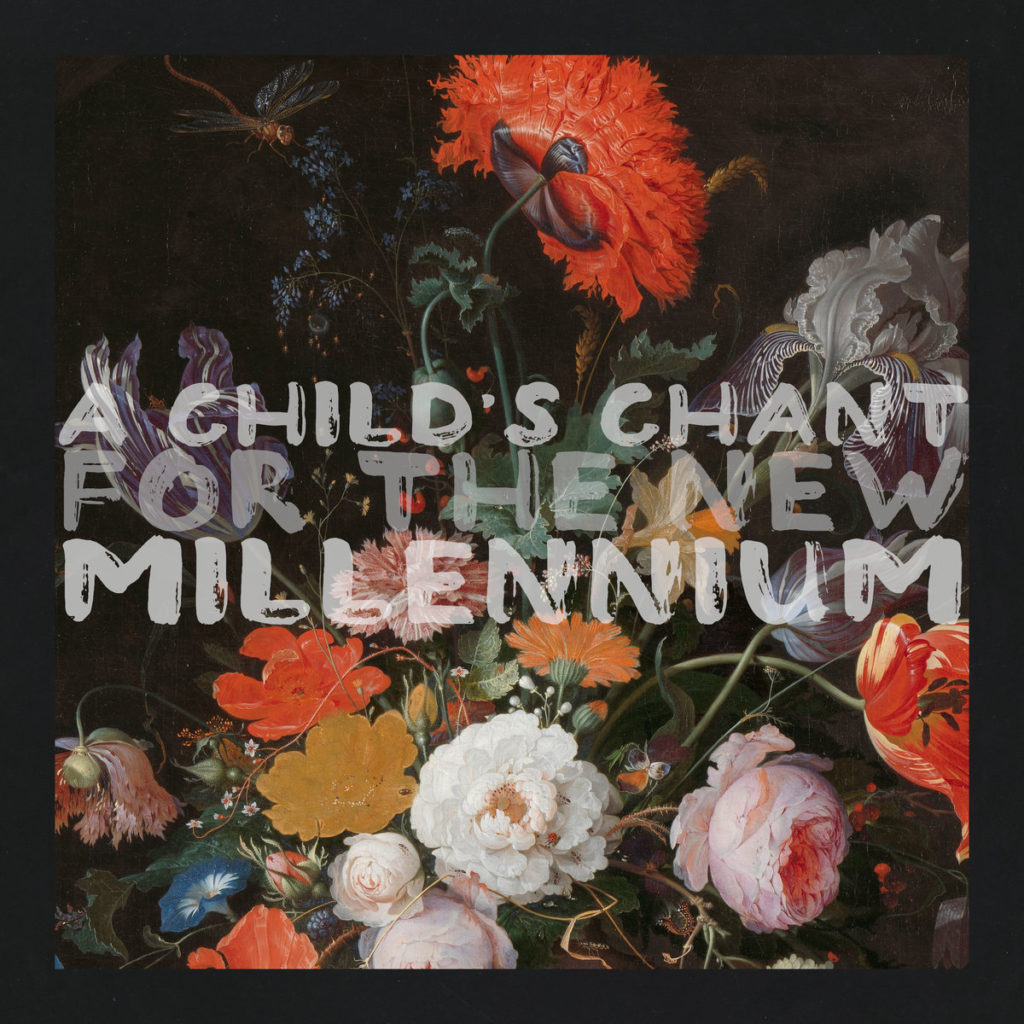
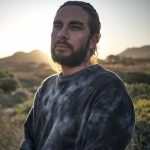

Wren Hinds discusses his record, A Child’s Chant For The New Millennium.
🎙️ Episode Summary
In this episode, Tim sits down with South African singer-songwriter Wren Hinds to discuss the release of his third full-length record, A Child’s Chant For The New Millennium.
Wren shares his incredible journey from a DIY artist releasing music on Bandcamp to signing with the prestigious UK label, Bella Union. The conversation dives deep into Wren’s “painting with sound” philosophy, influenced by his upbringing in a family of artists. Wren opens up about the austere conditions of recording in an empty cottage during the 2020 lockdown, collaborating with his uncle on poetry-turned-lyrics, and the emotional stories behind standout tracks like “The Pearl” and “River’s Song.”
Finally, Wren discusses the organic, unplugged experience of his Live at The Sun Temple concert film and gives us a teaser about his incoming fourth studio album.
🎧 Key Takeaways
- The Bella Union Story: How a message on Bandcamp regarding Wren’s side project (Faye & Wren) eventually led to Simon Raymonde signing Wren as a solo artist years later.
- Sonic Painting: Wren explains his approach to overdubbing and layering instruments, comparing it to how his mother used light and shade in landscape painting.
- Lockdown Creativity: How moving to an unfurnished cottage in Glencairn right before the 2020 apocalypse provided the sparse, moody backdrop for the album.
- Family Collaboration: The unique writing process where Wren takes original poems written by his uncle, Keith Erasmus, and sets them to music without altering the lyrics.
- The “Sun Temple” Sound: Insights into the purely acoustic, unamplified concert filmed in a wooden timber house, and why Wren chose to leave a “bum note” in the final edit.
⏱️ Timestamps
- [00:00] Intro and Wren’s musical upbringing.
- [01:29] The story behind the piano in Wren’s studio.
- [03:11] From Bandcamp to Bella Union: The signing story.
- [09:30] Recording A Child’s Chant For The New Millennium in an empty cottage during lockdown.
- [15:33] Breaking down the “Live at The Sun Temple” concert film.
- [20:07] Deep dive into A Child’s Chant For The New Millennium.
- [22:47] Adapting Keith Erasmus’s poetry into song.
- [25:30] Track-by-track: “Sign of Life,” “River’s Song,” and “Wren Bird.”
- [26:51] The sonic texture of “The Pearl.”
- [28:31] What to expect from the upcoming fourth Album.
🔗 Links
- Bandcamp: wrenhinds.bandcamp.com
- Instagram: @wrenhinds
- YouTube: @wrenhinds
🗨️ Memorable Quote
“For me, songwriting became painting with sound, using light, shade, and a sense of space to communicate powerful impressions and feelings.” — Wren Hinds
📃 Transcript
Tim Smal [host]: Hi everyone and welcome to the show today. My name is Tim Smal, and today I have a very special guest on the show, his name is Wren Hinds. Hailing from the southeast coast of KwaZulu-Natal, South Africa, Wren Hinds grew up with a musician for a father and a landscape painter for a mother. As a kid watching his dad recording and overdubbing inspired Wren to keep a tape recorder with him recording whatever and wherever he could. Later he would compare the layering of instruments and textures to the mediums and paints of his mother’s chosen art form. For Wren, songwriting became painting with sound, using light, shade, and a sense of space to communicate powerful impressions and feelings.
Wren brought this schooling to gorgeous fruition across his first three albums, initially available on Bandcamp, and now released on vinyl through Bella Union Private Pressings. Made with an eco-friendly manufacturing company, each record will be available as a special edition, limited to 200 copies, available through mail order and the Bella Union store. Either way, the trilogy plots the growth curve of a major talent released in readiness for the now Bella Union signed artist’s incoming fourth album. The first of three retroactive releases will be A Child’s Chant For The New Millennium.
Ladies and gentlemen, I welcome Wren Hinds.
Wren Hinds [guest]: Hey, Tim. It’s lovely to be with you and share in this conversation with you today.
Tim [01:29]: I love your background there, Wren – you’ve got a copy of your latest record in the background. Tell us more about the piano that is behind you.
Wren [01:37]: Yeah, man. So, yeah, this piano has been with me and in my life for many years now – it’s actually my partner’s grandfather’s piano. And we eventually got it around like seven years ago or so. It’s featured on a lot of my recordings. I don’t know if it’s anything special, but it’s got a beautiful tone. I took the panel out. I love the look of it, but most importantly, the sound like just… Yeah. Perfect place to place microphones. I’m not gonna go too into the piano, but I mean, yeah, it’s got a lot of history and it’s just a part of the day-to-day life in the studio, I think.
Tim [02:20]: Well, you’ve definitely set the standard quite high for backgrounds on the show, so…
Wren [02:26]: Yeah. I think it’s my theatrical inclination there, for sure.
Tim [02:34]: Wonderful. Well, it’s really great to have you on the show, and I’m really excited to speak with you about your latest record, A Child’s Chant For The New Millennium, which is your third full-length record. But I guess before we do that, I’m really excited to find out more about your signing to Bella Union, because as I understand it, you released your first three records on Bandcamp and then you’ve recently signed to Bella Union who are now putting out vinyl releases of your first three records. So maybe you can tell me more about how you signed to Bella Union and the subsequent release of your first three albums on vinyl.
Wren [03:11]: It’s quite an epic tale in a way. I mean, I started recording as a child with tape, a little portable tape recorder, as you mentioned at the beginning. So that got me into that world and watching my father record. So basically around 2012, I was still living in Durban at the time. And I got myself a little 24 track portable recorder – my brother actually brought it in, he ordered it from the States. So it came in, it was nothing special – a little Zoom recorder, just a standalone recorder that you don’t need to use a computer or DAW with at all. So I got stuck into this and I just started to really love the process of ultimately overdubbing in that more old-school approach, where you don’t have screens distracting you, you’re more in tune and present with the creative process of actually laying down parts and creating music. And just the overdubbing thing did it for me, you know, like laying down a guitar and vocals on one track, and then just starting to expand and expand on the story on each song.
So yeah, 2012 is where I just pretty much got into – mostly through experimentation – but recording my songs that I’d written and it was just in dribs and drabs, you know, like sometimes three or four songs a month. And then whenever I was inspired, another song would come around and eventually I just had this backlog of songs pretty much that I just shoved into the archives. And I had a habit of always doing that with my solo work: record all this music and all these songs, and then they would just go into the archives and it was mostly for me and family, you know, I didn’t release it officially then. Yeah, so going on through the years, then I worked with my brother as well – we performed as The Hinds Brothers. We were mostly active from 2009 to around 2014. So it was within that window where I was also just expressing myself in my own way with my own recordings.
So then eventually in 2015, my partner and I moved from Durban to Cape Town. We moved into a little apartment in Simonstown, a very small coastal Navy Village, like 50 km’s from Cape Town. I got stuck into recording a few albums for other people, So there were a few projects going on. Yeah, so then basically, amongst other projects and productions that I was getting into – still with the same little 4 track recorder – the one day we received a little message from Simon Raymonde. He messaged Faye & Wren through the Bandcamp messenger contact form and just basically said how much he loved volume one, it was the little EP that we had done together. It was amazing, in 2012, I found a copy of this uncut magazine compilation, and it was called the White Winter Hymnals. a compilation of Bella Union artists and curated by Bella Union. And I remember being blown away with this mixtape, this compilation. It just had the most amazing artists and sounds and songs featured on this mixtape. The Bella Union seed was planted back then in 2012, where I discovered some of their artists.
And then fast forward to 2018, receiving this message from Simon, from Bella Union, we were both like, “Wow, that’s quite amazing to hear from this man.” Yeah, then we were just in touch – we corresponded for a bit, and then obviously life carries on. We moved back to Durban in 2019, my partner and I for a year just to wrap up some family stuff. And the correspondence with Simon kind of just fizzled out and it was quiet and life went on, carried on, working, producing albums, you know. And then at the end of 2019, I started working on the first song for A Child’s Chant For The New Millennium, which was called Sign of Life. So that was a poem written by my uncle Keith Erasmus, who I work with quite frequently in the writing world. He’s a great lyricist, a great poet and we bring our strengths together quite often, and they often result in really beautiful arrangements and songs.
So yeah, at the end of 2019, the foundations for A Child’s Chant For The New Millennium came together. We decided to move back to Cape Town at the beginning of 2020. There’s challenges in the music industry in Durban, it’s kind of closed off from the rest of the country and the rest of the world. And Cape Town is definitely, I would say, more of the capital of show business and the entertainment world and the music scene. So, little did we know what was gonna happen in 2020? I mean, if we had known, we would’ve stuck it out in KwaZulu-Natal – it would’ve been a much better place to be facing the pending apocalypse. But we arrived in Cape Town in 2020, moved into a little cottage in Glencairn, also a village about 50 km’s out the city. I’ve never been inclined to live in cities coming from a small town, so I’ve always got to be outside, in the more kind of village life, you know?
Yeah, so 2020 came, everything unfolded. We moved beginning of March, so it was just a few weeks before everything was going to be locked down and all that. Basically we were in this cottage – we didn’t have furniture and that, so it was just like this kind of austere situation, you know, we were like in this very empty cottage. We had our bed on the floor in the bedroom and we had our basics. I had my recording stuff and equipment and that. And then yeah, I just got stuck into putting a few more songs down. It wasn’t as if the lockdown brought that upon me, because I’m always pretty actively recording anyway. When a song arises or if I finish a song, I want to get it recorded as soon as possible – it’s almost like a diary output for me. But anyway, then, the rest of A Child’s Chant For The New Millennium came about in that situation. So yeah, the first two tunes were recorded in KwaZulu-Natal and the rest were wrapped up in our cottage in Glencairn.
At that time, I was feeling very pretty heavy about the situation – I don’t think it’s normal for anyone to tell anybody to stay at home for an uncertain amount of time. So I found it like pretty stressful in that way, naturally. But I decided to release pretty much all my recordings then, I just put them out in Bandcamp. I was just like, “You know what? I’m just gonna put all of this stuff out.” So my first album, Tragedy Hill, second album, A Thousand Hearts, and A Child’s Chant For The New Millennium, pretty close together, were put out on Bandcamp. Yeah, and then not too long after that, it was probably but late 2020, I hear from Simon again. He drops me a message on Facebook and we start chatting again and corresponding. He heard about my father’s history and music as well, so I think he was interested in that as well. He also comes from a very musical family – his father is Ivor Raymonde, who was a very well known songwriter for many great artists. So he’s got a pure love of music – that’s the thing, he is not like a label guy, he’s not like in that way, he’s from a musical family, a musical dynasty, basically a musician who started a label and we just got on. So the correspondence picked up again with Simon, and I think he decided, “Okay, I’m ready to sign you now.”
So he approached me as a solo artist to sign a record deal with Bella Union, but also encompass the release of the back catalogue on limited edition vinyl. So that’s where we are at this point: the limited edition vinyl has been released – there’s 200 copies of each album, Tragedy Hill, A Thousand Hearts, and A Child’s Chant For The New Millennium. And the brand new album, which is the next album, the incoming Bella Union album, is finished now – I handed it in around September, so that’s very exciting. And yeah, it’s a very exciting journey to be on. I’ve never been in this situation, a South African independent artist. Probably all around the world, artists feel the same thing, but when you’re slogging it out for over 10 years, you reach a point where you’re thinking, like… I look at all the older South African musicians, the legends, and they’ve worked their asses off for so many years, like their whole lives. And I see the struggle still continuing, you know, the hustle of being a musician.
And so this definitely gave me a huge morale boost and made me feel like I’m on the right track. I’ve put in the groundwork, and I think with any sport or craft, when you put in that time when you do the groundwork – sometimes it’s, yeah, 10, 15 years, that’s your training ground, you’re in the training camps. And yeah, I feel in a very good space now. I feel like Bella Union is the perfect home for what I do and I feel like they’re good people and a small team, so I feel very at home and happy to be a part of this journey for sure.
Tim [13:49]: Awesome. Yeah, that’s an incredible story. And I can see how Bandcamp has actually played quite a pivotal role in the story, which is interesting. So I wanted to just touch on one or two points there quickly. So what I found quite interesting was that Simon from Bella Union actually initially picked up on your sound by listening to your Faye & Wren album, which if I understand correctly, is an album that you put out with your partner, Faye, correct?
Wren [14:19]: Yeah.
Tim [14:21]: Great. So it was interesting to me that that’s how he initially heard of you. And then fast forward a few years later to the Covid Pandemic, when you decided to put up your three solo records, that’s when Simon thought, “Okay, cool. The time is now to chat to about a potential signing.” So yeah, it’s just great to hear that Bandcamp has been so helpful to you in that sense. And I’ve listened to all three of your solo records: Tragedy Hill, A Thousand Hearts, and A Child’s Chant For The New Millennium, but I actually didn’t know that there was this other album entitled Faye & Wren, where you performed with your partner. So that’s another great album for the folks to listen to.
And yeah, I wanted to actually quickly just touch on the concert that you played recently this year at the The Sun Temple – it’s a full length concert that is available on YouTube for everyone to watch. And I encourage everyone to go and check it out, because it’s a really great concert where they can see what it’s like to watch you perform live. It was put on by a Concerts South Africa. So can you tell me a little bit more about that concert?
Wren [15:33]: Yeah. So, it was around the beginning of the year Concerts SA, they do these – I dunno how often they do them – but they basically have funding to put on original, filmed and streamed concerts. And they partnered with the Norwegian embassy who have always been very good to South Africa and the African continent, in the way of funding the creative sectors. So I just saw a call for applications for artists to put on a concert like this, and I thought it was the perfect opportunity with everything that had come to a head, you know? Yeah, so I was just excited about putting on a concert like this.
And the most important thing for me was getting it filmed really nicely as well, just because I’ve always like stayed away from the online streaming thing. Like during the lockdowns, everyone was wanting to just like, put on these streamed shows and they were mostly awful quality and it just took away from the actual experience of a live performance. I think watching anything, digitally through a screen – it’s never gonna be the same. But it was important that I could get as close to the real thing as possible. So it made it possible to have some funding to get some good cameras in there, to get some good sound. And I think that was the main goal and to put forward, like a nice, full show of basically what the Wren Hinds experience is, and that’s what I wanted to do.
In that show though, like, I think it was the first song Run, there was a moment where like, I hit this bum note, and I was just like, “Oh, that’s it, man. That’s like, set the tone for this whole thing.” I’m always trying to have the finished thing, like perfect, every time, but it’s never gonna be like that. And when we edited the show, we just decided to keep that song in there, even though there was that like weird slip of the fretboard and the string, we just kept it in there. Like, it’s still grates me, Like if I do see that, I’m just like, “Oh no man.” Yeah.
Tim [17:48]: It’s funny that you say that, because I’ve watched the concert maybe three times and I certainly didn’t pick up on the bum note at all.
Wren [17:55]: Oh, really, hey? That’s amazing. Well, I hope I didn’t draw attention to it now.
Tim [18:02]: Well, yeah, I think now I’ll be on the lookout for it. But, you know, that’s the way it goes. I think, when you’re a musician, you’re always gonna make a mistake here or there, and then you think about it and say, “Oh gosh, you know, silly me.” But the reality is, is for the audience, they don’t notice that and they just enjoy the concert. You know, I saw you perform once live and it’s many, many years ago when you were playing at the V & A Waterfront, so it’s been a number of years since I’ve seen you perform live.
So this concert on YouTube live at The Sun Temple, it’s such an incredible concert because, one can really get a sense of the Wren Hinds acoustic show, if you will. And I loved how you spoke in between the songs and told stories about the guitars and so forth. And what I really found amazing was that I only realized halfway through the concert when you mentioned that the sound was not amplified, in the sense that it was just two condenser microphones and your acoustic. I don’t think I even really noticed that at first, and so I was really amazed that this concert was purely acoustic, right?
Wren [19:07]: Yeah. So the room at The Sun Temple is, that’s a special thing – it’s a complete timber, basically a house, it was a house concert essentially. But a beautiful timber home, and I mean, you can’t go wrong with wood, it’s basically like an instrument in itself. Actually this new album was recorded at The Sun Temple. So The Sun Temple came into the picture quite a lot as well over the last two years or so. And from recording the album at The Sun Temple, I kind of felt like, with this Concerts SA show, we considered amplifying it, but because it’s such a small room, we thought actually, “You know what, it’s for streaming, and the people who are here, the in-house audience, are gonna enjoy the sonic purity of unplugged, totally unplugged.” So, yeah, we just set up two condenser microphones and that was it. It’s pretty much just a live recording.
Tim [20:07]: Yeah, awesome. Well, I’ve really been enjoying the latest record, A Child’s Chant For The New Millennium. There are seven tracks on this record, including a track called The Pearl, which you’ve recently released an official music video for, which is also on YouTube. So I’m just keen to know more about the album, now that I’ve listened to it a couple of times.
Wren [20:28]: Yeah. As I mentioned earlier, the start of the album, the foundations were started in Durban, I mean, on the South coast, before moving to Cape Town, before the lockdowns. So it started with Sign of Life, but there wasn’t really… I didn’t have any idea what the mood that was gonna come into the world, you know? So, I think that did shape the sound and the mood of the album, substantially, throughout the rest of the recording process. Being in that situation in our like unfurnished little cottage in Glencairn during those like intense first days of lockdown, that definitely played a big role in the mood. And most importantly, the lyrical content – mostly from Keith’s side. He’s always been a very inspiring and fascinating person to have conversation with. And I think you can hear where he comes from in his lyrical content. And a lot of the ways that he sees the world and thinks, I resonate with as well, you know, so we see eye to eye in a lot of ways.
Yeah, so the A Child’s Chant For The New Millennium album, the whole first half of the album, that’s basically three poems that are Keith’s – yeah, three, I think: A Child’s Chant For The New Millennium, Sign of Life, and The Pearl, those are all Keith Erasmus poems. So that opens up the album. And yeah, I think the title as well, A Child’s Chant For The New Millennium, it did definitely feel like a new millennium that we were entering into. So everything pretty much tied together. It was never meant to be a concept album or anything, but I think it turned into something like that. Yeah man, I just got stuck in and did what I love to do and that kept me busy and kept me distracted. And there were some amazing outcomes from it as well, so I think it’s huge lessons to always just push on with the thing that you love to do and things unfold, there’s just always this unfolding that is happening yeah, so yeah.
Tim [22:47]: So those first three tracks on the record, so, they’re based on original poems by your Uncle Keith, so I’m very interested to know when you collaborated with him on those three tracks, did you take his poems and his lyrics and essentially match them to the music entirely? Or did you include some of your own lyrics and work with the poem to mold it to your song? I’m just fascinated to find out more about that, because I assume the rest of the tracks on the album include lyrics that you’ve written yourself. But with these first three, I’m interested to know more if you don’t mind speaking about that. It’s just very interesting.
Wren [23:33]: No, not at all. No, I haven’t changed Keith’s lyrics at all in those songs, I’ve kept them exactly as is, I didn’t add anything to them. Fortunately he’s got a way of writing as well that naturally fits into like a musical framework. His writing style is very much… it’s got like these patterns that just fit in with timing and rhythm and all of that. So most of the time, he’ll bring a poem to me and say, he really thinks this is gonna be a great one to work on, what do you think? And then he’ll recite the poem and he’ll get it written down, he’ll write it down. And then the music usually comes afterwards. It’s not set like that, because there have been times with one of his poems that, you know, it’s like the other way around. But usually it’s the only way that I can make it really work is to see how his wording is and then match the musical landscape to that, you know.
Tim [24:29]: Interesting. And I’d love it if you could maybe highlight one or two of the tracks on the album that you really love and can talk some more about.
Wren [30:57]: Yeah, I think that’s the thing: songs all have their own story, they all come out at a certain time and place. They definitely have their own mood around whatever chapter of life you’re in. But for me, the first song that I actually recorded for the album was Sign of Life, and that pretty much set the tone, and it was just so heart wrenching and heavy and sparse, and it just had this mood about it, and it really resonated. It’s hard to go into stories behind each one, but I would say Sign of Life was one of my favorites, of Keith’s poems to work with.
River’s Song, is also very close to my heart, there’s quite a story around that. My partner and I went through quite a personal experience in that year of 2019 of a miscarriage. So that song really came out of that, processing all the feelings and emotions that you go through in those situations.
And one of my favorites in a more kind of light way was Wren Bird – it’s more like a state of dreaming story. Ever since childhood, I’ve experienced flying in dreams. So it’s going into that dream space and telling a story in the dream space, in a way. I really enjoyed the feel of Wren Bird – it’s very light, a lot of picking, acoustic instruments. The layers and layers of stringed instruments picking nicely… beautiful, swashy, slompy drum kit going on. Yeah, with a little bit of a sneaky electronic synth to appease the R&B and hip-hop crowd, but used subtly, you know? So yeah, I think everything’s got its own feel, and you always find something in the song that moves you in a different way to another.
Now later, I’m starting to love The Pearl more than I did at the beginning. The Pearl at the beginning, I was kind of unsure – I just felt like, is this just… Yeah, you just don’t know… Obviously I do love everything that I record – If I didn’t I wouldn’t put them on an album, but it’s really grown on me lately.
Tim [26:51]: I would say that The Pearl is certainly one of my favorites on the record. I love how it breaks into that – I’m not sure what term to use, but later on in the song, in the second half of the song, it kind of breaks into a new sonic terrain. But it definitely goes into a new place in the song, which you don’t necessarily expect earlier on. It’s almost like the song is, in a way, split into two parts, and I love how it builds up to that second part, which I just find to be very emotive and beautiful. I just love the sonic textures of the second part of that song. So yeah, it’s interesting to hear you mention that, because I watched the music video this morning for it, and it just reminded me of what a strong song it is on the album. And so to hear that you were somewhat hesitant to even include it, if you will, that’s super interesting to me.
Wren [27:45]: Yeah, I think it’s all quite a mystery actually, you know?
Tim [27:49]: Yeah, it’s a bit like the mystery of flying dreams, which I also have from time to time. So we sort of have that in common.
Wren [27:56]: Yeah, man, I haven’t had one of those for a while though, I dunno why. I’m really hoping for a return sometime soon.
Tim [28:05]: Yeah, they’re super fun to have, flying dreams. But you’ve certainly got a lot to be excited about at the moment: you’ve received vinyl copies of all three of your solo albums, which I’m sure must be an incredible experience to hold in your hand. And of course, the next full length album, your fourth record, which is complete – any idea on when that’s gonna come out on Bella Union?
Wren [28:31]: Yeah, so at the moment that’s a little bit on the downlow, we are still waiting to hear about a release date. It’s all totally new territory to me as well, but I’m really excited about it. Each album just has its own story and feel, and a lot of the time for this new album, which was like, officially, this is a Bella Union album that I’m recording, I think that can kind of play with your mind a little bit. Whereas in the past, you’re always pretty much just doing it for you, which is how I think you should always do it. And I had to remind myself of that a lot of times with this new album, like, just do this for you. I’ve got a huge backlog of song ideas that I’m always sifting through and just trying to get through. So at least these songs, a lot of them were actually written before, so I didn’t play on my mind too much in that way. I knew I’d written these songs, so yeah. But I’m very excited man, it’s a different album – I think it’s different to the last three.
Tim [29:34]: Incredible. Yeah, it’s really cool to be able to speak to you at the beginning of 2023. I’m sure you’re gonna have a fantastic year ahead of you, all that hard work over the years is now finally paying off. So yeah, Wren, it’s been great to have you on the show today, thanks so much for coming on. Any final words for the fans?
Wren [29:52]: Oh, man. Yeah, keep on keeping on, hey, do what you love, and yeah, I’m very thankful and appreciative of anyone who’s shown interest in the journey, or has been moved in some way by the music – that’s what keeps me going and keeps me wanting to share it with the world. I mean, I would do it for myself anyway, I feel like I’m in that space. But yeah, it’s even better when others wanna share it with you. And yeah, man, I’m very much looking forward to what the future holds. I think we all in for some good things.
Tim [30:28]: Yeah, it’s gonna be nice just to get back out and play some shows in your case, watch some shows in my case. But yeah, I’ll catch up with you soon at a live show – hopefully I can make it out to The Commons, but if not, I’ll see you soon. So thanks again for your time. All the best for 2023 and yeah, enjoy the rest of your day.
Wren [30:48]: Thanks so much, man. Good to chat, good to connect, and yeah, good to meet you man. We’ll chat soon.
Tim [30:55]: Cheers, Wren. Take care.
Wren [30:56]: Ciao.