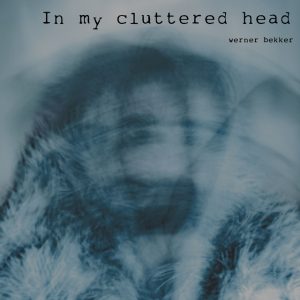


Werner Bekker discusses his record, In My Cluttered Head.
🎙️ Episode Summary
In this episode, Tim sits down with South African folk-pop artist Werner Bekker to discuss his 2021 EP, In My Cluttered Head. Werner shares what it was like growing up on the road with his musician father, his transition from small-town bars to opening for international acts like A-ha, and the “grimy” DIY home-studio process that defined his latest record. From the emotional complexity of songwriting to his recent move to the scenic landscapes of Cape Town, Werner offers a deep look into the mind of a modern storyteller.
🎧 Key Takeaways
- The Musical “Calling”: Werner discusses how being immersed in the South African music scene as a young child made a career in music feel like an inevitability rather than just a choice.
- The Business of Art: Why treating music like a “small business” and hiring professional PR (Genevieve Vieira) was the turning point that moved Werner from bars to major festival stages.
- DIY Creativity: Inspired by Damien Rice, Werner produced much of his latest EP at home, experimenting with everything from unique guitar tunings to using onions for music video effects.
- Emotional Juxtaposition: A fascinating look at how Werner wrote one of his happiest-sounding songs (It’s You) during one of the darkest periods of his life.
- Environment as Inspiration: How the shift from Johannesburg to Cape Town has opened up a new “nook and cranny” approach to discovering songs.
⏱️ Timestamps
- [0:00] Introduction to Werner Bekker and his musical influences.
- [0:39] The “Werner vs. Verna” debate: Navigating name pronunciation as an artist.
- [01:51] Growing up on tour: How his father’s career shift shaped his childhood.
- [04:56] Choosing the music path: From music school to the professional circuit.
- [07:21] Opening for A-ha: Landing a dream gig for a “listening” audience.
- [08:29] In My Cluttered Head: The story and meaning behind the EP title.
- [09:50] The Home Studio: Producing during lockdown and working with Brent Quinton.
- [11:57] Behind the Lens: Filming the “Thin Line” music video with his wife.
- [13:11] Deep Dive: “Daydreaming” and finding light in dark spaces.
- [14:58] The Paradox of Songwriting: Writing the “happy” vibe of “It’s You” during a divorce.
- [17:15] The Songwriting Process: Strange tunings and the John Butler philosophy.
- [20:34] Life in Cape Town: Nature, Swiss Shepherds, and beach walks.
🗨️ Memorable Quotes
“It doesn’t feel like you’re writing the songs; it feels like the songs are all out there, and then a song just chooses you to write it.” — Werner Bekker
“When I tune into a strange, different, new weird tuning, it’s like I’m a little kid and I’m playing around… the guitar sets the emotional tone.”
🔗 Links
- Instagram: @wernerbekkermusic
- YouTube: @wernerbekker
📃 Transcript
Tim Smal [host]: Hey everyone, and welcome to another episode of The Tim Smal Show, where I have epic conversations with awesome musicians. My guest on today’s show is Werner Bekker. He’s inspired by the likes of Damien Rice, Jack Johnson, Jason Mraz, and Ben Howard. Werner is known for his unique storytelling through acoustic driven folk pop, and he has recently released an amazing eight track EP called In My Cluttered Head. So Werner, welcome to the show.
Werner Bekker [guest]: Thanks so much for having me, Tim. It’s awesome to be here – well, in the sort of cyberspace.
Tim [0:39]: It’s great to be in cyberspace. So while we are together in cyberspace, the first thing I need to establish is: Am I pronouncing your name correctly? Because I assume that you are a first language Afrikaans speaker, so what is the best way to pronounce your name as an artist?
Werner [0:55]: Yeah, I suppose like Afrikaans, that’s always… well, it’s always a struggle for me, first of all, to be on stage. I think the choice to keep my name honest was just basically because my music is very honest and from my own sort of experiences, so I didn’t wanna hide behind a stage name. So in Afrikaans you’d pronounce it “Werner Bekker”. But in English, I’d sort of go between “Verna”, like the British people would say, and like “Becker” sounds good. I think it’s sort of like a “CK” sound, but it’s with two Ks, but it is a bit hard – Werner Bekker, I suppose.
Tim [01:31]: Great, so you’re open to all the possibilities of pronunciation for your artist’s name, which is great. And interestingly enough, you actually come from quite a musical family, right? So tell us more about your dad as a musician and growing up in a musical family and how you kind of got into the music industry from a young age. So
Werner [01:51]: So my dad was… he had his own little business when I was a kid, where he took cattle feed and horse feed and took it from the supplier to the buyer. It was a whole transport business. And then at some point during that whole process, he realized that his true passion was songwriting and performing. So at that point, I was about six or seven years old, so he quit his job as a… well, he sort of closed his or sold his business, and we as a family sort of started on this whole journey of traveling around the country with a singer songwriter.
And so I would say those are pretty much just after your forming years as a kid, and it obviously had a huge impact on me in the best way. I feel like I was able to see the country extensively at a very, very young age. And also see musicians and grow up with musicians as they were sort of making headway for themselves. Like for instance, I remember the first shows where Chris Chameleon opened for my dad, before Chris Chameleon was big, and where I saw Jan Blohm at Red Tomato and stuff like that. So growing up in that space where I was able to meet all these legends as a young kid was really incredible. And I feel like from there on it sort of sprouted into this beautiful love for music that is so deeply ingrained into me. I don’t think I would be able to do anything else and really be happy. So the choice for me to do music after school was sort of a no brainer.
Tim [03:34]: Yeah, so I guess at a young age, the music bug bit you really hard, right? Because after going on tour as a kid and as you say, really seeing the South African music industry and many awesome artists in these unique settings, you kind of can’t get away from that, right? It’s like the bug has bitten you and you just have to kind of do it, right?
Werner [03:56]: Yeah, it sort of becomes a calling. I don’t think it necessarily just is a calling. I think somewhere in your life music either starts calling you or it doesn’t. And I think for me that was the sort of period in which it happened, definitely.
Tim [04:10]: Great. So I guess fast forward a couple of years and you started to write your own songs and work on your performance and you’ve even taught some music. So I imagine you started building up a repertoire of songs and you were living in the northwest province of South Africa. So I imagine up there you were writing a lot of songs and networking and so forth, and ultimately you started recording and releasing some songs and shared the stage with many other South African artists like Jeremy Loops, Matthew Mole, Prime Circle, and Ard Matthews. So tell me more about how you kind of went from being this, let’s say, teenager who was kind of interested in music to becoming a young adult, if you will, with a lot of live experience.
Werner [04:56]: When I finished school… I did fairly well at school and my parents really – because my dad had been in the industry, and knew sort of that it was a very tough road to follow, he sort of pushed for me to first study something else, but I wouldn’t have any of that. So I sort of forced them into allowing me to go study music. And then for two or three years, I did a Bachelor of Music. And then I didn’t complete my course because at that point, loads of stuff happened in my life and I was just going through a bad time and I couldn’t see the reason why I needed to get a degree to become a singer songwriter, you know?
And so at this point I’d been writing extensively and sort of putting all my time and effort into writing songs because I think that’s where the passion really was for me. For me, the whole beauty behind being a musician is behind the songwriting and the lyricism. So that’s where I sort of invested all my energy into. And at that point I was still just doing like your open mic nights and like small little ball gigs and stuff. Then at one point when I first met my wife, she said to me, “If you’re gonna be a musician, you gotta take it more seriously.” And I think that’s something that you forget as a… it’s sort of like a small business, right? And you have to invest some time and effort into the marketing side of it.
And so at that point, I reached out to a lady called Genevieve Vieira, who was my PR and sort of general manager for a couple of years after that. The main thing that I asked her to help me with, is to get me onto festival lineups, because I knew that the small bars and little shows were… as awesome as they are and intermittent sort of vibey, I wanted to sort of reach a bigger audience. And I’d been to a couple of festivals and to me, as a music lover, that was sort of the epitome of what I wanted to achieve. And so from there, I started playing festivals and as more people started seeing me, I got these opportunities to open for these insanely cool acts around the country. So it’s been a good, good journey.
Tim [07:03]: Yeah. Well, it’s great to hear that you’re really passionate about performing live and that you love to tour and connect with your audience in a live setting. So I guess I would have to ask you this question, how did you manage to land the gig when you opened for the international band A-ha?
Werner [07:21]: Yeah, so that actually came from the label that I’m currently signed under a distribution deal with, a label called Tic Tic Bang, who are a subdivision of Sheer Publishing Group. So they were part of the Breakout Management Team that were helping with the whole A-ha tour in South Africa. And then they contacted me and asked if I wanted to open for them. So I had the first slot on the day and it was incredible because, the sort of audience that A-ha draws is more my kind of audience where people love to sit down and really listen to the music. So by the time I was on stage early in the morning, people were already sitting down and listening to the music, so it was just awesome. It’s definitely been a highlight in my career so far.
Tim [08:04]: Great. What an awesome story. And I guess your music really speaks for itself, right? You’re landing all these amazing opportunities because your music is really fantastic. And so let’s talk about your latest record, which is an eight track EP called In My Cluttered Head. It was released in 2021, so it’s still very new. Tell me more about this recording.
Werner [08:29]: So the whole process was very interesting. I think the title of the EP sort of explained what everyone went through in the last two years, where like in previous years, we were sort of able to get outta the house and go see stuff in order to just like declutter ourselves, right, mentally and physically and just think about everything that is bothering you or be able to have that sort of a release. Whereas in the last two years, me sitting at home was a struggle, I think like it was for almost everyone around the world, where you sort of realize that your head has gotten cluttered over the years and you’ve sort of put things into the back of your mind, into those little corners that you never revisited. And then when you’re silent and when you’re forced to stay in one place for so long with say one other person, those little things start resurfacing. And I think that’s what many of the songs on this whole EP deal with – little things that had been bothering me for years and years and years.
Tim [09:32]: Okay. Yeah, because obviously I’ve listened to the EP and I really enjoy it. So I’m definitely gonna chat to you about one or two of the tracks that I like. But I’m quite interested to know where you recorded it and if you worked with a producer or if you kind of hunkered down in your own studio and did it all yourself.
Werner [09:50]: That is sort of what the last two years have been. I have over the years always had a passion for, like you mentioned, Damien Rice is one of my big influences and Ben Howard. And both of them I know recorded many of their EPs and some of their albums in their own little home studios or in traveling studios that they have a little rig that they travel with them. And for instance, there’s a story about Damien Rice where he recorded the vocals to one of his tracks by putting the microphone inside a shoe because he liked the sound of that. And so that sort of experimental home recording has always been a thing for me.
And over the years I’ve sort of amassed a little bit of gear, and I never really used it because when you start working with producers before COVID and everything, it was really easy to just get in touch with someone – they’d say, “Oh, cool, I’ve got a little studio here,” and just go there and they’ve got everything set up. So I never really found time to extensively use it. And then in this period, because I couldn’t go to any studios and stuff, I was like, “Okay, cool, it’s time to use the stuff that I’ve gathered.” And then I sort of produced most of the EP myself.
And then we sent it through to a guy called Brent Quinton, who’s a mixing engineer. He’s worked with amazing acts, but if I can use someone that’s got a similar sound to me, he’s worked with Farryl Purkiss. So he sort of put some of the final production, like the final little tidbits on there and like some extra guitars and stuff and just made it shine. So I’m really proud to have sort of sat in my little, grimy little home studio and built these tracks up and having been able to work with Brent and a couple of other guys to produce this amazing – what I think is an amazing EP.
Tim [11:39]: Yeah, I would say that’s a great term to use to describe your EP, “Amazing”. I am certainly amazed that you have essentially produced this record on your own in your home studio. It’s got an incredible sound, and you’ve even pushed out one or two videos from the EP. You’ve got an official video for Thin Line, right, on YouTube.
Werner [11:57]: Yeah, so that one was actually… it’s pretty cool. My wife dabbles in photography and videography, but she’s not a pro at all – she does it as a hobby, you know, and she’s been doing it for two or so years. And then we had this idea to shoot it all on the floor because the artwork for the single was shot on that same wooden floor in our house. And then we wanted to look like I was crying. We weren’t so successful in the end, but we literally took onions and squeezed them in front of my face. And initially we wanted to shoot it in slow motion, but then did some research and then we did the opposite where we sped everything up, and so I sang the song really slowly in that recording and then we sped it all up so that you have all these little micro inflections on the face that you see. So it was… it’s so cool, having the time – and that’s one thing I will give lockdown is we had so much time to sort of experiment with stuff and be creative in our own little space.
Tim [12:55]: I wanted to speak briefly about the track Daydreaming, which is the second track on your EP. I really enjoyed this song, and I believe it’s about, kind of, being brave enough to expand your horizons, so I’m really interested to know more about this track specifically.
Werner [13:11]: Yeah, so some of the songs from the EP come from a time before lockdown, but this was one of those lockdown songs, and I think this was probably for me in the darkest space that I was in during lockdown. So I think this song, like I said earlier, those little corners in your mind where you put stuff away, this is sort of the amalgamation of loads of little things throughout my life that have bothered me – like in the chorus I wrote, “Catch the sun, keep it in your pocket.” That’s the idea is to… during that time, and during any sort of time where you feel like you’re close to giving up or you feel really lost, it’s important to remember those little memories that are good as well, because we tend to fixate on the negative sometimes. And so the song is very much about all those negative memories and trying to keep focus on the good stuff in life.
Tim [14:09]: Wow, very interesting. And I must say, I’m quite fascinated by your ability to move between emotions in essentially a fairly short space of time, right? Because on this EP, every song has got a very different feel. I mean, you start out with Thin Line, which is kind of this very atmospheric track that’s navigating the delicate balance of love and hate in relationships. And then you’re moving into Daydreaming, which as you mentioned, is kind of dealing with all these thoughts in your mind, so also kind of relatively somber. But then you’ve got a track like It’s You, where you can kind of feel that sort of Jason Mraz influence and this kind of very happy, uplifting vibe. So maybe tell me a little bit more about that track as well, because I really enjoy it, but also just kind of how you’re able to navigate between these various emotions on the EP.
Werner [14:58]: Cool. Yeah, I think for me, I’m still very much finding myself as a songwriter, and I feel like I’m not sure if I’ll ever find exactly what my sound is. So if I put it in terms of like other musicians, I see myself as a sort of, along the vein of someone like Beck, where every album is different and every song can be like a complete genre shift. And it’s difficult to build up an audience like that, but it’s also a lot of fun. So It’s You comes from a space… this is probably the oldest track on the EP, it comes from about five or six years ago when actually my parents were going through a divorce and I think it’s so strange that this song is such a happy-go-lucky vibe, because I was in a… yeah, it was a very dark time in my life.
I think this was my own way of trying to cheer myself up and trying to sort of see the bright side in stuff as well, and sort of juxtaposing what was happening in my life with this extremely happy-go-lucky, chilled song, I think really got me through that time. And it’s strange, I often find that songwriters in general try and – well not try and – but fixate on the depressive stuff in life. It’s easier to write about sad stuff or stuff that makes you angry or whatever. But it’s so strange to see how a song can come from that emotion and sound like that, you know?
Tim [16:31]: Yeah, I mean that is really interesting. I guess what you were probably trying to do is channel those emotions, which were difficult for you at the time. It was a difficult time, but I guess you were trying to channel those emotions into a more positive space, right To kind of have like a more positive outcome, if you will. So that’s super interesting, ’cause you, you wouldn’t necessarily think like that when you listen to the track, right? When you listen to it, it’s kind of like a very upbeat, happy song. But yeah, I’m glad that you gave me some more insight into that track. And I wanted to ask you, in terms of the songs you’re writing now, as you move forward to another release in the future, tell me more about the songwriting process right now and what kind of songs you’re coming up with or style that you focused on.
Werner [17:15]: So I’ve also been writing by myself these last couple of months since making the move to Cape Town from Johannesburg. It’s been very inspiring because everything here is so very beautiful. I find myself and my wife are going out a lot more just to see or to be in nature, and I find that really inspiring. So at the moment, I feel like I’m not thinking too much about songwriting. The songs are just coming to me, which makes it difficult because sometimes they aren’t in this specific vein of sort of emotion that I want the next release to be in.
And it’s always – I think for every songwriter – it’s almost a… it’s a fine line between writing stuff that people want to listen to, for instance on radio, and also stuff that people can relate to or that people want to fall in love with, and I think they don’t always go together. You know, sometimes a radio song can be very generic or needs to sound, to a certain extent, it needs to sound good to everyone. So in that process, sometimes you lose a fair amount of emotion. And so it’s sort of like, it’s always for me, a tricky balance between getting those songs out that have that sort of all encompassing vibe to them and then having the more deep, dark artistic songs. So my songwriting process is generally just me sitting down with a guitar and trying to just play something, anything really. And that’s why I write in different tunings as well, is because, when I find when I write in standard tuning on the guitar, I’m sort of forced to think in this little box of like chord shapes and stuff. Whereas if I tune in to a strange, different, new weird tuning, it’s like I’m a little kid and I’m playing around and finding what I think sounds good.
And then from there, generally, because the guitar sets that sort of emotional tone and the sort of sound, the lyrics start flowing – I sort of start humming along to it, and then before you know it, I’ve got a verse and a chorus, and then it pretty much solves itself. It feels like – I think John Butler once said this as well, “It doesn’t feel like you’re writing the songs, it feels like the songs are all out there, and then a song just chooses you to write it, to put it down into words and music.”
Tim [19:36]: Very interesting. And I like how you mentioned that being in Cape Town has been so inspiring for you, right? Because if the songs are all out there and they’re just waiting for you to discover them, it’s almost like the songs are hanging around in Cape Town or the Western Cape, right? Because the more you go out and explore and enjoy life, you’re going to find more of these songs. I mean, I’ve been following you on Instagram and seeing some of your adventures, going out to farms and whatnot. So I guess it’s an exciting time for you to be in a new location – you’re right, Cape Town is beautiful, there’s lots to do. So would you say that the songs are hiding out in all the different nooks and crannies in the Western Cape and you’re going on adventures to find them?
Werner [20:16]: Totally, that’s such a cool way of looking at it. At times during the lockdown, it’s been hard for creatives in general, I think, to sort of keep the juices flowing, right? But yeah, Cape Town definitely is hiding those little inspirations in all these nooks and crannies. Definitely.
Tim [20:34]: Great. Well, yeah, I’m so happy to hear that there’s lots on the horizon for you. I guess before we wrap things up, I’m just taking a look at your Instagram account because I can always kind of get a good idea of life in the world of Werner Bekker. One question I wanted to ask you quickly was that it looks as if you are a big fan of cats, is that correct?
Werner [20:54]: Yeah, dogs and cats. My wife and I have two Swiss Shepherds and two very furry cats.
Tim [21:02]: Wow, so they must keep you really busy there at home, right?
Werner [21:05]: Yeah, because we have a fairly small house, so luckily we live close to a dog friendly beach, so we walk them every single day, every morning we go for a walk on the beach.
Tim [21:16]: Incredible. Well, we’re very happy that you have relocated to Cape Town. We’re fortunate to have you playing the circuit here in the Western Cape and I’ve really enjoyed having you on my show today and getting to know you a bit better. So guys, if you are listening to the show and you’re enjoying our conversation, please do go and check out Werner’s EP In My Cluttered Head – of course, it’s on all the streaming platforms. It’s a really fantastic EP, it’ll make you think about life and do some reflection, but it’ll also put you in a good mood for driving down to the beach. So I love how he’s moving between all these different emotions through his music, and I’m certainly looking forward to releases in the future. So yeah, Werner, thanks for joining me today. Do you have any final words for the fans?
Werner [21:59]: Just thank you so much to everyone who is listening to my music and thank you Tim for having me and hope you all have a beautiful week ahead.