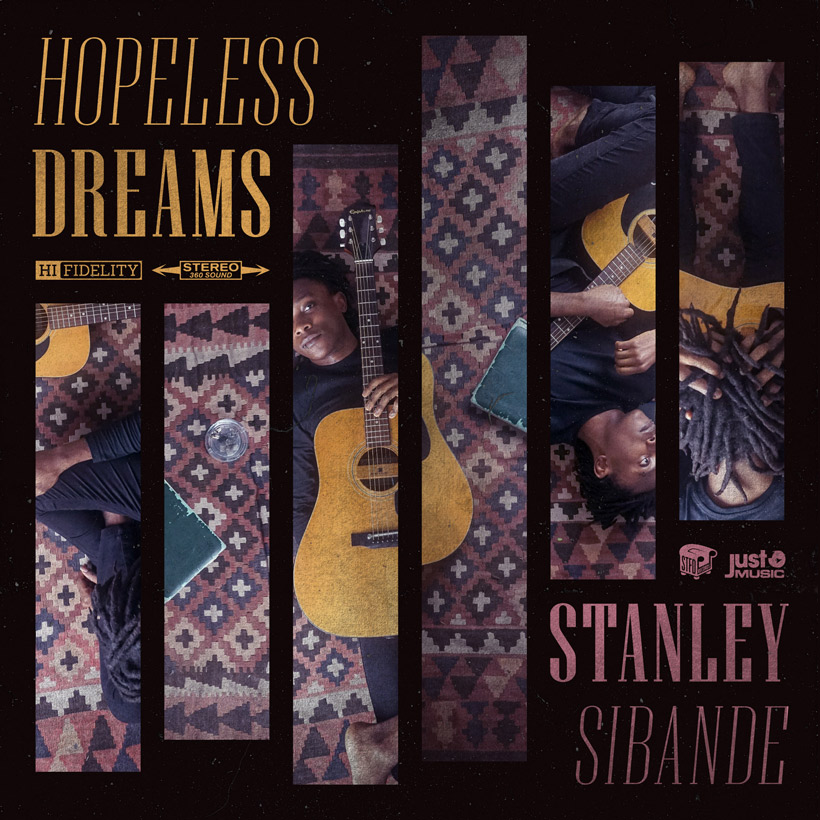


Stanley Sibande discusses his record, Hopeless Dreams.
🎙️ Episode Summary
In this episode, Tim sits down with multi-instrumentalist Stanley Sibande to discuss the release of his debut record, Hopeless Dreams. They explore Stanley’s transition from the Zambian music scene to the creative hub of Cape Town, his “whirlwind” recording experience with producer Jon Shaban, and the deeply personal stories behind his standout tracks. Whether discussing the importance of a “Sharpie” for autographs or the necessity of a supportive local community, this episode is a testament to the grit and heart behind independent music.
🎧 Key Takeaways
- The “Everything” Artist: When starting out, a musician must be their own publicist, manager, and booking agent. Stanley’s work ethic—sending 30 emails a day—was the catalyst for his success in South Africa.
- Creative Environments Matter: Stanley relocated to Cape Town because the Zambian musical landscape wasn’t conducive to his acoustic-based, alternative rock style.
- Therapeutic Songwriting: Music serves as a vital emotional outlet. Songs like “Mother” allow artists to process complex family dynamics and mental health when traditional therapy isn’t accessible.
- The Power of Community: The South African music scene thrives on “people knowing people.” Success is often a mix of individual talent and a supportive network of fellow creatives.
⏱️ Timestamps
- [0:00] – Introduction to Stanley Sibande and his “melancholic indie” style.
- [0:49] – The Origin Story: Meeting at Nobel Square and a shared love for My Chemical Romance.
- [3:17] – Musical Roots: From boy bands with his sister to discovering “Hard Rock” on DSTV.
- [4:44] – Moving from Zambia: Why Stanley chose Cape Town over the United States.
- [7:13] – Building a Team: How living with Kevin Ramage led to a signing with Sit The Folk Down.
- [10:08] – In the Studio: Tracking 11 songs at high speed with producer Jon Shaban.
- [11:09] – Spotlight on “Mother”: Processing dysfunctional family relationships through song.
- [12:36] – Spotlight on “Wilaba Uku Pema”: Writing in Bemba and the importance of “remembering to breathe.”
- [14:45] – The Launch Party: Turning fans away at a packed Armchair Theater.
- [16:46] – The Pro-Tip: Why every fan and artist needs a “Sharpie” (or Khoki).
- [18:26] – Promotion & YouTube: Re-imagining songs as a one-man band.
- [19:47] – Influences & Future: The impact of Matthew Mole and the Cape Town music community.
- [26:51] – Final Words: Where to support the record.
🔗 Links
- Instagram: @stanley_sibande_music
- YouTube: @stanleysibandemusic
📃 Transcript
Tim Smal [host]: Hey everyone. Welcome to another episode of the Tim Smal Show. I am, of course, your host, Tim Smal, and here on the show I have awesome conversations with epic musicians – or should I say epic conversations with awesome musicians, either way. And today my guest on the show is Stanley Sibande, and he’s a Zambian born, multi-instrumentalist singer songwriter. His composition style is an amalgamation of the melancholic soundscapes of indie and rock, coupled with the simplistic, yet catchy melodic compositions of modern alternative pop, serving as a backdrop for a narrative lyricism style that usually touches on the darker elements of the human condition and his journey through that landscape. Stanley, welcome to the show.
Stanley Sibande [guest]: Thank you very much for having me on, Tim. I absolutely appreciate it.
Tim [0:49]: You’re welcome. Now, Stanley, I wanted to let the listeners know that the first time I met you, I was walking through the V&A Waterfront in Cape Town and I heard some beautiful music playing in the background and I thought to myself, “Wow, where is this music coming from?” And I had to walk around the corner and eventually I spotted you playing some guitar and singing there in the… where exactly was it – outside the Food Market, if I’m not mistaken.
Stanley [01:14]: Yeah, it’s outside the Food Market, just right next to the four statues of, I guess, the only South Africans who’ve ever won a Nobel Prize. I think it’s called Nobel Square.
Tim [01:25]: That’s right, that’s the name, Nobel Square. And I was lucky enough to catch just a handful of songs before you wrapped up your set. The weather was great, it was a beautiful sunny day, and I sat there enjoying your music. And I hadn’t heard of you before, so it was a very exciting moment for me. And while I was watching you play your songs, I noticed that you were wearing a Chemical Romance T-shirt, which of course is a band from the states – or should I say My Chemical Romance. And yeah, I came up to you afterwards and introduced myself because, of course, I loved your music.
But I also wanted to tell you the story of how I had seen My Chemical Romance live in the States when I went to a Warped Tour once. And I remember arriving at the Warped Tour in Scranton in Pennsylvania in the year 2005, and the very first band that was performing as I walked into the Vans Warped Tour with my friend was My Chemical Romance. And we sort of looked up and we were like, “Whoa, look at this.” And we kind of have never forgotten that moment, right? Because it’s quite a bold, exciting moment to experience as you enter your very first Vans Warped Tour.
Stanley [02:34]: Yeah, it’s absolutely true. I actually still think about that story to this day because it stuck with me. I was very surprised to hear that you are the guy that I met because when the guys at my label told me about the podcast, they were like, “Oh yeah, there’s this guy, Tim, he just reached out to us” and I was like, “Cool.” And then you told me that a couple of minutes ago, and I was like, “Okay, small world.” But yeah, that’s an epic story, dude.
Tim [02:57]: Well, let’s talk a little bit about your background, because you were born in Zambia and you’re currently based in South Africa. And you’re very into alternative rock music, so you enjoy bands like Linkin Park, My Chemical Romance, etc. So tell us more about your journey and your musical influences.
Stanley [03:17]: So my journey with music, as far as me singing and all that, kind of started much, much earlier. My sister used to play a lot of boy band music way, way back, like in the early 2000’s and I spent a lot of time with her. So, you know, with time and her playing all of this music, I would stand with her in the living room and would scream at the top of our lungs together, which was really fun. But as time went by, and as I got to the age where I could choose the type of music that I listened to, I started veering more towards the rock and metal side. I very distinctly remember when I was – I think I was like 9 or 10 – we had just gotten DSTV at our place, and there were these radio channels on DSTV. And there was one that was just titled “Hard Rock”, and I would just flip to that channel and lose my mind jumping around in the living room. And that’s sort of where it started with my love for alternative music, and it just never stopped.
Tim [04:17]: Great. And so you’ve recently released, your debut album called Hopeless Dreams, which was produced by Jon Shaban at Sit The Folk Down studio, and of course that is in Cape Town. So your journey from Zambia to South Africa, that must have been quite an interesting experience for you. Can you tell us more about why you have relocated and you know, how things are going for you in Cape Town at the moment?
Stanley [04:44]: Yeah, so I decided to leave Zambia in 2018. I think at that point it had been maybe a year since I started doing music and doing shows live. And the landscape in Zambia just isn’t great for the type of music that I was doing, because at the time, and still to this day, my own music is very acoustic guitar based. It’s on that side of things, and it just wasn’t working very well in Zambia. So I decided… I made the realization that I was either gonna have to change the type of music that I did to adapt to the environment that I was in, or relocate to a different environment that was more conducive for me to thrive and grow as an artist who was trying to do that type of music.
So I initially decided to move to the United States and I started raising money and I got to a point where I had enough money to be able to move over there. And then I started doing some research about it, and what I found out was it’s very cutthroat in the United States. And all of the friends that I chatted to who lived there said, “Hey man, it’s cool that you wanna move here and you would do fine, but we advised that you try something that’s a little bit more familiar.” And at the time, I had a a lot of mates, like on Facebook and on Instagram who lived in South Africa. So I just started reaching out to my friends and asking them about venues that I could try to get some gigs and Googling venues and sending like, 20-30 emails a day. And I finally got to the point where I had organized a couple of gigs and I said to myself, “Okay, Stanley, on the 21st of February, you have to be in Cape Town.” And so I left Zambia on the 18th of February, I think. I took a bus down to Joburg, stayed with a friend of mine for a couple of days there, and then caught a flight to Cape Town and I’ve been here ever since.
Tim [06:33]: Fantastic. Well, it’s great to hear that you’ve got such a great work ethic, and that you’re essentially putting yourself out there and in many ways managing yourself, right? Booking gigs and booking plane flights and whatnot. So congratulations on that great work ethic and I’m sure that it’s paid off, right? Because since you’ve relocated to Cape Town, you’ve made some great connections like Jon Shaban and Kevin Ramage at Sit the Folk Down. So tell us more about how the transition from Zambia to South Africa has led to this great opportunity to essentially sign with Sit The Folk Down and Just Music to release this album of yours, Hopeless Dreams.
Stanley [07:13]: Okay, cool. Touching on what you were saying about like me, essentially managing myself and doing all of that stuff: when you’re a musician that’s starting out, and I’m sure you’ll agree with this ’cause I’m sure you’ve been around a lot of musicians and I think you’re a musician yourself as well – when you’re starting out, and you’re like a budding artist, you have to be pretty much everything. You have to be a publicist, a manager, a booking agent, all of that. And when I came down here, Sit The Folk Down was essentially very invested in trying to help artists who sort of had that mindset. And they’ve also been of that mindset where there’s a lot of things that they do, and wherever it is that they can do it themselves, they do it themselves. And by some… I don’t know how, but they seem to be very good at doing a lot of things.
So that sort of work ethic and mindset sort of made me and Sit The Folk Down, gravitate towards each other. It was just very easy for me to work with the guys, because they’re very transparent and it’s just about the work – if you can do the work, they’ll give you the work. And if it’s good, they’ll call you again, and that’s what happened. When I came down here, there was a series of gigs that they were doing called The Unknown Legends, and I did a couple of them and then I went off on tour for like a couple of weeks. And when I came back, I asked them if they wanted somebody to do sound for them, and they were like, “Yeah, sure man.” And so that’s how I sort of started working with them. And it just kept on going that way and that way.
And I actually lived… I rented a place from Kevin where he used to live in 2020. They had like an extra granny flight and I rented it from him. And we lived together through all of lockdown. And so when they launched the label, I was one of the people they basically approached and said, “Hey man, would you like to be signed?” And I was like, “Yeah, absolutely – I would love that.” And yeah, a year on the album is out and it’s great. And I got the honor and pleasure of working with Jon, which was very easy and went by very fast. But yeah, it’s been a fun journey.
Tim [09:14]: Wow, that’s a really incredible story and I’m so glad to hear that Kevin helped you out with accommodation. I’m sure you probably wrote some good songs during that time, hanging out with him as an inspiration. But, yeah, Jon Shaban – I’m not quite sure actually how to pronounce his surname – I suppose some might say Shaban and some might say Shaban. How do you pronounce it?
Stanley [09:35]: I pronounce it Shaban. In fact, I rarely pronounce it ’cause I try not to say it ’cause I don’t know how to pronounce it either.
Tim [09:43]: Well, tell us what it was like working with Jon Shaban at Sit The Folk dance studio, because of course Jon plays in his own band called The Shabs and I remember seeing him live many years ago in one of his very first musical projects called Forgotten Superhero. So we are really going back now, quite far in time. So tell me more about what it was like working with him as a producer, I guess, on your debut album.
Stanley [10:08]: So, working with Jon, it was very interesting, ’cause the moment that we hit the studio – I dunno if this is just what his approach is with working with artists or if it’s because we were in a bit of a time crunch – but the moment we hit the studio, we just churned out song after song after song. We did one song, tracked the guitars, and he was like, “Okay, cool. 10 minute break. We’re doing the next one.” The first day that we were in studio working on this album, we recorded 3 out of the 11 songs that are on the album completely, which was very interesting. So he’s very, very, very driven, and that’s a great thing because if I was working with a different producer, I don’t know if that would’ve been the case. And I’m definitely not the type of person who will record 3 songs in a day and have them sound good. So, yeah, he’s a great producer. He’s very good at keeping you motivated and keeping you on task, which is very important to do when you’re trying to record an album.
Tim [11:09]: Awesome. And you have 12 tracks on this album, so I wanted to kind of highlight one or two of the tracks. So the first one I wanted to speak about was track number five, which is called Mother. And the reason for this is because I just really enjoyed this track. I just felt like it was a really strong song with a great melody and some interesting guitar work. And it just brings the drums in quite nicely as well. In terms of the song as a whole, it really stands out to me as a very powerful and enjoyable song. When I’m driving in my car on my way to work, it’s always a highlight for me. So perhaps you can just tell me a little bit more about this track and what it’s about and how it came together.
Stanley [11:51]: Okay. Well, Mother is… it kind of touches on the slightly dysfunctional relationship that I have with some people in my family, one of them being my mother. And for me, music has always been something that’s therapeutic, something that I can pour my heart out in. As I’m sure you know, it’s very difficult for musicians to be in spaces that aren’t good for them mentally. And also all of us are broke, so we can’t really afford therapy. So writing songs helps and that’s sort of where the song came from. Because the last three years has been quite rocky when it comes to my relationship with my mother. And so I decided to Taylor Swift it and write a song about it.
Tim [12:36]: Okay, interesting. And the next track I wanted to speak about was track number 12, because this is, I believe, one of your favorite tracks on the album – if not your favorite track. And it’s written in the Bemba language, which I believe you grew up speaking in Zambia. So I’m gonna try and pronounce it myself and you can let me know if I’m on track. But the title of the track is Wilaba Uku Pema.
Stanley [13:00]: Close, very close – very, very close.
Tim [13:04]: Okay, well, you pronounce it for us and tell us more about it.
Stanley [13:08]: Okay. So it’s called Wilaba Uku Pema, so yeah, you were like 90% there dude, which is really cool, ’cause very few people can pronounce it. Anyway, one of the reasons that I really, really love this song is because, obviously I grew up speaking Bemba and I started writing songs around 2012/2013, and for years and years and years I’ve been trying to write a song in Bemba and I just was never able to do it ever. And it’s something that kind of bothered me a lot, ’cause, I felt like it was something that I was supposed to be able to do. But at some point I gave up and I just put it in the back of my head.
But last year in the throws of lockdown, I was sitting in my room, as I usually would, noodling around with guitar, and for me, my songwriting process is very… it’s sort of structured. So I start with melody and then I attach lyrics to it. So I came up with a melody that I thought was interesting, and I started messing around with a few phrases. And then two hours flew by and by the time I was finished I was like, “I just wrote a song in Bemba and it doesn’t suck.” So I’m very, very proud of it. And also, it sort of talks about, when things get really hard and you’re trying to ground yourself – well, you need to ground yourself when things are really hard, because if you don’t have a level head in difficulty and adversity, it’s highly unlikely that you’re going to survive that difficulty and adversity. And that’s sort of what it talks about, because your means “don’t forget to breathe.” And yeah, that’s the basic gist of the song.
Tim [14:45]: Wonderful. And I believe you had a really fantastic launch for your album at The Armchair Theater in Observatory, which is a legendary venue in Cape Town, it’s been going for many, many years. And on your Instagram, the listeners can go and have a look at some pictures from the launch where you essentially set the stage up as if it was your bedroom, which is, I believe, where you wrote most of your songs. So tell us more about what the launch of the record was like at The Armchair Theater.
Stanley [15:14]: Yeah. The launch was really, really awesome, because the way we set it up is, we just went to The Armchair, we approached them with this concept and they were like, “Cool guys. You can come in and do it.” And we had this whole idea, and thank God for Kevin existing because, if he wasn’t there to help me put everything together, it wouldn’t have been anywhere close to what it was. So, yeah, if you’re listening to this, Kevin, thank you, I love you. But yeah, it was really, really cool, because when the launch started, the place was basically packed. I had invited a couple of people and they actually had to be turned away, which I never thought was ever going to be a thing with any show that I did. So yeah, it was a very, very awesome experience – kind of trippy, but awesome still. I have to admit, there’s a part of me that’s kind of still processing it. But yeah, it was absolutely amazing – my mind was blown. I came back home that night, had a bit of a cry, ’cause it’s good to have a bit of a cry when you achieve things. And yeah.
Tim [16:12]: And I just have to ask this question, but did you sign any of your albums? Did you get to give some autographs?
Stanley [16:19]: Yeah, actually, as a matter of fact, I did. The biggest problem with that is that I didn’t have a khoki, like a good one. So all of my signatures were absolute sh*t. But I did get to sign a few albums, which was pretty cool. Yeah, it’s something you think to yourself when you’re going to bed at night, but it’s like when you’re actually doing, it’s like, “Wow, okay. Am I famous now?”
Tim [16:46]: Yeah, I guess you pick up these little things on the road, right? So in South Africa we refer to those pens as khokis. But when I was in the States, I noticed that they call them Sharpies, right? That’s the name of the pen in the states. So when you go to a show and you want someone to sign a record, you’re like, “Hey man, can you sign this record?” And they’re like, “Sure, but – where’s a Sharpie?”
Stanley [17:09]: Yeah, I don’t have a Sharpie man!
Tim [17:13]: Yeah. So the Sharpie is gold because, let’s say you’re at a My Chemical Romance gig and you want the guys to sign your record, and they can’t find a sharpie. It’s like, “No!”.
Stanley [17:24]: Yep. You’re not getting that autograph from Gerard Way.
Tim [17:29]: Exactly. So I think, if I’m not mistaken, I actually started planning ahead and I’d bring my own Sharpie to shows, right? So that they didn’t have to struggle to find one. So yeah, you can definitely invest in a bag of Sharpies or as we say in Africa – khokis.
Stanley [17:46]: Nice. Pro tip to anyone that’s listening and wants to have their album signed by an artist: Bring your own Sharpie!
Tim [17:56]: Exactly, exactly. I’m glad to hear that you had such an epic time at The Armchair, and it just sounds like things are going really well for you, so I’m sure you’re considering doing another album and writing some more songs. But I guess for now you’re still gonna be promoting Hopeless Dreams, it’s still early days for this record. So tell us more about what you’re doing from a promotional point of view. I know that you’re very active on YouTube, of course, doing covers and whatnot. But recently, you’ve been experimenting with some really interesting videos, right?
Stanley [18:26]: Mm, yes I have. So what I’ve been trying to do is, take the promotional aspect of it on the social media side and try to make as much content with the music that’s on the album as possible. And so the concept that you mentioned that I’ve been exploring is, basically doing a couple of videos where I’m playing every instrument and re-imagining the songs, and I’m actually gonna be putting out a variation of Wilaba Uku Pema on Tuesday, which is tomorrow, as of recording this video. It’s fun to explore those concepts. I mean, that’s pretty much the only thing I can do right now, because I kind of don’t want to work with a band and I still want to see these songs sort of fleshed out in different ways. So that’s sort of the direction that I’m taking it. But yeah, that’s basically where I am with promotional content. And I’m also… I’ve been messing around with some concepts for official music videos for some of the songs on the album. I can’t say too much about that – but yeah, that’s basically where we are right now as far as promotion goes.
Tim [19:27]: I wanted to ask you, if you’re looking forward to perhaps sharing the stage with any artists in South Africa that you’re a big fan of, or artists that you’d like to tour with. Tell me more about what you’re hoping to do in the future, in terms of collaboration or touring or recording or performing with other South African artists in this case.
Stanley [19:47]: Well, with regards to performing with South African artists, there’s one that I would really like to share the stage with, and that’s Matthew Mole, because Matthew Mole was sort of my introduction into the music scene in South Africa that I’m currently in, which is acoustic based stuff. I remember back in 2013, I was just trying to consume as much music as I possibly could, and so I was watching all of the music channels and TV and all of that. And there was this – I don’t know what program it was, but it was on MTV – and I clicked on it and there was this guy, he was doing this acoustic session and he was playing, and this song called Take Yours and I’ll Take Mine. And I was like, who is this guy?
And then I saw that and I really, really loved it. And I immediately learned how to play that song and cover it, and I’ve been playing it ever since, like 2013. And then I came down here, I had absolutely no idea how huge Matthew Mole was here. And I came down here and you know, I met people and they were asking me what type of music I was into. And I was going on and on about how I really loved this guy called Matthew Mole, he was a small artist and everybody kept on giving me weird looks. They were like, “What are you talking about?” So, yeah, since then I’ve always wanted to share the stage with Matthew Mole, because as far as South African music goes, he’s a huge influence.
Tim [21:04]: Oh, fantastic, I’m glad to hear that. So, I guess I’ll have to tell you an interesting story that I’m sure you will enjoy. But ultimately what happened was Matthew, he put out this EP in 2011 called You Did Well Kid, which was his first official EP. So I dunno if you’ve actually heard it before – if you haven’t, you should try and track it down. Back in the day at that time, I was very passionate about promoting artists on this website called Last.fm – I think it’s still around, but it’s an amazing website, like a database of artists. So I’d really make a lot of effort to take all the local artists and put them on there. So I remember actually taking Matthew’s EP You Did Well Kid and putting it on there. And yeah, I was just really excited to hear his music.
And then of course, he had a great breakthrough opportunity when he won the Get Out Of The Garage competition from Converse in 2012. And so it was really exciting to see him, sort of,skyrocket to success, if you will, through that competition. You know, obviously from my point of view, it’s always really exciting to see someone go from essentially relative obscurity to success. And of course, he’s very talented and he’s worked very hard and I really do enjoy his music. But, yeah, I guess I just remember that very first independent EP of his and sort of promoting it on the scene and then seeing his growth from there. So, I dunno, I thought you would enjoy that story.
Stanley [22:29]: Yeah, that’s a really cool story, dude. I mean like coming down to Cape Town, looking at the scale of Cape Town compared to where I come from, when I arrived here I was like, “This place is huge – I bet nobody from this side of town knows the people from that side of town.” And then I hung out here for like three months and I was like, “Wow, everybody knows everybody.” And so what it’s taught me since I came down here, is the importance of having community and having people who know you and having people who are willing to push you. Because the way the music scene is here, the way I see it anyway is, there’s a bunch of people who are very good at doing different things and they recognize that and they’re willing to help other people who are good at doing other things. And yeah, it makes opportunities like the one that Matthew Mole got really cool because, even if he didn’t win that Get Out Of The Garage thing, I’m pretty sure you and a bunch of other people who are passionate about performing people on the scene, would’ve still kept on pushing it and all that stuff. And that’s a really, really awesome thing to have, you know.
Tim [23:31]: Yeah, and I think I’m also kind of in that head space right now, because I think that music is something for everyone, right? Whether you’re writing songs, or playing covers, or running a YouTube channel, or you’re a big fan of music, or you’re writing articles, or maybe you’re producing music – you know, you’re a mix engineer, or a live sound engineer, or maybe you’re mastering albums like Tim Lengfeld, who mastered Hopeless Dreams. As I say, even if you’re just a fan and you like to listen to music on the MyCiti Bus, I think it’s just great to be a part of that community, right? It’s great to be a part of the movement of music because we all share the same common interest and the same passion. And I mean, I’ve got my podcast going and that’s my way of contributing, right, to the community, and so everybody can bring something. Some folks are great photographers – I mean, there’s so many ways to contribute.
And so I think we do have a really special scene in South Africa, and especially now with the internet with opportunities like podcasts and YouTube and Spotify and all these wonderful things, which we never really had 20 years ago, it’s really opened up things for musicians. So someone like Matthew Mole, I believe he actually had the first number one album on iTunes in South Africa when they launched iTunes in South Africa. So yeah, I’m really proud of him and I think he’s paved the way for many other artists going forward. But you must be very excited to be in South Africa where there is a lot of opportunity for musicians, right?
Stanley [24:59]: Yes, I definitely am. I mean, South Africa isn’t… it’s not like the perfect place to be as a musician, but there is still a lot of opportunity if you know where to find it and if you know who to associate with. And, I don’t know what to attribute it to – for me, I guess it’s work ethic and luck I guess. But I’ve managed to meet the right people who’ve put me in a very, very good place. Because for me right now, it’s very possible for me to grow as an artist and go as far as I possibly can – from my end anyway – and just explore as many different things as I can, because I’ve got a team behind me who’s very supportive and who have given me the leeway to explore my creativity. So yeah, South Africa is a great place to be as a musician and as a creative, especially Cape Town, because being in Cape Town – not only because of the various scenes that exist within the art space – but also just looking at the landscape, like you can go to the beach and then go for a hike and then go and hang out in a forest. This is the absolute perfect place to be as a creative.
Tim [26:07]: Absolutely. Well, Stanley, we’re very happy to have you in Cape Town, and I’m stoked to have you on my show today to talk about your debut album, and I certainly wish you all the best in your career. And I’m looking forward to catching you live on stage soon and, you know, having a drink together and yeah, just hanging out and having a good time. But, yeah, I think there’s definitely good opportunities on the horizon for you. I’m looking forward to hearing more about your next record and the writing process for that, because as you know, you’ve gotta just keep chipping away over time, you know, keep writing those songs, keep going back into the studio, keep growing, and being open to new opportunities. So, Stanley, once again, thanks again for joining me today – I’m sure the listeners have really enjoyed getting to know you. Do you have any final words for the fans?
Stanley [26:51]: Do I have any final words for the fans? Listen to my album. Please buy it actually. Go to Amazon Music and buy my album. Please give me your money. I want your money.
Tim [27:04]: Well, there you go, ladies and gentlemen, the one and only Stanley Sibande. Check out his brand new album, Hopeless Dreams, it is his debut. It’s out now on all platforms, including Spotify, YouTube Music, and so forth. Give it a listen, see what you think, and go check him out across Social Media. It’s a fantastic album, and if you can catch him live, I’m sure he’d definitely sign one of his records for you with a khoki.
Stanley [27:32]: Thanks for having me, man, I appreciate it. Hopefully I come back soon.