
Listen with subtitles on YouTube
🎙️ Episode Summary
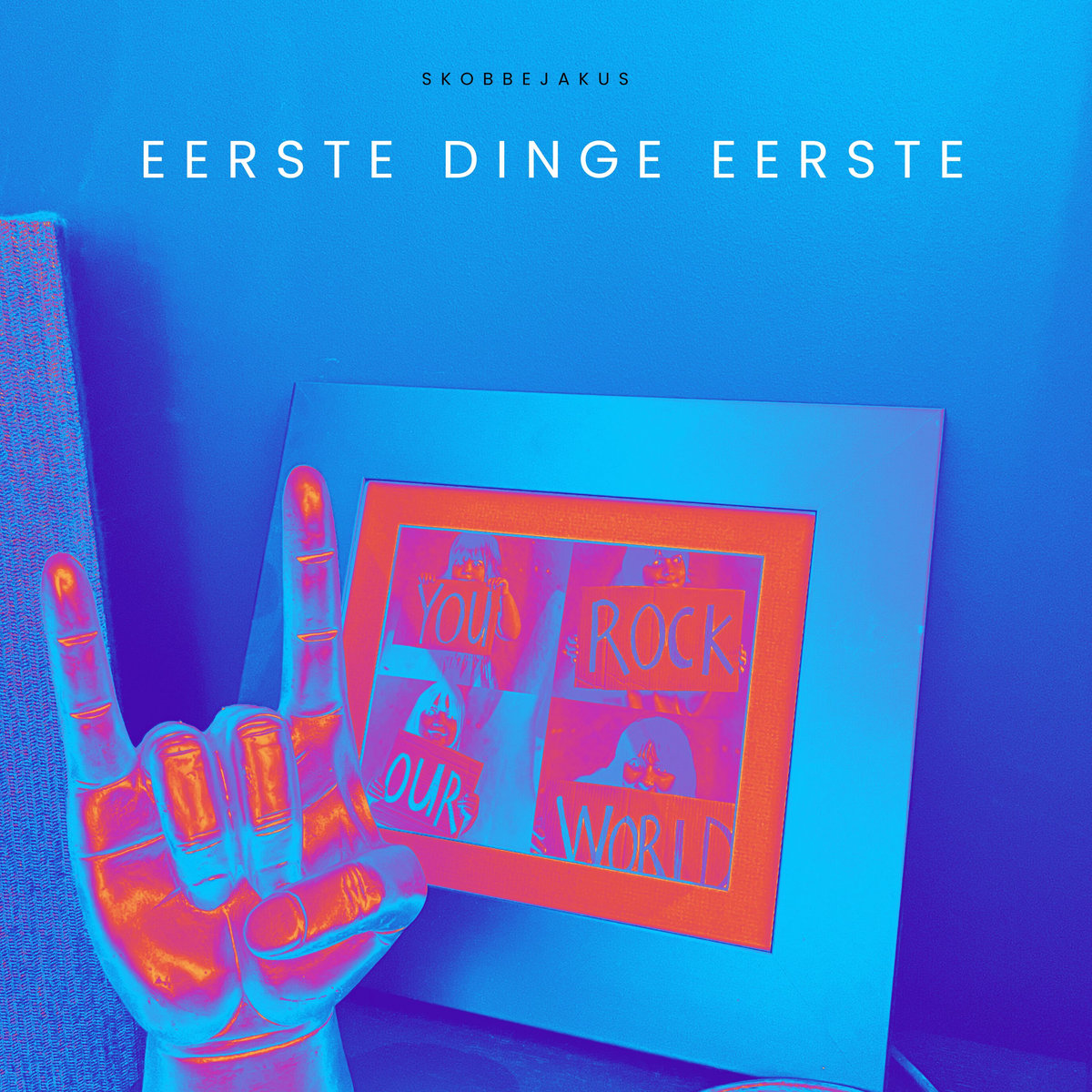
In this episode, Tim catches up with old friend and collaborator Anton van Schalkwyk, the man behind the new Afrikaans project Skobbejakus. After 18 years in the UK, Anton has returned to the shores of Hermanus, South Africa, trading the corporate grind for the creative flow of his home studio. We dive into his debut EP, Eerste Dinge Eerste, discussing the emotional catalyst behind his shift to Afrikaans, the evolution of his 90s rock sound, and why making music without the pressure of a paycheck is the ultimate creative superpower.
🎧 Key Takeaways
- The Emotional Weight of Language: Anton shares how the passing of his father inspired his first Afrikaans song, “Pilaar,” proving that some emotions simply can’t be translated.
- Redefining the Afrikaans Sound: Discover how Anton moved past the “harsh” stereotypes of the language to find a musicality that feels authentic and modern.
- The DIY Evolution: From cranking valve amps in the early 2000s to using Neural DSP plugins in a home studio, we discuss how technology has democratized high-quality recording.
- The “Pure” Musician: Anton reflects on the freedom of being a “privileged” musician—creating for the sake of art rather than survival in an era where 100,000 songs are uploaded to Spotify daily.
- Nostalgia Reimagined: Why a song written 30 years ago around a campfire (Madeliefie) finally found its place on a 2026 record.
⏱️ Chapters
- [0:00] Introduction: Tim’s “rusty” Afrikaans and the history of working with Anton van Schalkwyk.
- [2:22] The London Years: Life in audio post-production and the “guitar on the wall” syndrome.
- [4:14] The Pivot to Afrikaans: Why Skobbejakus?
- [6:20] Behind the Single: “Pilaar” and the discovery of vocalist Emma Hamman.
- [7:34] EP Breakdown: Analyzing Skuld, Die Oomblik, and Saam.
- [10:55] Tech Talk: Recording in Hermanus and the shift to digital modeling.
- [13:24] What’s in a Name? The meaning of “Skobbejakus.”
- [15:03] Madeliefie: A 30-year-old song finally gets its studio wings.
- [17:15] The Modern Artist: Making music in a fragmented, high-volume industry.
- [21:58] Future Roots: Why EPs are the “palatable” future for Skobbejakus.
🔗 Links
- Bandcamp: skobbejakus.bandcamp.com
- Instagram: @skobbejakus
📃 Transcript
Tim Smal [host]: Hey everyone, and welcome to the show. My name is Tim Smal. They say that music is the only language that doesn’t require a dictionary to understand, and our guest today is living proof of that. Even if, like me, your Afrikaans is a little rusty or even nonexistent, you can’t help but feel the grit, the nostalgia, and the raw honesty in his latest work. He is the creative force behind Skobbejakus, and he’s just released his debut record titled Eerste Dinge Eerste. Please welcome to the show, Anton van Schalkwyk.
Anton van Schalkwyk [guest]: Hey, Tim. How’s it going?
Tim [0:38]: Good, and you? Great to have you on the show today, Anton. What’s it like being back in Hermanus?
Anton [0:44]: I was gonna say it’s sunny, but it’s been pretty rough, as everyone in Cape Town knows, for the last few days. I must point out that your Afrikaans was brilliant there, you could’ve fooled me.
Tim [0:54]: Thank you very much. I did win a medal when I was in high school, I believe standard nine. I won, uh, what was it? The “Hoogste lof vir Afrikaans lees. Maar dis tweede taal.”
Anton [01:08]: Love it, love it.
Tim [01:10]: All right, so Anton, we’ve known each other quite a long time. Back in the early 2000s, you were recording bands around Cape Town between about 2000 to 2006, and you actually recorded my band, Serving Suggestion, which was a fantastic experience for all of us. We were young guys in our 20s, and you helped us make some good records that were even played on 5FM and helped our career kind of skyrocket from absolutely nothing to some airplay on Barney Simon’s show. So we were very appreciative of the work you did. But yeah, you helped a lot of bands, and you even recorded your own album in 2006 in English called First Things First by Anton Vann. It’s still around if the folks wanna check it out.
But you moved to the UK in 2006 and spent 18 years in the UK, the better part of two decades working in audio post-production, a bit of finance, and you eventually grew an agency with your partner, Tandy. But you’ve moved back to Cape Town in 2024, specifically Hermanus, and you’re back recording music, writing songs, back on the scene. You’ve got a new record. So tell us what the last two decades have been like in your life.
Anton [02:22]: Yeah, it’s been interesting for those reasons. I’m no different from many disillusioned middle-aged guys that used to do music. I had the guitar up on the wall for a long time, and I would walk into a room, take it down and play it for five minutes and put it back up again, and that would be the play for the week. And it was like that for years and years and years. You know, music’s always been there. Certainly as an appreciator of music, it’s never gone away. But life happens, and at some point you go, “Well, I need to… I don’t know, have somewhere to live, provide for a family, do all these things,” and every time a choice was given to me, or an option was given to me, to make a bit of dosh, I decided long term that’d probably be better, I should take that option.
And so that’s why life’s taken me on various twists and turns. But landing back here, back here in sunny South Africa, so no regrets. And yeah, if anything, overseas, England, London was also an educator in terms of playing live and I did do the band thing there for a while. So I really appreciate the fact that I was there. We kinda went for the arts and that’s what I got, and now I feel like I’m older and wiser.
Tim [03:41]: Okay, so talk to me more about the inspiration for this new record, because you’ve decided to release music in Afrikaans, which is quite interesting because I’ve always known you as an English man. We’ve always communicated in English and your first album in 2006 was in English. But of course, there’s certainly some Afrikaans heritage to your family. So tell me more about this decision to start the project Skobbejakus and how this record, Eerste Dinge Eerste, came together.
Anton [04:14]: Yes. Well, I think first thing to get out of the way is that I’m not faking being an Afrikaans person. I’m just bilingual, like a lot of South Africans, and both my parents are Afrikaans. I grew up Afrikaans, we speak Afrikaans in the house, and I was just encouraged for years and years and years to sing in Afrikaans, to write in Afrikaans. And for many reasons, but one of them the fact that I think Afrikaans can be quite a harsh language, I wasn’t that interested. And all the music that I loved and listened to for most of my time was in English. And then even coming back here, I had no intentions of doing anything in Afrikaans, and this direction came about from an emotional place, really. My father passed away, and I wrote a song for him. The song had to be in Afrikaans. It would’ve been really weird to write it in English. And I think the moment I wrote it, the moment I sang it just to myself, it sort of awakened something – both in the sense where actually if I sing Afrikaans in a particular way, it doesn’t feel as harsh on my tongue anymore. And also I just realized that Afrikaans can be presented in lots of different ways. “Duh,” I guess somebody would say. But I could do Afrikaans music in a style that I enjoyed.
And so it was those two parts: the fact that I wrote the song for my dad. It’s actually being released this Friday, by the way. We can chat about that at some point. But I wrote a song for my dad and that basically… it started at the very least and in its smallest form, just a, “Well, why don’t I do an EP? Write a few songs, get it out of my system, tell everybody that’s been on my case for years that I have actually done that.” And yeah, I guess that sort of answers the questions, right? I tried to do it as an experiment and here I am still enjoying it. Doesn’t mean I’m not gonna write in English, but the Afrikaans songs are still coming thick and fast.
Tim [06:20]: Yeah. I’m sorry to hear about your father, but I do remember him well from the times when we used to visit your studio in Cape Town, so my condolences there. The song that is coming out on Friday, I believe it’s called Pilaar – that’s not on the EP, but it will be available online, right?
Anton [06:40]: No, and what’s interesting about it is that I wrote it, put it on the back burner, and then at my children’s school farewell, one of the school leavers, sang a sort of a goodbye song, like a tribute. And this girl, her voice just stopped me in my tracks and I had to have her in the studio. She came in and she sang that song, and I recorded her singing on it, and the moment she did, it just blew me away. And so that’s actually going to be her on that record, which makes it very confusing ’cause I’m meant to be an artist singing on my stuff, but I also see myself as just a producer working with people. And I would never sing the song as beautifully as that or with the same emotion, so that’s what’s happening. So that’s quite interesting. Her name’s Emma Hamman.
Tim [07:34]: Great. Yeah, by the time this podcast episode comes out, that song will be available online for the folks to listen to, so check out Pilaar featuring Emma Hamman. Onto the EP that we’re talking about today, Eerste Dinge Eerste, there are five tracks on this record, so let’s talk about them quickly. The opening track is called Skuld, which is, I guess, quite a chilled song to kick off the EP. Tell me more about the opening track.
Anton [08:02]: It’s interesting. All these songs pretty much, just like my English album way back in the day, start off on acoustic and then they sort of just go elsewhere. I think Skuld is one of the ones where the acoustic, maybe Die Rede as well, where some of the acoustic still is left over and you can be like, “Okay, well, that’s where it started.” And Skuld really is just about… it’s an analogy on intense relationships where you feel you’re obsessed, and because you’re obsessed with this person, you feel like they’re ruining your life, but ultimately it’s your fault. As in it’s my fault if I’m the one obsessed. And therefore it’s basically saying, “It’s your fault. It’s your fault,” but in the end, no, actually it’s my fault. Very simplistic way of describing it, but pretty much just that feeling of like you feel like you can’t eat, you can’t sleep, you can’t do anything because you’re just all consumed by this person. But yeah, that’s what Skuld is about.
Tim [08:58]: Great. Yeah, I guess a lot of the tracks on this record are very much focused on relationships. I used Google Translate to view the lyrics in English, and I even pressed play on the speaker button where the woman reads it back to me, so that was quite entertaining.
Anton [09:14]: I wish I’d heard that.
Tim [09:16]: I can play it for you after the interview. But, yeah. The second track is called Die Oomblik, and this is a really nice upbeat song, perhaps my favorite track on the record because it has a really cool melody, a fantastic groove, and a very cool chord progression. And the sound I’m hearing in this track is definitely reminiscent of the Anton van Schalkwyk sound I remember from back in the day. So it actually… it kind of evokes that nostalgia that I referenced in the introduction. So tell me more about this one, Die Oomblik.
Anton [09:48]: Well, the thing about Die Oomblik, – lyrically I have a son who’s now 16, and sometimes the situations he describes to me in terms of maybe like a girl he’s sitting next to and that he might have a crush on, and being too scared to make a move or just, is this the moment to make that move? That song really is just about that, and it’s something we all relate to or potentially can remember. That’s what that’s about. In terms of the sound, you and I, we… I think we love our ’90s rock. And as much as I try and be modern, I mean, I’ve actually got some songs in the works that don’t have a guitar in sight. And, if you look at my remixes, they’re all just basically EDM music. What moves me still the most would be guitar, and Die Oomblik is probably like a nod to that – that and Madeliefie I’d say.
Tim [10:42]: Cool. Yeah, I’d love to hear more about how you actually recorded the album, because I imagine you did it yourself at your home studio in Hermanus. So perhaps you can tell me a little bit more about how you put this record together.
Anton [10:55]: Yeah. So it’s probably easier to pick a particular song, ’cause they all have a different journey. Something like Die Oomblik was just written on an acoustic and then, my setup is very basic here. I pretty much go direct in with all my guitars. I play the drums on a digital kit or program it in, depending on where it is in the track. Die Oomblik, I’d have to actually think… those guitars are running into some Neural DSP plugins. And honestly, back in the day it was literally like amps or nothing. You know, crank those valve amps to 11 and that’s how you got your sound, and it’s come such a long way. And really is so much easier for someone like myself to be able to run that straight through and then tweak forever on the sound that I want for the particular track. Yeah easy as pie these days.
Tim [11:50]: Nice. And let’s talk about the third track on the record, which is called Saam. And I’d say this is more of a kind of medium to upbeat song where it seems like you’re talking about the past. So this one’s got an interesting story to it, I would imagine, right?
Anton [12:08]: Well, Saam is a song you can only write if you’ve been with someone for a long time, and this is very much in homage to all partners, being married or not married, that have gone through life together, the ups and downs. It’s sort of like tongue in cheek a little bit too, where the verses talk about “Everything we would’ve gone through together,” and then maybe the chorus is “Okay, now we’re having a slight argument, but let’s remember where it all started and let’s remember that I’m writing this song about you.” So it’s got a bit of nostalgia to it, and it is… yeah, sort of like a love letter to love. And all these tracks have got that underpinning it. I’m working on a track right now that’s maybe a bit more political, but also careful not to be too political, but it’s saying something else. But relationships and love and unrequited love is what moves us. That’s why maybe 90% of the world’s songs are about that.
Tim [13:09]: Great. Well, it’s good to hear that you are writing more material and that there’s gonna be more songs coming out from Skobbejakus. Maybe this is a good time in the interview just to find out a little bit more about the name. Why the name? What does it mean? Tell me more.
Anton [13:24]: Well, Skobbejakus is… I don’t know, it’s got an Afrikaans ring to it. It loosely hints at a rascal, and I guess there’s a rascal in all of us. And I liked the idea that I could be writing or singing some really serious things, but also with some tongue-in-cheek parts. And then there’d be maybe a bit of a contrast to the name and what you’d expect to find once you listen to somebody called Skobbejakus, from an Afrikaans point of view. I think for most English people, unless they understand what a skobbejak is, it would mean nothing. The other thing is that it was a nickname at school, so it was just, you know… that’s what I was gonna do.
Tim [14:04]: Yeah, I mean considering the meaning behind the name, you would sort of expect that your music would be perhaps a little bit more on the risqué side, right? Like rapscallion rap or something, you know, like that Afrikaans artist Snotkop.
Anton [14:18]: Yeah, exactly. And I like the fact that, maybe once you dig in, you realize actually no, it’s not that. Madaliefie is a bit naughty. In fact, Madaliefie was a lot naughtier when I wrote it. That one’s funny because I wrote it as one of my few Afrikaans songs, experimenting way back when I was 17, 18, and it was just a silly thing I used to sing around the campfire. And now, almost 30 years later I’ve now recorded it, which is mind-blowing to me. But talk about risqué – those lyrics were a lot more risky to be putting out there, and I’ve toned them down a bit, but it’s still a bit naughty and tongue-in-cheek, which I like.
Tim [15:03]: Wow, I didn’t realize that you wrote that song such a long time ago. That’s super interesting to me because…
Anton [15:08]: I know. It stayed alive, it didn’t die.Tim [15:11]: Yeah, ’cause when you listen to Madaliefie, which is the fifth track on the EP, it starts out with these electronic elements and you’re thinking, “Hmm, this is a very different track to the rest of them.” And then it becomes more rock-driven, more kind of aggressive later on in the song. So it’s… yeah, it’s a super interesting track.
Anton [15:30]: Mmm… as you go along, you realize that you’ve got this top line melody that’s sitting there, that’s the catchy part and the lyrics, and you can do anything underneath. It’s why I’m having so much fun with remixes. On my SoundCloud you’ll see things that I can’t really release anywhere else ’cause I don’t actually have the rights. But over there you’ll see me taking melodies of songs done by other Afrikaans artists at the moment, and then just rearranging music underneath it completely. I suppose it’s like when you do covers and you just do your own spin on it. But I like to really invest the time to do something completely different. And I think it’s also good practice for recording my own stuff, is that I try all these techniques and I try all these different things that I wouldn’t normally try and do in the traditional sort of guitar rock sense.
Tim [16:26]: Nice. All right, and then the final track that we need to mention is a track called Die Rede, which is a very chilled one, a nice love song there. It’s the fourth track on the EP. Tell me more about that one.
Anton [16:38]: Ag, Die Rede was just… it’s exactly that: just a soppy, you’re the reason for this and you’re the reason for that. Basically if you’re with someone like I’ve been with my lady for a long time, you spend a lot of time apologizing and saying things like “You make me wanna be a better man,” I think Jack Nicholson said that. And that’s true, that’s true. And I think people that challenge you and people that inspire you make you wanna be better, and this is basically saying, “You’re the reason I want to be a better person.” So yeah, very soppy, but it’s got its place.
Tim [17:15]: Great. Well, I wanted to ask you what it means to you to be a musician at this stage of life, because as I mentioned earlier, you spent a lot of time working in various industries in the UK. You’ve obviously maintained your passion for music, but now being back in South Africa, based in Hermanus, writing your own material, releasing music, and even recording other artists, can you talk to me more about what’s going through your mind in terms of music now moving forward?
Anton [17:43]: I think that I come from a very privileged position in the sense where I’m not reliant on music for income. And that changes everything because I can really lose myself in it – well, to the extent that my kids allow me and the other things in life allow me. But I can really lose myself in it with no pressure that I need to make a living from it. That is where I find myself. And then in terms of why music, why now? This is just the time, this is the season. I don’t know, other guys start playing golf or get in the Lycra and get on the bikes. I just wanna make music. I love it that much that it was almost inevitable for me to come back. It doesn’t mean there weren’t times where I thought I wasn’t gonna make music to the same extent. I actually sold a whole bunch of studio gear way back in the day, and I’m looking around and I’ve just amassed a whole lot again.
But yeah, I think just about being a musician, I don’t really know what that means in practice. I’m at the stage where I’m sitting in my studio making a lot of music and having so much fun doing it, but music’s different now – or being an artist is different now. It’s all so fragmented that you could conceivably make amazing music that you love that no one ever hears because there’s just so much, I think. What are the stats now? Something like 90 to 100,000 songs are being added to Spotify each day – that’s insane. And so you really, and I really have had to ask the question like, “Why am I doing it? How much do I love it that it’s worth doing?” I’m literally like the guy who just paints at home, not trying to sell his art. Luckily, or also just coincidentally, you can just stick things online and people can discover it, so there’s that side of it too. In terms of being an artist these days, I think it’s a lot harder for the guys who have stars in their eyes at age 19, 20, in their 20s, that feel like they have the whole world ahead of them, but have the pressure – potential pressure of trying to make that happen. Things are so different now.
Tim [20:01]: Interesting, yeah. Well, is the plan to continue writing songs under this name and release singles, maybe another EP? I know it’s early on in the project, but is that the kind of general idea?
Anton [20:14]: Yeah, I think when I first started, like I mentioned, I just wanted to do a few songs, get it out there and say that I’ve done it. But I find myself carrying on. Ideas are coming thick and fast, and they don’t always come in Afrikaans or English. But I think what inevitably happens is, it sometimes feels like an idea in English is close to something that I’ve heard, but I know for a fact that I’ve never heard something like that in Afrikaans yet, and therefore I feel like it’s got something new to offer to people that listen to Afrikaans music.
So the motivation to do this, and also the fact that I don’t mind singing it so much anymore. I know this sounds ridiculous, but I really didn’t like singing in Afrikaans. All the k’s and the gh’s and the r’s, like they really, um… I don’t know, it wasn’t very musical to me. But now the fact that I kind of found a way around it, or through it, means that I can just carry on. And I’m not one to sort of really commit strongly to anything, other than, let’s say I decide to do an EP, I’m like, “Okay, cool. I’ll finish this EP.” I do commit to that and finish it. But in terms of what happens after that, I might switch back to English. I don’t know. I’m just enjoying Afrikaans at the moment. It’s tied in with a lot of other emotional stuff like culture, coming back – coming back to South Africa. Singing in Afrikaans just brings back feelings of homecoming, belonging, all that kind of stuff, identity. So yeah, it’s complicated, but I’m enjoying the complication.
Tim [21:58]: Yeah, well, it sounds like the creative juices are certainly flowing there in Hermanus. I can’t wait to come and visit and see what you’re getting up to. And I imagine over time you’re just going to start writing and recording more and more, as you put down your roots in Cape Town. Yeah, I mean, I said Cape Town, but really Hermanus is two hours from Cape Town. But a beautiful place to visit for those of you that haven’t been there. Some wonderful wine farms and lots to do there as well. So yeah, I’m sure it must be a beautiful place to be spending time. And yeah, it’s been great speaking with you today, Anton. I’m super excited to hear that you’re making music again, and I know there’s gonna be a lot of folks out there that are equally impressed to hear that you’re back on the scene – certainly Noel will be very excited, a mutual friend of ours.
So yeah, folks, check Skobbejakus’ material online. You can visit Bandcamp, Instagram, DistroKid, SoundCloud, etc. I’ll leave all the links on my website for you to click on and check out his music. But Anton, yeah, fantastic to spend time with you today. I wish you all the best on your release of your new single coming out this week, Pilaar. So yeah, any final words for the fans of Skobbejakus?
Anton [23:09]: No. Well, just, “Enjoy music that’s coming.” There’s definitely a lot more in the pipeline, I’m working on another five or six tracks right now. I just feel like EPs are more palatable, both from a… maybe a listener’s perspective and also just, ‘let me start and stop and finish them’ perspective. So, that’s what’s coming. And yeah, thank you very much for chatting to me, Tim.
Tim [23:35]: Absolutely. Look forward to hanging out soon. Have a great evening there in Hermanus. And, yeah – keep on truckin’!
Anton [23:43]: Keep on truckin’!