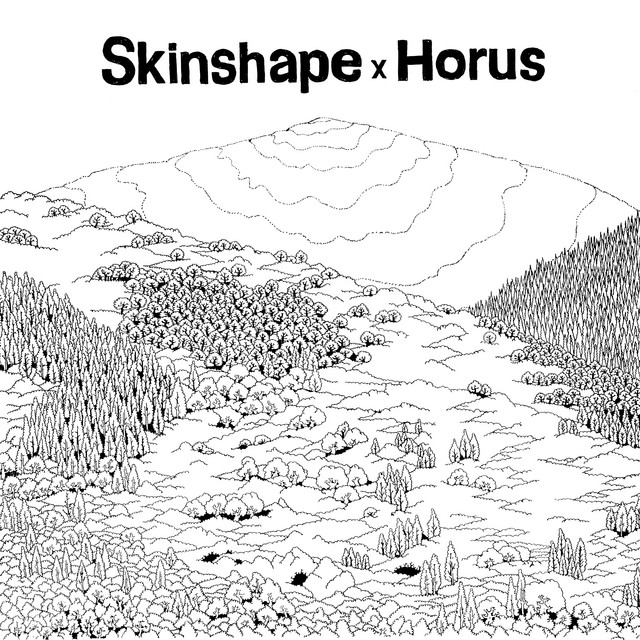

Will Dorey of Skinshape discusses his record, Skinshape x Horus.
🎙️ Episode Summary
In this episode, Tim sits down with Will Dorey, the British multi-instrumentalist and mastermind behind the acclaimed studio project, Skinshape.
Known for blending vintage funk, soul, and psychedelic rock, Will takes a deep dive into his latest release, Skinshape x Horus. A collaboration with lifelong friend Ben Bell, this record serves as a love letter to 1960s and 70s Jamaican reggae and dub. Will discusses the unique process of creating a “collaborative” album compared to his usual solitary workflow, the intricate analog production techniques used to achieve an authentic vintage sound, and the story behind reworking the Interstellar theme into a reggae track.
We also chat about a major milestone: Skinshape’s very first live performance after a decade of studio releases, including the surreal experience of debuting at The Lodge Room in Los Angeles.
🎧 Key Takeaways
- The Horus Connection: How Will’s reissue label, Horus Records, evolved into a space for original studio productions with collaborator Ben Bell.
- Live Debut: Will recounts the surreal experience of performing live for the first time ever in October 2024, after a full year of rehearsals.
- Reggae Interstellar: The story behind the album’s most surprising cover—a reggae dub version of Hans Zimmer’s Interstellar theme.
- Analog Workflow: A look into the “mostly analog” recording process, utilizing vintage tape machines and a hybrid workflow to capture the warmth of classic Jamaican recordings.
- Global Sounds: Will discusses working with Senegalese vocalist Modou Touré and his future interests in exploring music from Thailand, Vietnam, and China.
⏱️ Timestamps
- [00:00] Introduction to Skinshape and Horus Records
- [01:35] The first-ever Skinshape live show (The Lodge Room, LA)
- [04:40] Explaining the “Skinshape x Horus” collaboration
- [07:01] Selecting covers: Act Like You Know, Interstellar, and Betina
- [09:34] Working with Modou Touré on N’Téro
- [10:59] Veteran Jamaican singer Winston Reedy on Looky Looky
- [12:18] The collaborative songwriting process vs. solo work
- [13:56] The meaning behind the instrumental track The River Effra
- [15:05] Blending London orchestral players with Jamaican session musicians
- [19:15] The specific analog & tape gear used to get the vintage sound
- [21:20] The fan-made tour website and future plans
- [22:48] Reflecting on Arrogance is the Death of Men
🔗 Links
- Tour Info (Fan Site): skinshapetour.com
- Bandcamp: skinshape.bandcamp.com
- Instagram: @skinshapemusic
- YouTube: @skinshapemusic
📃 Transcript
Tim Smal [host]: Hi there and welcome to the show. My guest today is Will Dorey, a British multi-instrumentalist and the mastermind behind the studio project, Skinshape. He’s known for his unique cross-genre productions, blending vintage sounds from funk, soul, reggae, and psychedelic rock. Drawing inspiration from the rich musical landscape of the 60’s and 70’s, Skinshape has captivated listeners worldwide amassing hundreds of millions of streams across platforms.
Will founded Horus Records in 2013 with lifelong collaborator and friend Ben Bell. Driven by a shared passion for vintage Jamaican music, Will and Ben originally launched Horus as a reissue label, focusing on rare and hard to find reggae gems, but it has since evolved into a space for original studio productions. Rooted in the rich traditions of 60’s and 70’s Jamaican reggae and dub, their deep connection to the genre has led to longstanding relationships with many of Reggae’s most respected musicians, several of whom contribute to their latest studio album.
The new record is a fully analog reggae dub studio album, showcasing the duo’s production craft, and featuring guest vocalists Andy Platts, Modou Touré, and Winston Reedy. Blending classic influences with fresh interpretations, the album includes original compositions alongside inspired covers, such as a distinctive reggae reworking of the Interstellar theme tune.
Will, welcome to the show.
Will Dorey [guest]: Thanks, mate. Thanks for having me. Yep, good to be here and chat with you.
[01:35] Tim: Yeah, I’m glad to have you on the show and very excited to hear more about the new record. But first, I wanted to let the listeners know that I had the pleasure of meeting you when Skinshape played at The Lodge Room in Los Angeles back on October 9th, 2024, which I believe was Skinshape’s very first live show in the US.
[01:51] Will: It was actually Skinshape’s very first live show anywhere, not even in the US. We didn’t do any shows at all before that.
[02:00] Tim: Yeah, it was an incredible show. I flew into LA on the day, so I was a little bit tired, but once I was at The Lodge Room, I had a lot of energy there. You described the show as “a beautiful experience and the crowd was wild.” What was it like for you to perform there?
[02:15] Will: I think being the first ever show that we’d done as a band, we’d done like a year of rehearsing. So just to clarify, they’re not involved in the studio side of things. So when it came to about 2023, I said “Let me get a band together.” And some of these guys I knew already, Paul and Ollie – bass and keyboards, respectively. And then I did some auditions and got the other two lads, Peter and Tom in the band. And then we rehearsed for about a year, because I’ve never done live, so I didn’t wanna go out on stage and feel like it was gonna be rubbish, you know? I had to… I had to do the best job possible.
So, me and management spent a lot of money rehearsing for a year, but when we came out on the road finally, we could actually deliver to the level that was needed, if that makes sense. But yeah, no, the show itself was very overwhelming, I’d say. It was very surreal, you know, to… to not do any live music at all for, basically 10 years, since the project started – not to do a single show and for your very first show to be in LA, it was very surreal and amazing. The crowd were really good, it may be my most memorable show, you know.
[03:37] Tim: Yeah, I was very lucky to be at the show. And for those that haven’t been to The Lodge Room before, it’s a beautiful venue. It’s actually a 1922 Masonic Lodge, and it’s just a really beautiful venue with amazing interiors and aesthetics. So I wanted to give a shout out to Peter Anderson on guitar, Tom Blunt on drums, Paul Wale on bass and Ollie Pash on keys, because it was truly a memorable show for me. In fact, I made friends with a whole bunch of other fans in the crowd, who of course, were very excited to see Skinshape perform live. And a couple actually drove from Mexico, so they were standing behind me throughout the show and I would often hear “We love you Skinshape!” throughout the show. So there was a lot of good energy.
[04:19] Will: That’s nice.
[04:20] Tim: So you’ve got a new album out now, and it’s actually a collaborative reggae dub album, which you’ve put together with your longtime friend and collaborator, Ben. So lots to chat about with regard to this new record – maybe you can tell me how you pronounce the title of this record and a little bit more about how it came together.
[04:40] Will: So it’s kind of complicated. See, it’s… Skinshape has always been Skinshape. And then alongside Skinshape, I’ve been running this label with my friend Ben called Horus Records, which has been specifically doing re-issues of lost Jamaican music from the seventies. And then we started doing our own recordings as well. We worked with a guy called Ronnie Davis before he passed away, who’s one of the great singers from Jamaica. He was in a group called The Tenors and he did a lot of solo stuff. That was back in 2014. And we just kept doing things. And then, I think we’ve done about 25 releases on the label so far. And then I thought “Maybe in order for me to be able to give as much time as I want to Horus, instead of always prioritizing Skinshape, if we did together a Skinshape and Horus album, then I could focus on it because it’ll be my main focus for that time.”
So in the last year, or year and a half I’d say, we came into the studio a lot and recorded new ideas, such as the Interstellar cover. And some of those recordings were actually about, maybe five or even six years old – maybe even more than that actually. I think there’s one called Stormy Night, which is one of the last tracks, and that was actually recorded at our old studio, maybe as far back as 2017. So we kind of brought things from our archive of recordings, as well as new things like Interstellar was recorded pretty recently, and some of the other ones were done quite recently. And put it all together as the Skinshape x Horus – Skinshape being me, Horus being me and Ben. So it’s like me, and me and Ben. So it’s a strange idea.
[06:39] Tim: Yeah, I didn’t realize that you’ve been working on it, I guess, for a couple of years now, If you consider the early tracks that were done about five or six years ago. But you’ve got a collection of mostly original songs, but a couple of covers as well. So let’s start with the covers. Tell me a little bit more about how you went about choosing these three covers on the record.
[07:01] Will: I think we like the idea of doing strange covers. I mean, some of them are just like “Straight up, that would be a good cover!” such as Act Like You Know, that’s an obvious one. And we said, “Well, has this one been done in Jamaica before?” and then we concluded, “I don’t think it has.” So we said, “Okay.” We recorded the rhythm section, and then we said, “Who’s gonna sing it?” And I thought of Andy Platts, who’s an English guy who is more of a soul singer, but he can tackle anything. He’s got the voice to deliver the power needed for that kind of song. And he did it perfectly, really, so that was that.
And then the Interstellar one was Ben’s idea. And he said, “Should we do Interstellar?” And I was like, “Are you joking?” And he said, “No, I’m not joking.” Okay. Uh… I thought about it a little while and then we had a look into it. I said, “Okay, well if it works, it could be really cool. There’s no harm in giving it a try.” And, we kind of put it onto a reggae beat, decided a tempo, what kind of rhythm should be underneath. And that was it really. And then after that, you build it up bit by bit.
Was there one other cover on the album? Oh yeah – Betina, that was my idea. So I love the original of that, the Bola Sete, this Brazilian jazz song. And I just thought it would make a really interesting reggae version. You’re sort of incorporating more jazz and stuff into reggae, which has been done before, but it’s just less commonly heard these days. And we went to town on the arrangements. A friend of mine called Jon Moody, who’s in a group called Franc Moody (also a childhood friend with Ben – we’ve been friends since about the age of 13), he did the arrangements for the strings, the choir, the brass. And then on Interstellar, he played all the keyboards, the piano, the synthesizers. So very much a collaborative effort.
[09:05] Tim: Yeah, what an incredible idea of reworking one of the songs from Interstellar into a reggae version, along with the other covers as well. Act Like You Know, was the first single off the record, so Andy did a great job on that. And now your second single is out, and this is a real banger on the album – I’m sure you’re getting a lot of praise for this particular track. I hope I pronounce it correctly, I believe it’s called N’Téro. Maybe you could tell me a little bit more about that one.
[09:34] Will: Sure. N’Téro is a song we did with a guy called Modou Touré from Senegal, who lives here in London. I’ve known him since about 2019, and we’ve done two songs together before on my Umoja album. So the broader idea of this album was almost like a Umoja part two, but in reggae, like it’s a loose idea for the whole album. It’s like, Umoja, which was released in 2020, was, “How can I put my love of African music together with Skinshape?” And this is, “How can I do it with reggae, but also incorporating some of those world influences.” You don’t commonly hear a language like what he’s singing there, which is, I think it’s Soninke and Wolof – I can never remember this. He sings in about three or four different languages and he sometimes combines them, it may be one of those two.
[10:34] Tim: Yeah, when I was doing research on this particular song, it said on your Instagram account that he’s singing in his native Senegalese language of Mandinka
[10:43] Will: Ah, yeah, that’s right. Mandinka, yeah.
[10:46] Tim: Yeah. Well let’s chat about another track on the album that is also really cool. It’s called, Looky Looky, with Winston Reedy on vocals. This has got an amazing tone to it. I’d love to hear more about this track.
[10:59] Will: Looky Looky. Winston Reedy’s a veteran Jamaican singer who also lives here in London. And Ben knew him before me – I don’t know him so well, but Ben knows him better than me. Ben runs a record shop in Brixton called Lion Vibes, which sells vintage Jamaican records and that kind of stuff. So yeah, we’ve done songs with Winston Reedy before on the Horus Label, which didn’t have an affiliation in name with Skinshape. Sometimes you hear Old King Tubby or Prince Jammy songs where it’ll be a dub track and you’ll just hear a bit of the vocal at the start, or a bit in the start and a bit in the middle, and you won’t hear the whole song. So people will be wondering, “Is there an original version of this?” There is actually, but it’s a dub version, and the original may never be released. It’s just this version with the little snippet of vocal at the start.
[11:58] Tim: Very cool. And in terms of songwriting for the album in general, did you write a lot of the songs yourself or did you collaborate with Ben? Because you’ve brought in a lot of different musicians to perform on strings and trumpet and sax and so forth. So what was the songwriting process like specifically for this collaborative album?
[12:18] Will: It depends. Some of the songs I will have gone home and written a part, literally sitting on the guitar at home and said, “Okay, here’s an idea, here’s some chords – how can this be put into a song?” The River Effra, so that was one of those which I wrote at home and brought it in and showed Ben and we recorded it. Stormy Night, we would’ve written together. Mostly it’ll be together, you know, sometimes spur of the moment.
For a few of the later recordings, we will have gotten a couple of session musicians, like this guy called Alan Weekes, who’s a guitarist, and Ashanti Selah, who’s a keyboard player and producer. So they came in and on Theme for Horus they were playing with us. So I would be sitting here recording, Ben would be in the drum room, and we would record the rhythm track live. So it’d be keys, guitar, bass, drums, onto tape. And then later say, “Okay, well we’ve got the base track and then what can we put over the top?”, which was the horns on that one. It’s kind of like doing a ska track. So it varies, it just depends.
[13:30] Tim: Yeah, and usually if I ask an artist about a song where there are lyrics, they can tell me more about the story behind the song. But of course, on a record like this where most of the tracks are instrumental, I was wondering what the song The River Effra was about. And the reason I’m asking this, is because it’s one of my favorite tracks on the album. It’s got such an incredible groove to it – it’s a standout track for me. So what would you say the song is about, given that it is instrumental?
[13:56] Will: There’s not a definitive sort of, “It’s about this.” I think when you’re coming up with instrumental track names, you just tend to reference things that mean something to you, and that may fit to the sound of the music as well. So the name was actually given by Ben. And it’s a lost river of Brixton, which is in South London. “Lost” meaning, it’s under the city effectively. And I think it’s still there, or… I don’t know actually – maybe it’s not. So he likes that ’cause it means something to him. To me it means less, you know, I live in North London, so I don’t live around there. He literally lives in the exact streets where that river would’ve been or is underground. But still, the connection with Brixton is deep in reggae as well, so that’s where the name came from.
[14:49] Tim: Beautiful. And just thinking about all the musicians that came in to perform on this album. You had some amazing background vocals, some strings, some brass – many different musicians – guitar, bass, etc. Can you tell me a little bit more about all the folks that contributed to the album?
[15:05] Will: Sure. There’s quite a big mix really. So there’s people who are friends (or friends of friends), just normal English musicians. A lot of the orchestral players will have been very high level guys who went to GuildHall School of Music and proper music conservatories and stuff like that. And some of them are straight up Jamaican musicians, so there’s a big variety. We didn’t wanna make it a fully English affair, we wanted to include Jamaican musicians to give this sort of sense of authenticity as well. The guitarist we often used, Alan Weekes, he was a producer and session musician on a lot of lovers rock in the eighties. And then we’ve got percussion players who regularly play on the scene in the reggae world. Obviously people like Winston Reedy – there’s a massive mix to be honest, and I think that’s the good thing. It gives it a sort of all encompassing feel.
[16:05] Tim: Yeah, and there are 12 tracks on the record. Are there one or two that are special to you in particular?
[16:13] Will: I’d say, funnily enough, I like The River Effra, it’s one of my favorites as well, just because I like the sound of it – It sounds so big. And Stormy Night, the one before that, I also really like. It’s the only one with a sort of “Augustus Pablo feel” and I like it ’cause it’s managed to survive for like, however many years since we recorded it and still made it onto an album, however many years later. So yeah, I’ve always liked Looky Looky. I mean, I like everything really – I’m pretty proud of it.
[16:51] Tim: Yeah, and you’ve got two tracks at the end of the album that you’ve done dub versions of: N’Téro and Act Like You Know. Can you tell me more about those two tracks and the dub versions?
[17:02] Will: They’re not really official tracks in a way, they’re kind of bonus tracks. They’re not technically part of the album, but it’s nice to just leave them there so people can enjoy them. And that will be on the CD. It won’t be on the vinyl though, because with a vinyl you’ve gotta squeeze on as much groove width on the actual pressing as possible. So especially with reggae, you want a chunky sound with lots of bass. And if you were to add six songs a side, you’re making the sound weaker sonically, so they’re not on the vinyl unfortunately. But they will be on the singles, vinyl on the B-sides. So if people really wanted them, they can get that.
[17:46] Tim: Great. And seen as you’ve released quite a number of albums in your career, I wanted to find out how recording this album in particular for you personally, was different to your approach that you take on other Skinshape albums.
[18:00] Will: Recording this album was very different. It’s a completely different way of working. Normal Skinshape albums will be, for the most part, quite solitary. I’ll be in the studio and I’ll be recording ideas that are very personal and gradually put my album together. But with this, I couldn’t do it without Ben, pretty much, for most things. Maybe there’ll be some mixing stuff I could have done myself or Ben could do without me. Or occasionally there’d be a day where I couldn’t make it and we booked someone to come in and play something and I couldn’t make it and Ben will do it by himself. But in general, it was very much “a together thing.” So that’s one reason why it sounds very different. It probably sounds the least Skinshape of all the albums I’ve done, I would say. There’s a few bits of guitar that will be more distinctive, but it’s a very different thing for the most part.
[19:02] Tim: And with the production being fully analog, was this a deliberate commitment to honoring that specific kind of quality of the 60’s and 70’s Jamaican records that you very much enjoy?
[19:15] Will: It’s not fully analog, but it’s mostly analog – maybe it’s been miswritten somewhere, but it’s for the most part, analog. So the basic track with the drums and the bass and some guitars and as much as possible will be done to tape. And then we’ll put it on the computer and add the other stuff that we don’t have enough tracks on the tape. So like the orchestral stuff and some other instruments, you know, and it just helps us to work on the track in the modern way, whilst getting the benefit of the tape sound.
And then finally, once the song’s all ready, we would then mix it live again through the Trident mixing desk that I’ve got here, back onto a two-track tape machine, ready for mastering. And the one I’ve got is an old 1950’s Ampex, all valve tape machine, which I bought a few years ago, and it sounds amazing. So it kind of glues everything together and makes it sound very smooth and full and rich, which is definitely something you want for a vintage sounding reggae album.
And even when we got it mastered, the mastering engineer has a tape machine there, which is also all valves. So I was able to give him my master tape and he was able to directly master it from the tape.
[20:40] Tim: Incredible. And in terms of the studios that you recorded at, I believe most of the album was recorded at The Library Studios in London, but you also visited one or two other studios. Can you tell me more about what it was like working in the different studios?
[20:55] Will: There are no different studios, really. It’s just that my studio happens to be called The Library Studios, and the old studio that we had was called The Arch, which was a shared studio, but effectively they were both mine for the purpose of recording. The Arch was shared, and this library one is my own studio. So yeah, it has all been done ourselves, we’ve never recorded with anyone else.
[21:20] Tim: Awesome. And I see that some fans have even put together a website for you called www.skinshapetour.com, which has all the information on your upcoming tour, and I imagine your activities in the future. How do you feel about that?
[21:34] Will: Someone did tell me about this, but I have no idea who put this together. It’s funny though. I mean, it’s pretty, pretty awesome, to be honest. I’d love to know who’s done this. Okay, yeah. “Made with passionate fans, not affiliated with Skinshape.” I mean, they’ve done an amazing, amazing job. It’s quite a nice website. Shout out to those guys, whoever you are.
[21:57] Tim: Yeah, it’s just great to know what fans can look forward to in the future. You have a European tour in 2026. And as it says on the skinshapetour.com website, the next concert is in 130 days, 6 hours, 23 minutes and 5 seconds, so…
[22:13] Will: Wow.
[22:15] Tim: Lots to look forward to. Alright Will, and on my parting note, I’d also like to mention that, Arrogance is The Death of Men is such a fantastic album, my personal favorite. So I just had to slip a question in there and just ask you quickly, with all of these different albums over the years, isn’t it interesting how every fan will have a different album that they like, right? At the show at The Lodge Room, they were buying different vinyls and we were all chatting about our different records. But for me, Arrogance is the one that got me into your band. So any thoughts on that particular record as a fan favorite of that one?
[22:48] Will: Sure. Arrogance is the Death of Men was my lockdown album, if you will. You know, I was at home a lot. I couldn’t go to my studio because I wasn’t allowed, so I was just making the most of bits of recordings I had at home and it was all done in that way. And yeah, some people say that’s their favorite.
Most people would generally go for the second, third, or fourth album being Oracolo, Life and Love, or Filoxiny. But then again, it does vary, you know. Some people say Umoja, ’cause they love the African stuff so much. So yeah, it’s nice to hear people enjoying different things.
And yeah, I’m just gonna keep going with it really and just keep trying new things. And there’s lots of other parts of the world I want to explore and integrate. I’m interested in music from India, the Far East, Thailand and Vietnam, and even Chinese music, and incorporating all kinds of things like that, I think it’ll be fun.
[23:54] Tim: Amazing. Great Will, well once again, thanks again for joining me on the show. The listeners are definitely gonna enjoy checking out your new record and of course, your back catalog as well. So all the best for 2026 and I look forward to catching you at another live show soon.
[24:11] Will: Alright mate, thanks for your time and speak to you next time.