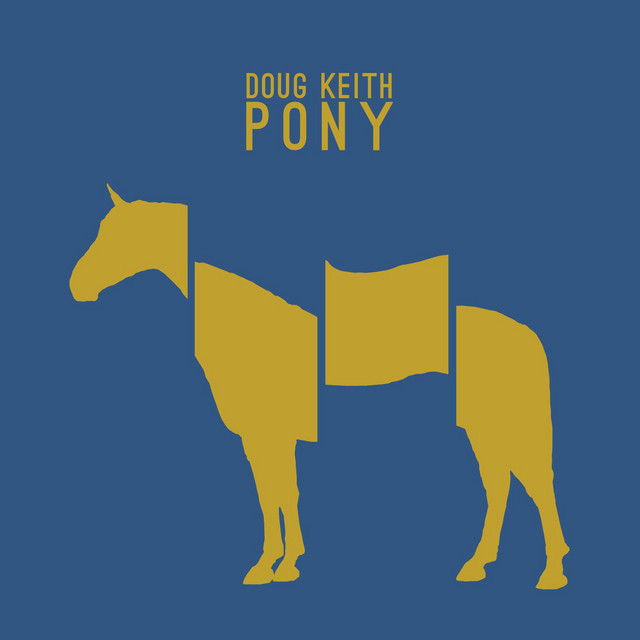
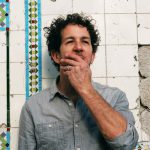

Doug Keith discusses his record, Pony.
🎙️ Episode Summary
In this episode, Tim and Brian sit down with New York-based singer-songwriter Doug Keith to discuss his third studio album, Pony. Doug shares the creative journey behind the record, which marks a departure from his solo acoustic roots toward a louder, full-band rock sound. We also dive into his history playing in the San Francisco punk scene, his long-time collaboration as a guitarist for Sharon Van Etten, and the legendary influences—from Tom Petty to Paul Simon—that shape his upcoming fourth album.
🎧 Key Takeaways
- The Evolution of Pony: Unlike his first two records, which were written for solo acoustic performances, Pony was intentionally crafted for a full, loud rock band environment.
- Punk Rock Pedigree: Before his solo career, Doug “cut his teeth” in the legendary Berkeley/San Francisco punk scene, playing in bands like The Gods Hate Kansas and Shotwell.
- Session Work vs. Solo Career: Doug discusses the balancing act of being a high-level session musician (notably for Sharon Van Etten) while finding the time to nurture his own songwriting.
- The “Mumble” Method: A look into Doug’s unique songwriting process: watching sports on TV while developing guitar parts and “mumbling” melodies until the lyrics eventually find their place.
⏱️ Timestamps
- [0:00] Introduction to Harvest Home and the album Pony.
- [0:50] Balancing life on the road with Sharon Van Etten.
- [1:39] Why Pony is Doug’s “favorite child” and how the sound shifted to a full band.
- [2:54] The San Francisco Years: Choosing punk rock over university.
- [4:53] Moving to New York and transitioning from bass player to songwriter.
- [6:43] Early details on the upcoming fourth album and recording in North Carolina.
- [8:04] The influence of Tom Petty and the documentary Running Down a Dream.
- [11:01] Discussing Paul Simon’s Graceland and South African musical influences.
- [12:28] Technical Talk: Blues, country fingerpicking, and the influence of Elizabeth Cotton.
- [14:23] Gear Spotlight: Why the Fender Jazzmaster is Doug’s go-to guitar.
- [15:32] Current Favorites: The War on Drugs, Phil Cook, and His Golden Messenger.
- [18:38] The dream collaboration: Working with J Mascis (Dinosaur Jr.).
- [19:55] Songwriting 101: How sports and “mumbling” create melodies.
- [21:15] Closing Track: The Bob Dylan-inspired intro of “Black Metal Black.”
🔗 Links
- Official website: dougkeith.com
- Bandcamp: dougkeith.bandcamp.com
- Instagram: @doug_keith
📃 Transcript
Tim Smal [host]: It’s Doug Keith with a brilliant track, the opening track actually from his latest record, it’s called Harvest Home – that’s the name of the track and his record is called Pony. And Doug is a singer-songwriter based in New York. He’s actually a punk rocker turned singer-songwriter, and his music is filled with deep lyrics and smooth vocals. Pony is his third record, and we’re going to be chatting to him about it today. We have him on the line in New York, so let’s check in with him. Doug, how are you doing today?
Doug Keith [guest]: Good, good.
Tim [0:32]: Hey, great to have you on the line, man.
Doug [0:34]: Thanks. Yeah, good to talk to you.
Tim [0:35]: We’re very excited to have you on the show today, we’re big fans of your music – we’ve been listening to Pony over the last couple of months. So let’s jump straight into it and ask you, Doug, how is this new record going for you? Have you been touring it a lot?
Doug [0:50]: It’s been going great, but I have not been touring it a lot. I take a lot of session work as a guitar player, and I was pretty busy playing in a woman named Sharon Van Etten’s band that kept me on the road for quite a while, just playing in her band. But now that tour has wrapped up, and I’m looking at touring my own thing here pretty soon.
Tim [01:09]: Very exciting. Now, this is your third record. Your first two were called Here’s to Outliving Me and The Lucky Ones. Are you very happy with Pony being your third record? Are you very excited about it? Is it your favorite one?
Doug [01:20]: Yes, yeah, definitely. Of my three children, if you will, it’s my favorite one for sure.
Tim [01:27]: Awesome man, awesome. Yes, because I’ve been reading some reviews online and some interviews, and apparently this record is very different from your first two. Can you talk a little bit about what distinguishes this third record from your first two?
Doug [01:39]: The first two were really… I did them a lot by myself, and I wrote a lot of them to tour just as like a solo acoustic singer-songwriter guy. And with Pony, my goal was to kind of write a record that would force me to do a full, loud rock band kind of thing. And so a lot of the songs, I can pull off just solo, but they’re much more suited to a full band environment. And I recorded with a set group of guys, and we did it in two weeks, and it was a lot of fun to make, for sure.
Tim [02:12]: Awesome. So when you go out on the road touring with Pony, are you going to get a band behind you?
Doug [02:16]: I am. Yeah, yeah, that’s the plan.
Tim [02:19]: Awesome. So when can we expect some dates from this tour?
Doug [02:23]: To be honest, I would say early 2016. I’m actually working on writing a follow-up record right now, and things are kind of going well for that. So I’m sort of staying home and focused on that, and then I’m going to start touring like crazy next year.
Tim [02:38]: Great. So you’re hoping to have the new record out before the tour?
Doug [02:41]: Probably middle of next year, new record. Yeah, that’s the plan, at least right now.
Tim [02:46]: Man, well, that’s exciting that you’re able to give so much time to your solo career. It really sounds like things are taking off for you.
Doug [02:51]: Yeah, so far, so good. It’s been going well, can’t complain.
Tim [02:54]: Well, let’s talk a little bit about your origins as a musician because I believe you spent some time when you were younger in San Francisco playing in punk rock bands.
Doug [03:03]: I did. Yes. Yeah, instead of university, I went to San Francisco and played punk rock.
Tim [03:09]: So did you ever actually make it to university or have you just stuck at music over the years?
Doug [03:13]: Just stuck with music over the years. I was originally going to go to San Francisco for a year and play some music and then go to university, but it just kind of kept snowballing and going. so I stuck with it.
Tim [03:24]: So how many bands did you play in when you were in San Francisco?
Doug [03:27]: I was in three, kind of, at all times, and there was one that was, sort of, the mainstay that I did for the most part.
Tim [03:34]: Would you be able to tell us the names of those bands?
Doug [03:36]: Yeah, the main band was called The Gods Hate Kansas. And then I played in a band called Shotwell for a little while, Suspended In Amber, and Ask the Dust was one of the other mainstays.
Tim [03:50]: Must have been great to play in a whole bunch of different bands, really get to cut your teeth on the scene.
Doug [03:56]: Yeah, it was fun. It was good. I mean, punk rock at the age of like 19, 20, 21, 22, there’s kind of no better life. It’s pretty free flowing and you’re just out there on the road in a van with your friends. It’s a good time.
Tim [04:09]: And I guess California is a good place to be for punk rock in general.
Doug [04:12]: Yeah, definitely. The whole Berkeley punk rock scene is pretty… it’s still amazing and thriving, it always has been. I was sort of drawn out there with the whole, not necessarily Green Day, but the world that they came out of. I had this kind of fantasy of what it would be. And I sort of fell into that world and met a bunch of those guys, which was pretty fun.
Tim [04:30]: So when you were playing in these bands, were you doing predominantly guitar or did you do some vocals as well?
Doug [04:35]: I actually… I had never toured before when I got out there and I met a guy who was looking for a bass player. So I mainly played bass and a little bit of backup singing. But I played guitar in a couple of them, but for the most part, I was a bass player.
Tim [04:47]: All right. And then at some point you moved to New York and started doing more work on the guitar. Tell us about that transition.
Doug [04:53]: Yeah, I moved up to New York in my early 20s and mainly… actually mainly to try and try something outside the punk realm a little bit and just sort of, you know, hang with some different friends and people and things. And so I started playing guitar in some bands as soon as I arrived here in New York. And basically kind of became more known as a guitar player, I guess, in the world of music, if you will, but still occasionally taking a bass gig or two. And then I mainly played in other people’s bands and started really writing songs, I would say about eight to ten years ago or so where I kind of got really involved in writing my own stuff and starting to play some of my own shows and things like that.
Tim [05:35]: Okay, so playing as a solo artist as Doug Keith, that’s actually been something that’s been going on for almost a decade now in the background.
Doug [05:42]: Yeah, in sort of a haphazard, halfway way. I always kind of played with other people, but now I’m sort of definitely 50-50, I’ll play with other people, but then also need to spend equal amount of time on my own thing for sure.
Tim [05:56]: That’s amazing. Well, I’m so stoked that your solo career is taking off, man. It’s always great to be able to focus so much time on your own material.
Doug [06:04]: Yeah, thank you. Yeah, I’ve been enjoying it.
Tim [06:07]: And what’s it like playing in Sharon Van Etten’s band? Does that keep you quite busy?
Doug [06:10]: It does. Yeah, it’s been very busy. I helped her start her first band. I saw her as a solo person and approached her about playing with some other people, and we sort of put a band together around that. So that’s been very busy for about five years as her career has just sort of skyrocketed and sort of taken off, and we’ve had all these great experiences together. We just wrapped up touring for her last record, and she wants to take one to two to maybe even three years off from before the next record. So I’m going to focus on my own stuff in that interim there.
Tim [06:43]: That’s awesome, man. So right now, you’re actually currently writing for your fourth record.
Doug [06:46]: Yes. Yeah, a lot of writing and demoing and trying things out. I think I’ve probably written 15 songs, but I would say three of them, I’m very excited about putting on a record. The other 12 need a little more massaging and work.
Tim [07:02]: And where do you plan to record this fourth record?
Doug [07:05]: Probably down in North Carolina, in the States again, and with a few of the same guys from the last record actually. I love New York City, but I do love getting out of New York City to record. And there’s just a lot of things to take care of when I’m home in New York, and it’s nice to step away from that and fully focus on the recording process and all that sort of thing.
Tim [07:24]: Okay. So in terms of the sound between Pony and this new record, what are you hoping to achieve on the fourth record sonically?
Doug [07:31]: That’s a good question. It’ll be a little bit more produced, I would say. With Pony, I purposely didn’t try to overproduce the songs and let them come out in a little bit more of a natural way. In this one, I’m doing a lot of demoing, trying to find some things to throw in there and shake them up, and change up the sound a little bit. It’ll be a more produced record, I’d say.
Tim [07:55]: And in terms of other singer-songwriters or solo artists, are there any other guys that you would cite as influences in terms of the work you’re doing now and the sound you’re aiming for on this fourth record?
Doug [08:04]: Hmm, I have been listening, just based on what I’ve been listening to a lot of, a lot of Tom Petty has been coming up. I’ve been listening to… I’m just amazed by the range of his catalog and the number of songs he has that I know every single word to. Tom Petty has been a huge one. Oddly enough, Waylon Jennings, I’ve been listening to a lot of Waylon Jennings’ records, so a little bit… There’s not going to be no country necessarily, but there’s something about his tone and his voice sort of falls in the octave that mine does a lot of the time. So maybe a little bit of that in there.
Tim [08:36]: That’s awesome, man. I’m actually a massive Tom Petty fan. I used to listen to him when I was a kid. Obviously, I got Full Moon Fever when I was really young and got into that because that was a big record for him.
Doug [08:45]: Yeah, yeah. He was the first concert I ever saw. My dad took me to see him on the Full Moon Fever tour. I was very young, but I was unbelievably excited, and I’ve kind of just been a lifelong fan. And recently again, I’d say this year, I just started listening to him a lot. I listen to him very often. If you see me with headphones on, that’s usually what’s playing.
Tim [09:05]: That’s great, man. It’s great to have that in common with you because I’ve gone back and collected all of his older records and it was really exciting for me to get, especially I think it was his first and second record, which I’d found quite hard to get in South Africa over the years. But with iTunes recently, I was able to track down some of those more rare records.
Doug [09:22]: Yeah.
Tim [09:23]: And I’ve essentially collected most of his records. I know most of his stuff, which is totally awesome.
Doug [09:28]: Yeah, yeah. Those first few actually are unbelievably good. They’re rock and roll records, but they have this kind of almost 70s funk back beat to them that I’m way into.
Tim [09:38]: Now, you must have seen that documentary, Running Down a Dream. It’s the four-hour documentary about Tom Petty and the Heartbreakers.
Doug [09:44]: I have. One of the interesting points of tour is that you spend a lot of time sitting there, and you can watch four-hour documentaries multiple times while you’re doing that in the van or on a plane or whatever. So I’ve seen it a couple of times, actually.
Tim [09:57]: Yeah, it’s got to be one of my favorites. I learned so much about the band, and I love watching that first disc, especially from when the guys are young and how they get together and they make their first band recording. It’s incredible.
Doug [10:06]: Yeah, and he’s just so motivated. The story of him going to tell Benmont Tench’s dad that they’re going to go to LA and become rock stars, and his son isn’t going to go to college is kind of amazing. I just love the confidence of this young Tom Petty, scrawny little guy with these songs.
Tim [10:24]: I love the fact that he just knew that’s what he wanted to do. He saw Elvis on TV, or he met Elvis once, and he said, that’s what I want to do. I don’t know how I’m going to do it, but I’m going to make it happen.
Doug [10:32]: Yeah, I love that. He’s a very interesting guy.
Tim [10:35]: I was very lucky to see Tom Petty and the Heartbreakers live for the first time in my life. I believe it was two years ago, 2013, in Pittsburgh, I believe. And that was an incredible night for me to see him play songs from his whole career. I was so stoked.
Doug [10:49]: Oh, awesome, yeah. They’re an incredibly great live band. The whole… everything about them. It’s fairly like simple show production, but I love that about them. They just let their songs get up there and speak for them, which is amazing.
Tim [11:01]: Now, another artist or in particular, a record that was quite influential for you when you were young, I believe, was Graceland from Paul Simon.
Doug [11:08]: Yes, yeah, I got that for Christmas one year from my dad as well, and I spent a lot of time listening to that one.
Tim [11:15]: Well, that was recorded right here in South Africa.
Doug [11:17]: I know, I know, and extremely influenced. I’ve actually hunted down a lot of the guys. I know there’s the Ladysmith Black Mombazo, obviously, but then also the Boyoyo Boys records. I mean, I would say half of Graceland is basically Boyoyo Boys songs with Paul Simon singing over it.
Tim [11:33]: Yeah, well, if you like documentaries, you must check out the documentary on Graceland. I believe it’s called Under African Skies. Have you seen that one?
Doug [11:41]: I have not, no. I hope to see that.
Tim [11:43]: Yeah, it’s very, very good. It’s all about the recording of Graceland, really, and it’s got Paul Simon in it. It came out about two or three years ago. I actually picked up a copy when I was in the States, so check that one out.
Doug [11:51]: Oh, yeah, I definitely will. Very cool.
Tim [11:54]: All right, so I’ve got my co-host here, Brian, and he’s going to ask you a couple of questions.
Doug [11:58]: Sounds good. Hi, Brian.
Brian Bohlin [co-host]: Hi, Doug. How are you?
Doug [12:01]: Good, good. Thanks.
Brian [12:02]: Well, first, thank you for taking the time to speak to us, this is very exciting. I actually wanted to ask – I hate to go back in time here – but you said before that you started out your career really as a member of the San Francisco punk rock scene in a few different bands. How did you find the transition from being a part-time bassist, backup vocalist in a punk rock band to moving to New York and launching a solo career? Was it a tricky transition?
Doug [12:28]: Not, not totally. It was… I sort of took the route, I guess, of like punk rock into a little bit more straight rock and roll songs and then sort of mellowed it out a hair from there. It’s interesting because I grew up… my dad plays blues harmonica. So when I first started playing guitar, I was learning a lot of more blues and like kind of country fingerpicking, was sort of my main guitar thing as a kid. And punk rock sort of was my own little journey I went on. But my main thing when I’m listening to music is often actually country blues and folk and the Tom Petty’s, Neil Young’s of the world.
Brian [13:09]: Right, that’s awesome. That’s very cool. And it must also give you… if you spend time learning those blues and country fingerpicking styles, which, I mean, in a lot of country music, the finger picking is extremely difficult. But it must have also allowed for your playing to be a lot more, I mean, as a guitarist, like a heavy-handed kind of playing, you know what I mean?
Doug [13:31]: Yeah. I’m more… yeah, I’ve been learning, like, for example, I do… I originally learned a lot of Elizabeth Cotton songs, actually. She was a North Carolina fingerpicking blues woman in the 60s, 70s. And then lately I’ve been doing a lot of Chet Atkins, which is super tough. It takes forever to learn one of his songs, but I always get quite a bit out of it. And I end up fingerpicking a lot, actually, in my own stuff, even songs that I could play with a pick, I end up fingerpicking just to kind of add a little texture in there.
Brian [14:01]: Yeah, and it gives it that nice bit of a softer sound, like a lot more, I guess, intimate would be a word that could be used.
Doug [14:08]: Yeah, the sound of a finger hitting this string as opposed to a plastic pick, it just hits my ears a little bit nicer for sure.
Brian [14:16]: That’s awesome. Well, anyway, thank you very much for answering my questions. It was very nice to talk to you.
Doug [14:21]: Absolutely. Good talking to you as well.
Tim [14:23]: And Doug, what kind of guitars are you playing these days in terms of brands and styles?
Doug [14:28]: I do a lot of Fender Jazzmasters. I have three Jazzmasters, and I actually just got a Telecaster recently, I guess partly inspired by my Tom Petty phase I’m going through, not to keep talking about him. And then I have an amazing Martin acoustic that I bought probably 10 years ago that I just haven’t found another one like it that I play incessantly while I’m home.
Tim [14:51]: Wow. Very, very cool, man.
Brian [14:22]: So literally some of the nicest guitars ever made.
Doug [14:55]: I try.
Brian [14:57]: That’s awesome. That’s so cool.
Doug [14:59]: I have a friend that’s sort of a Jazzmaster genius, and he gave me a few tips on how to tweak the pickups a little bit. So I have them pretty set up exactly how I like them, which is nice.
Brian [15:09]: That’s so cool.
Tim [15:10]: Yeah, you must be getting ready to go on tour, as you mentioned, in 2016 with all your new gear and your new songs and your band guys. Now, are there any other artists in the States that you’re looking forward to playing with or touring with? I mean, I’m aware that the scene in the States in terms of singer-songwriters these days is amazing, there are just so many great guys out there. Who do you look forward to maybe touring with or jamming with on the scene?
Doug [15:32]: I love The War on Drugs. I’m sure they’ve made it down to South Africa. They’re one of my favorite bands just going right now. Unbelievable band, musicians and people, nicest guys. There’s a guy named Phil Cook who played on my record – he played a lot of the keys on my record – who just had a record come out last Friday that I think is unbelievable. There’s a band called His Golden Messenger out of North Carolina that I love. They’re kind of a little bit of like a country rock, but with a really, just a cool sound, great players and great musicians. A guitarist named William Tyler is phenomenal. There are so many. There’s just a… it’s an interesting golden age of music, I feel like right now. I know every decade probably says that, but I feel like there are so many great bands and musicians coming out and just people doing some very interesting stuff that I get pretty excited about. Even last night, I went to see a friend of mine play in a band called Circuit des Yeux out of Chicago, and they’re not that big, but they were just super interesting. And the… it had a lead singer that played a 12 string finger pick, but sort of doom metal with an acoustic guitar. I don’t know how to explain it – It was sort of tribal, it was a cool band.
Tim [16:38]: Yeah. Well, I’ve traveled around the States a bit as well. And if I go and watch a band, I always discover another four or five bands and always get so excited. Because there’s just so many great artists out there. And that’s why I love doing the show down here in Cape Town, South Africa, because we get to, I suppose, promote music and discover music. You’ve just mentioned a whole bunch of other guys that we can go and look up. And every week we have different guys on the show. And it’s just amazing that we have the internet today that we can broadcast like this, it’s really cool.
Doug [17:05]: Yeah, absolutely, it is. And more bands I’ve heard of going down to Cape Town, actually, to play. I’ve had some friends go down for a show or two down in South Africa, which I think is great, too.
Tim [17:16]: So if you ever want to come down to South Africa, Doug, we’d be happy to have you.
Doug [17:21]: Oh, I’d love to, yeah. I was there about nine, no, eight years ago now, actually. I went down for a vacation and had an absolutely amazing time. Great country.
Tim [17:31]: Awesome. Did you come to Cape Town?
Doug [17:32]: I did, yeah. I was there for about five days, actually. It reminded me a bit of San Francisco, actually. There’s similar, I guess, weather and waterfront kind of thing. It was beautiful.
Brian [17:42]: I hear that a lot.
Doug [17:43]: Yeah, I’m sure.
Tim [17:45]: Well, next time you come, you can’t get away with not playing a show. You must play at least one or two shows while you’re here, Doug.
Doug [17:51]: Sounds good. I’m looking forward to getting back there at some point soon.
Tim [17:53]: Now, interestingly enough, you actually have your own record label called The Village Label.
Doug [17:57]: Yes. Yeah, yeah.
Tim [17:59]: So do you put out any other records by other artists, or is it just your own stuff right now?
Doug [18:02]: It’s just my own stuff right now. The idea was to put out other people, but I’m just a little nervous about taking on someone else’s career. It’s a lot to take on for any label. So if I’m going to do it, I want to do it right and commit a lot of time to it. In between playing in other people’s bands and doing my own thing, it’s just sort of hard to find the time to do that at the moment.
Tim [18:25]: For sure, for sure. Well, we look forward to the release of your new record, and I’m always interested to know who you’re going to play with on the record. I know in your last one, Pony, where we’ve played a whole bunch of tracks from today, you actually had Jay Mascus from Dinosaur Jr. play on some of the tracks.
Doug [18:38]: Yeah, yeah, that was a huge dream come true for me. I’ve been a Dinosaur Jr. fan forever and was lucky enough to meet him a few years ago and just wrote him one day to see if he had any interest. And to my absolute disbelief, he wrote back and said, “Yeah, sure, when do you need them?” And sent me some guitar parts to use, which was just unbelievable. So he’s a great guy and just a huge influence on my guitar playing. So that was an honor for me.
Tim [19:03]: Yeah, I think he actually has his own signature guitar. I think Fender have got a Dinosaur Jr. guitar art, if I’m not mistaken.
Doug [19:09]: That was what originally steered me to the Jazzmaster. Yeah, he’s a Jazzmaster aficionado, and I just love his tone and sound. And so I originally picked up a Jazzmaster as a kid because I love his sound.
Tim [19:21]: And of course, his solo records are also pretty epic.
Doug [19:24]: Oh, yeah, they should definitely be checked out. Yeah, he’s unbelievable. He actually is an amazing songwriter, guitar player, and his singing voice is just still amazing. I don’t know, there’s something… he’s a magical musician. Not underrated per se, but just I wish more people knew about him and followed him.
Tim [19:43]: Well, yeah, thinking about songwriting and vocals, how do you go about writing your songs and thinking about your vocal melodies? I mean, you’ve got such a unique voice. What can you tell us about the process of songwriting specifically with the vocals?
Doug [19:55]: I typically come up with guitar parts… I like watching sports, mainly to play guitar. So I’ll watch like racing or American football, and I actually got into rugby – I was down during the World Cup of rugby when I was in South Africa, so I kind of got sucked into that. So I’ll put on some sort of sporting event that I halfway pay attention to, and I’ll play guitar, and I’ll come up with something, and then kind of just mumble fake words in a melody over, and then try and write words to fit the melody and sort of rhythmic pattern of what I was mumbling. So the words definitely come last, but the vocal melody and the guitar part kind of develop together, I’d say.
Tim [20:25]: Awesome. Well, it’s so cool to get some insight into your songwriting and also to find out that you’ve actually been to Cape Town. That makes me super stoked. What do you say, Brian?
Brian [20:43]: Yeah, that’s quite exciting. It’s very, very cool that you’ve been down here.
Tim [20:46]: I feel like Doug is in the room with us right now in spirit.
Doug [20:49]: Yeah, I know. I feel like I know you guys.
Brian [20:51]: Having an open conversation right now.
Tim [20:54]: Well, Doug, I hope that we get to meet you one day at one of your shows either in South Africa or in the States. It would be great to have a drink together.
Doug [21:01]: Absolutely, yeah. If you’re ever in New York, look me up.
Tim [21:03]: Awesome, man. And we really look forward to your new record. I wish you all the best in the writing process for that and the tour. And I think 2016 is going to be an epic year for you, man.
Doug [21:12]: I hope so. It’s been a good ride so far.
Tim [21:15]: We’re going to play one more song from your last record, Pony, and it’s called Black Metal Black. Can you introduce it for us?
Doug [21:21]: Yeah, this song started as a pretty folky, mellow, kind of Guided By Voices-ish number and slowly developed into what you’re about to hear. The snare hit at the beginning is totally influenced by Bob Dylan’s Like a Rolling Stone. I love the way that record starts with just a snap, and then the whole band drops in.
Tim [21:42]: Awesome. Thanks so much, Doug. Have a great day.
Doug [21:44]: Thank you. You too. I appreciate it. Have a good one.
Brian [21:46]: See you later, man.
Doug [21:47]: Bye bye.