
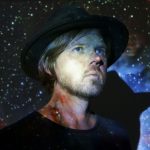

Pete Uhlenbruch of Owls of the Swamp discusses their record, Atlas.
🎙️ Episode Summary
In this episode, Tim sits down with Pete Uhlenbruch, the creative force behind the atmospheric indie-folk project Owls of the Swamp. Pete shares the story of his life-changing relocation from Australia to Iceland and how his latest record, Atlas, was born out of a “mobile studio” in a backpack. We dive into the vulnerability of transitioning from a rock guitarist to a solo singer-songwriter, the creative magic of Reykjavik, and how he recreates complex studio layers using loopers and whistling on stage. Atlas was mixed by Mio Thorisson and features collaborations with Oscar-winner Markéta Irglová.
🎧 Key Takeaways
- The Power of Place: Pete discusses how the unique, creative atmosphere of Iceland (and the Northern Hemisphere in general) serves as a primary muse for his songwriting.
- Vulnerability in Transition: Moving from playing electric guitar in a high-intensity band to being a solo acoustic artist required a “leap of faith” to find his own voice.
- Mobile Creativity: Atlas was recorded across Germany and Iceland using just a laptop and an acoustic guitar, proving that high-quality art can be made without a traditional studio.
- Intimacy Over Scale: Why Pete prefers playing intimate venues (15–100 people) and how those connections fuel his touring experience in Europe.
- The “Reykjavik Ratio”: A look at why a small city of 150,000 people produces such a high density of world-class musical talent.
⏱️ Timestamps
- [0:00] – Introduction: Who is Owls of the Swamp?
- [0:43] – Weather report from Iceland: 10 degrees and raining.
- [1:01] – The 10-year journey from Australia to relocating in Europe.
- [1:35] – Shifting from hard rock bands to “vulnerable” solo acoustic music.
- [2:24] – Looking back: Smoky Bay (The Icelandic concept record) and Go With the River.
- [3:45] – The making of Atlas: Recording with a mobile studio in a backpack.
- [4:53] – Musical influences: From Nick Drake to Sufjan Stevens.
- [5:38] – The Live Setup: Using vocal processors, loopers, and Ableton Live.
- [6:22] – Recreating Markéta Irglová’s contributions through live whistling.
- [7:13] – Touring Europe vs. Australia: The beauty of intimate venues in Poland and Czech Republic.
- [10:14] – The creative energy of Reykjavik and collaborating with locals.
- [11:48] – Working with mixer Mio Thorisson (Damien Rice, etc.).
- [13:16] – What’s next: New directions, opera training, and digital textures.
- [14:40] – Pete introduces the track: “Shapeshifter.”
🔗 Links
- Bandcamp: owlsoftheswamp.bandcamp.com
- Instagram: @owlsoftheswamp
- YouTube: @owlsoftheswamp
📃 Transcript
Tim Smal [host]: All right, it’s Assembly Radio, my name is Tim Smal, welcome to the show today. That was Owls of the Swamp with a track called The Hypnotist, taken from their latest album Atlas. Owls of the Swamp is an atmospheric indie folk project of Australian singer-songwriter Pete Uhlenbruch. He’s originally from Australia, but now living in Iceland. And his latest album was mixed in Reykjavik by Mio Thorisson, who’s done work with Damien Rice and many others. And we have Pete on the line today. So Pete, can you hear me?
Pete Uhlenbruch [guest]: Yeah, mate.
Tim [0:43]: How are you doing?
Pete [0:44]: Yeah, good, good. How are you?
Tim [0:46]: I’m excellent. How’s the weather today in Iceland?
Pete [0:48]: Freezing. I think it’s about 10 degrees and raining a lot.
Tim [0:53]: Awesome, man. So you’re a singer-songwriter originally from Australia, but you relocated to Iceland. Tell us a little bit about that journey.
Pete [01:01]: Oh, it’s a really long, long story. I mean, the first time I came here was about 10 years ago. I’d always wanted to come because of the music mainly, and I had 10 days, I fell in love with it, and then I had to leave. And I don’t know, something kind of stuck with me that I had to come back. And I moved back to Australia for a few years, and then it was in 2011, I decided to come back over and relocated in Europe. But for the last few months I came here, and it feels like a second home.
Tim [01:29]: All right, so before you started your project, Owls of the Swamp, were you playing in any other bands?
Pete [01:35]: Yeah, I was. I was playing in bands mainly. Like Owls of the Swamp is an acoustic solo project, but before that I was playing for almost 10 years, electric guitar in a harder rock band, similar to At The Drive-In or something of more that level of intensity. So it was a pretty big shift to go from electric to acoustic at that point.
Tim [01:55]: And what’s it been like making the move from the band scene to the solo scene?
Pete [02:00]: Yeah, it was a big shift actually, because I’d never actually written my songs before then. I was just playing electric guitar for other people’s tracks. So it was a big shift to start writing my own songs. And it took a big leap of faith, it’s a really vulnerable thing to start giving voice to your voice. It took me a few years to find it, but it’s great now.
Tim [02:24]: And you have three records out with Owls of the Swamp. Atlas is your most recent one. But what was it like recording the first one?
Pete [02:31]: Pretty, actually, it was fun. It was fun. The first album I did is called Smoky Bay, so it’s like an Icelandic concept record, reminiscing about the really fantastic times that I came here. I got obsessed and I wanted to do a concept album about it. And I recorded that one at home, and it was more like just demos. You know what I mean? You’re just writing songs for the sheer joy of them. And then somehow they turned into an album and did pretty well for me in terms of just finding a new audience. So that was the first album experience.
Tim [03:05]: Awesome. And then the second record, Go With the River. What was the process of recording like for you on that one?
Pete [03:11]: Yeah, that was a bit different. That one I decided to take a bit more seriously, and I recorded that one in Melbourne, Australia as well. And I was lucky enough to have access to a really beautiful beach house, 30 meters from the beach, two stories. And I can fill it up with all my instruments. So it was like living in a home studio and being able to turn up the guitar as loud as you want and having access to all these real organic instruments. So that one was a lot of fun, actually, but quite different from just doing home demos in, essentially your bedroom, to modifying a house to get a particular sound.
Tim [03:45]: And your most recent record, Atlas, which came out last year, that was recorded on your mobile studio across Germany and Iceland. Is that right?
Pete [03:54]: Yeah, that’s right. So when I moved overseas a couple of years ago, of course, I had to leave a lot of my instruments behind, and all I really had with me was my laptop and my acoustic guitar. So I just found myself recording on my laptop skeletons of acoustic tracks and then developing them using the programs on the computer, whatever they would be at the time, to just use what I had available to make an interesting sound. So it was a real challenge not to have access to a studio everywhere, but just whatever you can have in your backpack at a particular time, which is fun because it allowed me to explore recording in lots of different cultures. And that’s one of the reasons the album is called Atlas, is because it’s a traveling document of my music as I was traveling around the Northern Hemisphere over the last few years.
Tim [04:38]: And I love the way it’s been described with “sweeping synthesizers, dynamic textures, and rhythmic programming alongside your characteristic finger picking and earthy vocals.” What a great description.
Pete [04:49]: Yeah, thanks.
Tim [04:53]: So you’re obviously very big into acoustic music. Who are some of the artists that you enjoy listening to that inspire you?
Pete [04:49]: Oh yeah, for me, the first artist that did that was Nick Drake. It’s a pretty classic point of reference for really arresting low key acoustic driven music that really connects with people on a pretty significant level. So I mean, he was my first point of reference. And then more recently, I think it’s been Sufjan Stevens, his more acoustic based work, like his most recent record and some of his older work. I just loved how we could just take these acoustic basses and vocals and a few things around that and just really bring this sonic world to life in an emotionally meaningful way.
Tim [05:38]: So with the shows that you play, obviously you’re playing by yourself, but you’re using pedals, you’re using loopers. What’s that like?
Pete [05:45]: Yeah, it’s a bit… it’s always a work in progress, because the last album had so many sounds on it that I wouldn’t ordinarily do, it was really a challenge to bring that sonic palette to life on stage. So I found a happy medium by using my… just getting a vocal processor for the microphone so I could build harmonies and delays and try to be a bit creative with using my voice to recreate some of the sounds in the album. And I also started experimenting with just using Ableton Live and triggering some samples to try to create that atmospheric soundscape, while still keeping the sounds pretty intimate as well.
Tim [06:22]: Yeah, because you had a couple of musicians playing on the album, most notably Markéta Irglová from The Swell Season. And obviously, live, you’re doing it all by yourself, so you’re having to recreate all the work that they’ve done on the record. Must be quite a challenge, hey?
Pete [06:38]: It’s a huge challenge, like… because that song, The Hypnotist, that’s the one that Markéta played, these beautiful pianos and backing vocals all over. And there’s no way I can do that live. For that particular song, I find, because it’s quite that haunting song, I can strip it back and actually use whistling to try to… Whistling with delays up that is actually a pretty interesting way to get that haunting feel live. But it’s definitely a challenge, not having access to those individuals in a live setting to pull it off. So you kind of have to get equally creative putting your live set as you do in actually recording the album.
Tim [07:13]: And the great thing about Owls of the Swamp is that they’re on the road a lot. Or should I say, you’re on the road a lot. You’re touring around Europe, you recently did a tour in Germany and a whole bunch of other countries. What has the reception been like to Owls of the Swamp on the road?
Pete [07:28]: It’s been pretty nice, actually. I’m at a point where I’m not playing big shows. I’m still playing pretty intimate venues across lots of little different cities. But what I love about that is that you can get really close with the audience. So if you have anywhere between 15 to 100 people, it’s a perfect space for me just using a pretty stripped back set to create a really attentive environment. So it’s been really nice to develop a fan base, but doing it on a pretty local scale. And I found actually the best response has been in some of the Eastern countries like Poland and Czech Republic, where I don’t know why, but there’s just something that just really clicks with the audiences over there. So I love going back to those places as well.
Tim [08:14]: Yeah, Europe is an amazing market because there’s so many different countries, and they’re all so close together that you can spend weeks on the road there, and always be in a different country playing to a different crowd. But there’s that sound that they enjoy hearing in Europe. And if you can supply that to them, they’re going to give you the thumbs up.
Pete [08:32]: Yeah, exactly. It’s pretty different to where I grew up. I spent most of my life in Australia, and touring there is a really different story. I mean, you’ll spend 8 hours in a car just to go to the next town for a concert. Because there aren’t many people in the country. Relative to European countries, you can’t play as much. So Europe is perfect, you can play Germany, you can play Poland, you can play Czech, and by the time you’re done, you can start that route all over again.
Tim [08:58]: So have you found that being based in Iceland and touring in Europe, it’s also created more of a hype for Owls of the Swamp back home in Australia?
Pete [09:06]: That’s a really interesting question. Actually, I have no idea what my profile is doing in Australia. I don’t go back very often to play concerts, mainly because it’s so far away. But I think that my sound is closer to the audiences, like in the Northern Hemisphere. But it has picked up some interest. I think people are curious always what happens to an Australian songwriter when they relocate to a pretty different kind of culture and continue doing their music. But without being there a lot, it’s kind of hard to gauge.
Tim [09:35]: But that was an incredibly smart move on your part because if you know that you have a particular sound and it’s going to resonate very well in a different part of the world, what a brilliant idea to actually move there and use that as your base to grow your career.
Pete [09:49]: Yeah, no, I agree. It’s a pretty nice feeling. And to me, it does feel like the right move. You know, I can kind of… It’s very easy for me to connect to the audiences that I fit with. And I’m living in a part of the world that really nourishes my personal sense of creativity and what inspires music for me. There’s something about traveling and being in new places that really stimulates my subconscious and stimulates my songwriting process.
Tim [10:14]: I haven’t been to Iceland before, but I believe, over the years, it’s really been… Its profile’s been raised as a country in terms of the creative arts. There have been a lot of big artists coming out of there, and it represents this very creative energy.
Pete [10:29]: Yeah, exactly. It’s really vibrant here. And to be honest, I don’t know what it is. Because I live in Reykjavik now, and the population here, it’s pretty small. It’s like 150,000, maybe 170,000 people. And you can go to any cafe, any bar, you bump into anyone, and you’re likely to bump into a pretty fantastic musician. So it’s kind of like the ratio of musicians to people – and not just musicians, just creativity in general – it’s really hot. And I don’t know if it’s got to do with the weather or the history, but, you know, something really powerful, I think, is kind of percolating creativity here. And it’s really nice to be surrounded by that.
Tim [11:10]: And I take it that the locals in Reykjavik have been very warm and receptive to your music as a foreigner as well from another country.
Pete [11:18]: Yeah, I’ve come here a lot over the last 10 years, so I’ve been able to grow some beautiful relationships with the amazing musicians here, and it’s nice to explore those relationships a bit more. And one thing that I’m doing at the moment is looking to collaborate in terms of the songwriting process with a few musicians over here, which is quite exciting. And just being able to play with a lot of the artists that I usually just used to tour with overseas from time to time is really refreshing for me as well.
Tim [11:48]: All right, so Mio Thorisson, the guy that mixed your latest record Atlas, where exactly is he based?
Pete [11:54]: He is based in Iceland.
Tim [11:56]: Okay, so what was it like working with him on your latest record?
Pete [11:59]: Yeah, that was fantastic. We started working together just on a single, The Hypnotist, we did that one first. And at that point I was living in the UK, but I knew him by that point. So we were working from different countries, but I would send him mixes that I worked on and he would send me back some of his work. And it was just perfect what he was adding to the sound. So it was really nice to extend that into working on the album together. And it got to the point, I would just send him my demos and let him do his thing and we’d talk about it later, but he is a natural talent and it was fantastic to have him add his magic to the record.
Tim [12:33]: Yeah, he brings with him a wealth of knowledge having worked with so many artists, including one of my own personal favorites, Damien Rice.
Pete [12:39]: Yeah, yeah. It was nice to have someone who could work with a really incredible clientele and working with Mio, he’s one of the nicest guys on the planet and he really makes you feel special when working on music together. So it was a really perfect fit for me, for both of us at that point.
Tim [12:58]: Well, I really encourage my listeners to pick up a copy of your latest record. Obviously it’s available on various platforms on the internet, but your official website is owlsoftheswamp.bandcamp.com with all the information is up there.
Pete [13:10]: That’s right.
Tim [13:12]: But what do you have up your sleeves in the foreseeable future?
Pete [13:16]: Yeah, well right now I’m mainly writing for the next album. So I’m taking a little break from touring and putting more time into exploring the next record, which is a lot of fun because I’m in this really inspired point where it could go in a lot of directions and I’m just trying to figure out which direction it’s naturally tending towards. So it’s a very sort of inventive, innovative, coffee-fueled haze at the moment. So songwriting with a view of putting out another record in the next year or two.
Tim [13:46]: So do you think it’s going to be similar to Atlas or move in a different direction? Because I really enjoyed the sound and the feel of Atlas.
Pete [13:53]: Yeah, there’s some songs I’ve done that are a bit more acoustic. Like I did a lot of vocal work last year with a trained opera singer. So she’s helped me find new levels with my voice and finding new ways to express myself using the acoustic guitar and voice. So there’s some of that element, but there’s a lot more looking at those production values, how to use new programming and using different synths and plugins to create that digitally textured sound. So at the moment, it’s heading towards more of the programming side from Atlas, but it could go anyway right now.
Tim [14:26]: Wow, exciting times for Owls of the Swamp.
Pete [14:29]: Yeah, it is, it is.
Tim [14:31]: Well, it’s been absolutely awesome speaking to you today, Pete. Thanks so much for joining us on Assembly Radio.
Pete [14:36]: It’s been a pleasure chatting to you. Really, thanks a lot for inviting me to come onto the show.
Tim [14:40]: I was hoping you would be able to just introduce the next song for us. It’s the big one of your album, Shapeshifter.
Pete [14:46]: Absolutely. Okay, this is Pete from Owls of the Swamp, and you’re gonna listen to a song called Shapeshifter from my last album, Atlas.