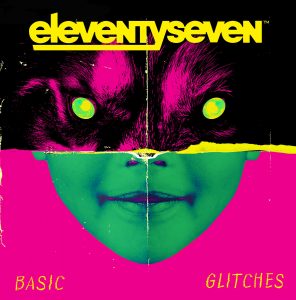


Matt Langston of Eleventyseven discusses their record, Basic Glitches.
🎙️ Episode Summary
In this episode, Tim reunites with long-time friend Matt Langston, the creative force behind the synth-pop/pop-punk outfit Eleventyseven. Spanning a friendship that began on a dusty tour in 2006, the two dive deep into the evolution of the band’s sound, the vulnerability of writing songs from therapy notes, and how to maintain a “creative nest” in a busy world.
Matt also shares a moving tribute to the late Adam Schlesinger of Fountains of Wayne and explains how his studio, Rock Candy Recordings, has become a sanctuary for inclusive storytelling.
🎧 Key Takeaways
- Creative Evolution: How Eleventyseven transitioned from 2000s pop-punk to a synthesizer-heavy sound by treating electronic instruments like distorted guitars.
- Songwriting as Therapy: The lyrical content of Basic Glitches was born directly from Matt’s therapy notes, unpacking the “glitches” of growing up in an evangelical subculture.
- The Power of Environment: Why creating a “vibe” (neon lights, instruments at the ready) is essential to avoiding creative burnout.
- The “Seen” Connection: A discussion on how music connects us across oceans, specifically through the lens of Adam Schlesinger’s influence on Matt’s life and work.
⏱️ Timestamps
- [00:00] – The Texas Reunion Tim and Matt reminisce about touring together in 2006, “hitchhiking” at the Cornerstone Festival, and the early days of pop-punk.
- [03:36] – Evolving the Sound From power chords to Fruity Loops. Matt explains how getting “bored” with the standard pop-punk formula led to the electronic evolution of Eleventyseven.
- [06:39] – The “Basic Glitches” Deep Dive A look into the heavy, introspective themes of the new record. Matt discusses how therapy helped him address mental health and his upbringing.
- [11:28] – Productivity and the “Bunker” How Matt balances being a producer, mix engineer, and podcaster. He discusses the importance of his studio, Rock Candy Recordings, as a creative “nest.”
- [18:19] – A Tribute to Adam Schlesinger The emotional story behind Eleventyseven’s cover of “Mexican Wine” and the dual grief of losing a grandmother and a musical hero during the pandemic.
- [25:49] – What’s Next for Eleventyseven? A look at upcoming B-sides, the Kickstarter-funded acoustic EP, and the growth of the Rock Candy Network.
- [29:29] – Closing Memories: The Unicorn Dance Tim recalls a mysterious “hoedown” at an Ohio show, and Matt shares his final thoughts on the importance of inclusive creative spaces.
🗨️ Memorable Quotes
“If you’re always worried about what everybody else is gonna think about your record, you immediately take the joy out of it. Comparison is the thief of joy.” — Matt Langston
“I feel like I’m at my best when I’m making work that I’m really proud of… those are the juicy bits in life.” — Matt Langston
🔗 Links
- Official Website: eleventysevenisalive.com
- Rock Candy Recordings: rockcandyrecordings.com
- Eleventylife Podcast: Listen on Spotify
- Instagram: @eleventysevenisalive
- YouTube: @eleventyseven
📃 Transcript
Tim Smal [host]: Hey everyone, and welcome to the show. My name is Tim Smal, and my guest today is Matt Langston from the band Eleventyseven. Matt is a music producer, mix engineer, podcaster, and full-time creator. He also runs Rock Candy Recordings, which is a full service recording studio and creative space serving artists in Western North Carolina and all over the planet. Matt, welcome to the show.
Matt Langston [guest]: You are so good at intros Tim, this is not the first intro that you’ve done.
Tim [0:35]: No, it is not. I’ve been practicing hard.
Matt [0:38]: I love it, I love it. Yeah, I’m super happy to be here with you.
Tim [0:42]: Well, thanks so much for joining us, Matt. Eleventyseven’s got a new record out called Basic Glitches, and I’m looking forward to speaking about that more. But before we get into that, I just thought I’d let the listeners know that I actually met you in the year 2006 in America when you guys were touring your very first record. I had a band called Serving Suggestion and we hopped on one or two shows when we were in Texas where we actually got to share the stage with you.
Matt [01:10]: Yes, yes, yeah, we were talking about that off mic for a little bit and that was so fun reminiscing about our time in Texas with you guys and Last Tuesday.
Tim [01:21]: We got to play a show in Paris, Texas, which is this tiny little place in Texas, but it was super cool and if I remember correctly, it was super hot outside and we had a lot of fun. And then a few weeks later, we actually landed up playing at the same festival in Illinois called Cornerstone Festival. And I was walking around the grounds one daya and the Eleventyseven van pulled up right in front of me and I was like, “No ways, the Eleventyseven tour van!” And then, and then you guys saw me and then the van door opened like something out of a movie… and then Matt was like, “Hey, it’s a hitchhiker. Let’s pick him up.” So I jumped in the van and Matt was like, “Hey man, we’ve got your band sticker in our van.” And I looked at it and I saw the sticker and I was like, “Whoa. That’s super cool man.”
Matt [02:12]: Yes. Yes, we, yeah… Cornerstone was always one of those places where we felt like if we can lend a helping hand or just like have a practice of “I see you” to other people, it makes it a little more tolerable, because it is a hot, dusty, nasty, sweaty place with not a lot of, um… not a lot of infrastructure, I guess – toilets and showers and whatnot. So the hygiene is in high demand there, for sure.
Tim [02:45]: So that was in the year 2006, and you guys were touring your very first record, which was called, And The Land of the Fake Believe. So of course I remember your bass player, Caleb, and your drummer, Jonathan. And then I actually managed to bump into you guys at another show in Ohio in 2007 when Galactic Conquest came out, which was your second record. And I remember you gave me a copy of the record. So I got to see you guys live a couple times. And at that stage you guys were pretty much a pop punk band, I suppose, similar to us in that regard.
Matt [03:20]: Oh yeah, absolutely. We weren’t capable of playing anything other than that, I think at the time. We were just kind of barely hanging on to our instruments at that point. Uh, even still, but yeah, good times, good memories.
Tim [03:36]: Then fast forward a few years, you guys have essentially changed your style a little bit or evolved, and your music has taken on a sort of an electronic element. Could you describe your sound as it stands today?
Matt [03:52]: Um, I think that like growing up and cutting our teeth on a lot of pop punk music, we’re always super, um, into trying to channel that same sort of energy or angst, I guess. Because that’s what I feel like resonates with us. But I feel like over time, I just kind of got a little bit bored with, “Okay, well we’re just gonna make, you know, we’re gonna just chop up more power chords and make another record this way.” And I just always have kind of felt like there was a lot more possibility with synthesizers and programming. And then also at the time, like it’s becoming so much less expensive to get into recording. And so they were all of these like wonderful programs that were coming out, like Fruity Loops and Reason, and everybody’s starting to kind of go in the box when it comes to making records.
And so I think that I just saw that as a playground that I just loved exploring and wanted to be able to do that. So I think you, like you start hearing some of that on Galactic Conquest and then I think over the years it just, the guitars kind of just erode away in a lot of the Eleventyseven stuff. But in place of that, we’ve always tried to treat our like synthesizers and stuff like guitars when it came to recording. So we run synthesizers through a lot of like distortion pedals. We’re always kinda looking for a really tough kind of fun tone to create with.
Tim [05:17]: Cool, so in 2009, you guys put out Adventures in Eville. In 2011, you put out Sugarfist. In 2017, you put out Rad Science, so certainly a number of albums during that time. And now in the year 2020, your new record is out and it’s called Basic Glitches.
Matt [05:36]: Yeah, yeah, that’s totally the name of it.
Tim [05:41]: So you’ll be very impressed to know that I have listened to your podcast, which is called Eleventylife, and I’ve listened to all four episodes where you spoke about the tracks on the album and how you wrote them and the meanings behind them. So I have a really good understanding of the whole album.
Matt [05:59]: Wow. You are, you are very committed, my friend. I thank you so much for doing that, you’re very kind.
Tim [06:08]: There are just so many cool tracks on this album. When I started listening to it, I was like, “Oh, yeah, the second track is my favorite.” But then as I went on and on, there were just so many tracks to enjoy. I was like, “Oh, no. How am I gonna choose my favorite track”? Because when I heard you speaking about them and what they’re about, it was super cool, because they’re all very different. You know, they’re all addressing different themes and some of them are sad songs and some of them are happy songs and some of them are funny songs. So a song like Cookie for example, that’s got quite an interesting story to it, right?
Matt [06:39]: Yeah. So a lot of the record that we started out with, with Basic Glitches was, you know, like a lot of those songs, the lyrical content for them ended up coming from notes that I had been taking in therapy. And so a couple years ago, I started going to counseling ’cause I feel like my inner mental health life had kinda reached a fever pitch where something really needed to happen, something needed to change. It was just… it was becoming unmanageable. So I really, I had this idea that I really wanted to kind of chase down where these, where these issues were coming from. And so throughout therapy I started doing a lot of unpacking about like my growing up in a very like protestant, evangelical subculture within America, and like how damaging that was, or how a lot of that information that I got was, um, sort of started the seeds of a lot of the mental issues that I was dealing with at the time.
So a lot of the songs on Basic Glitches are kind of heavy introspective, angsty explorations into those notes from therapy, kind of just like unraveling a lot of that stuff. And so once I’ve done all of that kind of work for so long, I end up needing songs like Cookie and Battlecats to kind of like cleanse my palate. I guess just things that are a little more like on the nose, or just happy, or just like a pop song for the sake of a pop song. So yeah, Cookie is kind of just like a snarky clap back at everybody that had problems with our band coming up. And so it was just like a nice little way to kind of go back and, you know, reimagine that you win the fight with your high school bully, if that makes sense. So, yeah.
Tim [08:36]: So it must have been a super interesting journey coming from that background of pop punk and developing a fan base and, and having your fan base know you guys for a certain kind of a sound, and then starting to evolve into. A different band essentially with a new sound. And inevitably you’re gonna have some fans that are not really into the new sound, but you’re also gonna have a whole bunch of new fans that are really excited about what you’re doing. So I suppose in the year 2020, especially with this new record that’s coming out, you are inevitably growing your fan base. And you know, a whole new generation of people are discovering the magic that is Eleventyseven, right?
Matt [09:17]: You’re very kind to call it magic. Um, yeah, I think that.. I think one of the things I’m most grateful for is that, you know, there’s always gonna be that group of kids that is just like – you put out a new record and they’re just not into it, or doesn’t resonate with them, or they just, you know, it doesn’t speak to them in any way. But one of the cool things is that we’ve been able to kind of grow up with our fan base. You know, like we all kind of started out together as teenagers. And so as we’ve grown and developed, I feel like a lot of our, um, a lot of our songs, a lot of the way that we express ourselves artistically has grown as well.
And so being able to be on that journey with a really cool, like core group of people has been really awesome and kind of freeing in a lot of ways, because we’re… we never feel beholden to like, well, we have to maintain this specific sound, or, you know, if we don’t make another pop punk record, then people aren’t gonna be into our band. I just, I think we stopped caring about that stuff a long time ago when we realized just like how fragile all of that was. And then if we weren’t finding a way to make music in a way that was satiating for us and that made us happy and that we liked and that we enjoyed, then that was ultimately gonna affect us and burn us out on making music at all. Like if you’re always worried about what everybody else is gonna think about your record, you kind of, you immediately take the joy out of it. Comparison is the thief of joy, so to speak. So…
Tim [10:50]: What is quite impressive is that you’ve managed to stay really productive over the years, and essentially you are a creative that has continued to create content with Rock Candy Recordings. You’re doing mixing and mastering and consultation, and you’ve created content for Netflix, NBC and Sony. You’ve got your own podcast called Eleventylife. You’re a pretty busy chap. I mean, how have you found that world of continuing to create content and continuing to be a creative, where perhaps some of your other colleagues have decided to move away from that.
Matt [11:28]: Um, I guess… I guess there’s like a lot of ways to answer that question, it’s a very good question, Tim. You know, I think that a lot of people ended up – like within our circle of, of artists and creators – a lot of people that were there and part of this sort of like Protestant evangelical movement in the States, they found themselves very at home in that, and they really enjoyed that world and they loved that scene, because they fit into it really well. So a lot of friends of ours became pastors or worship leaders or went on to kind of like, you know, do the whole worship circuit band thing. And that was never – like looking back on it – that was never going to be a possibility for us. I think that we were just like so burned out on like the weird hyper spirituality of everything that we were experiencing at the time. And so that was never gonna be an avenue for us.
Because we were in the band, we were all kind of late starting families, so there’s that. I feel like that kind of freed us up some time to be able to be creative and do what we’re doing. But I think, I think at the end of the day, you know, it’s like I feel like I’m at my best when I’m making work that I’m really proud of, or when I’m having a conversation that I feel like is stimulating to me in some way. And those are like the juicy bits in life. Like when you, when you kind of go down into the bunker and then you come out with this thing that you’re really proud of, and that you feel like is reflective of who you are and how you’re feeling, and at the very least, like a snapshot of something that you’ve gone through in life.
I’ve just always felt really drawn to sort of chronicling my life and my creative experience in that way, and so I really love it. And then, you know, as you develop skills and a sort of work ethic, you kind of start to attract other people around you with skills and work ethic. And so with Rock Candy, I feel like we just got to this point where it was a perfect storm of all of these people that were really passionate about the same things kind of coming together and saying, you know: At the end of the day, we really wanna make the world a more inclusive and kind and friendly place, and I feel like the best way we can do that is by lending credence to all these voices and sharing stories with others and hearing their experiences, and developing our own empathy in that way. So yeah, I hope that answers your question.
Tim [14:06]: Yeah, for sure. I mean, it’s always interesting to speak to creatives and find out more about their journey. If I look at the work that you’re doing at Rock Candy Recordings and when you spoke about the bunker, I mean, your bunker is super cool, man. The pictures on your website, you’ve put some real effort into that bunker man. I mean, the lighting and just the aesthetics – I mean, it’s super cool. And if the listeners wanna check it out, they can pop onto YouTube and find your Eleventyseven channel because you’ve shot a lot of videos there. You’ve got, you know, live performances and all kinds of videos there. But yeah, tell me more about Rock Candy Recordings and like the work you’re doing there and how you jump from project to project and how you set it up.
I mean, it just looks super, super cool and super, super fun. Oh,
Matt [14:51]: Oh, you’re very kind to say that. That’s a little bit of a complicated question for me. Along with everything happening at Rock Candy, like I end up wearing a whole lot of hats at one time. So on any given day, like when I come down into the studio, I may have like Photoshop open and Pro Tools and all of our podcasting stuff, and I’m like set up in between, you know, sitting at the computer doing a podcast with someone and then as soon as that’s over, there’s like a drum tracking session that’s coming in. So we’ve gotta like knock out drums for a record. And then after that session’s over, then I’ve gotta like figure out time to edit all of that and then respond to emails. And then if any of the podcasts on the network are having technical issues or are formatting issues, like we’re constantly working through those kinds of things with our creators.
So, I feel like part of it is, feels really challenging and really fun, but a lot of it admittedly is pretty overwhelming, I think because I end up having more of an integral part in everything than that I kind of want to have. But it’s fun and everybody that is a part of what we’re doing here really believes in what we’re doing. It’s very kind of you to say nice things about the studio, ’cause I’m definitely a nester – like I need a place to sort of create a nest and to create a vibe so that like when I walk into it, it feels empowering to me in some way. You know, like you definitely don’t wanna be walking down into a white brick block room, you know, with just a single computer and some monitors in it and then like try to get some work done. And it’s almost like, it sucks the creativity out of you just being in a place that doesn’t feel creative. So we’re really big fans of like neon lights and like having a bunch of instruments just kind of out and about so that if at any time, you know the inspiration strikes, it’s very easy to just like plug some stuff in and go and sort of maximize our creativity in that way.
Tim [17:01]: Yeah, and I love the way that you bring your fans into that space. So all the videos that you create, you kind of draw them in, right? Because you’re always putting up new videos and you’re showcasing the studio, and you’re collaborating with your friends and your colleagues. So the viewers at home and the fans of your band, they can kind of feel a part of that, right? Because you’re putting that effort in, you’re setting everything up really nicely. And as an example, I loaded up your Fountains of Wayne cover Mexican Wine the other day on the big widescreen HD TV at my mom’s house. And I plugged in the big sound system and I showed her the video and she was like, “Whoa, who’s that?” And I said, “That is Matt. And he’s gonna be on my show soon.” But it just looked so awesome and I texted my brother today as well, I said, “You gotta check this video out” because of course, my brother also played in my band, so he remembers you guys. And I said, “Jonathan’s even drumming in this video. You know, the original Eleventyseven drummer.” So I just love the videos that you guys are putting out and sort of building this community, right? But of course, this particular video, the Fountains of Wayne, Mexican Wine cover, has got kind of a special story, right?
Matt [18:19]: So after, um… well, let me back up a little bit. I remember where I was whenever I read the article that Adam Schlesinger had passed away, and he passed away like a couple of days after we had lost my grandmother. So we didn’t lose her to COVID. She had, um, she had a lot of cancer that she was battling. But it was during the COVID, during like the height of the COVID pandemic, and so, you know, we have all these external stressors on us to begin with. And then I, you know, I had ended up going to her funeral, I was helping my parents kind of clean out her house and, um, just kind of feeling like all of those emotions were not quite catching up with me yet. Like I was handling all of it pretty well, I was able to show up at the funeral and make some jokes with the family. You know, we’re all kind of, everything’s super lighthearted. That’s kind of how we deal with really stressful situations, you know, we kind of keep it topical and fun.
And then when I heard that he had passed away, I just remember like coming down into the studio and I just absolutely broke. It was just like that – for whatever reason, it was easier for me to let his death be the catalyst for like letting all these emotions out. And I remember just like grabbing an acoustic guitar and I just, I played through every single Fountains of Wayne song that I possibly could, almost feeling like he had just passed away and if I could play all of these songs, like maybe it would somehow keep him here or like his spirit or his essence here a little bit longer to, I don’t know… Because you know, when you play somebody else’s song, you know, you’re also kind of tapping into that wavelength from which they wrote the song, and I’ve got so many wonderful memories tied with all of these, and it just almost felt like, “Oh wow, I’m gonna be living in a world where this specific voice and this specific heart in music doesn’t exist anymore to make anything new.” And I realized how much I had taken it for granted.
And then it just, you know, it brought back all of these memories that I had of my grandmother and these experiences that I had of her. Like she always seemed to see me in a way that the rest of my family wasn’t able to see me. I was really into like paranormal stuff when I was a kid, like growing up, and she was always, you know, taping Star Trek episodes for me off of TV ’cause we didn’t have cable, so she was always doing that. She took me to see the X-Files movie whenever it came out. She took me to see the Star Wars remakes whenever they came out. Like she just… she was always willing to do things for me that other people in my family didn’t care about. And so I just, I kind of felt like there… there was a little bit of a connection going on there, if that, if that makes any sense. I felt very seen by her and I felt very seen by a lot of the songs that Adam had written.
Tim [21:30]: Yeah. Thanks for sharing that story. And of course, I’m sorry to hear about your grandmother. For the listeners that perhaps are not familiar with Fountains of Wayne, of course they are a band from the United States and Adam Schlesinger was the bass player and he was a really big part of the band. He was a songwriter that wrote a lot of the songs along with Chris Collingwood. And I’m also a really big fan of the band, so it was really sad to hear that Adam had passed during the COVID Pandemic on April 1st, 2020, I believe. So your Mexican Wine cover by Fountains of Wayne is essentially a tribute to the band.
But I just wanted to mention that I did get the chance to actually see the band once in my lifetime, live in the year 2013 in Fort Wayne, Indiana at the Sweetwater Gear Fest, and so that was a really lovely opportunity to see the band live and to meet the chaps from the band. So yeah, I think when I heard of Adam’s passing it also really affected me emotionally, because the songs and the band had been such a big part of my life and it sort of felt a bit surreal, it felt like it wasn’t really real. And you know, of course it’s just a big emotional experience when somebody passes from a band that has been a big part of your life. So, um, yeah, so certainly a challenging time during COVID, but then again, it’s really incredible to be a part of a worldwide musical community where people feel connected, even though we oceans apart due to this wonderful and magical medium that is music, right?
Matt [23:07]: Absolutely Tim. Like absolutely, you’re hitting the nail on the head there. I think that there’s one thing that like keeps me making music, it’s because I always want to be able to have that connection with other people. Maybe I don’t fanboy about music or artists the way that I did when I was younger, but I absolutely am a fan of different people’s artistic output, of their specific voice, of the way that they view the world, the way that, you know, the English language is so rich in ways of expressing itself. And it is just like this toolkit that’s available to everyone, and everybody kind of does something different with the Play-Doh.
You know, they’re all making something different with it, and I think that on a really primal level, that creativity is something that connects us because it’s a way for us to be vulnerable with the rest of the world and say, “I’m not afraid to show this part of myself, or I’m not afraid to put this idea about myself out there into the world and see what happens.” And for other people it can be so cathartic, you know, like there are absolutely songs in Fountains of Wayne, like what we were talking about earlier, where I just felt so seen and understood by Adam. I’m sure that you’ve had these feelings as, well being a fan of the band. And I just feel like that is incredibly important that people be seen and acknowledged, and I don’t know any better way of doing that than something as trivial as making pop music. It sounds kind of funny to say it like that, but…
Tim [24:47]: Yeah, so for me, one of the most awesome experiences is driving around in my car and listening to a record. So I was at my friend’s house the other night and I jumped in my car and Basic Glitches was playing, and I’ve got a really awesome sound system in my car with nice, big phat bass, so Fear The Fire was pumping and I was like, “Man, this is the coolest freaking thing on the face of the planet. Because like 14 years ago I met Matt Langston, you know, in Paris, Texas. We played a show or two together, and here I am, you know, as this dude in his late thirties pumping Basic Glitches in my car, driving on the streets of Cape Town in South Africa, and like Matt is in my car pumping out some of his best work.” I mean, to me, man, I just get so excited and now you’re on my freaking podcast, so I’m super amped. But, Matt, like, what’s next for you guys? I know, you know, during this time in, you know, Corona things are sort of underground and we are all laying low, but like, what’s next for Eleventyseven?
Matt [25:49]: So there’s a bunch of B-sides that were left off of Basic Glitches. And so we took a lot of the time during quarantine to sort of tighten those up, do a few rewrites on a few of them. And then we also did… people that backed the album on Kickstarter, we promised that if we reached a specific goal financially that we would do like an acoustic EP, so we’ve got a couple of acoustic versions of songs that like fans voted on that we’re gonna be putting on this B-sides album that’s probably gonna be coming out this fall, maybe late fall. But yeah, like there’s that, we’re onboarding a couple of new shows right now for the Rock Candy Network, and so that’s always fun.
Like I just, I think that I always struggled trying to find a place where I fit in. Like even within Eleventyseven, like we were all really close, like the band was really close, but it always felt like we’d never quite found our people, if that makes any sense. You know, we never quite fit into that weird sort of like Christian music subculture or genre, and so we’re always kind of fighting against that and I always sort of, I don’t know, for lack of a better word, like I just, I felt very lonely – I felt lonely as a creator because I didn’t have the vocabulary to be able to invite other people into my world and I also didn’t know how to let people into my world. I didn’t have a required amount of tenderness. I feel like that I needed to be fully experiencing all of that and be experiencing the people that were around me. I feel like with Rock Candy in some way, I’m like trying to make that right. I’m trying to provide this space that feels very inclusive and very joyful, where we’re able to talk about anything and everything that we wanna talk about – there’s no sacred, there’s no secular, there just is what there is. And we wanna make sure that people feel invited to come be a part of that conversation.
Tim [28:03]: Yeah, I like the way that you put that. And you guys are certainly doing some really good work over at Rock Candy Recordings and Eleventyseven and Eleventylife your podcast. So if the listeners would like to check out what you guys are up to, your website is eleventysevenisalive.com and rockcandyrecordings.com and I’m sure they can find you on all the various social media. But Matt, it’s been really awesome to catch up with you again – it’s been a really long time and yeah, I’ve enjoyed just speaking with you today about the work that you’re involved in and, you know, sharing our passion for creativity and music and Fountains of Wayne, so it’s been a super cool conversation. Do you have any final words for the listeners today?
Matt [28:57]: Um, well first of all, thank you so much, Tim, for sharing your day with me. I know that everybody is a lot more protective of their time now, as they should be to make sure that, you know, the pandemic is not causing everybody to freak out. So I really appreciated you reaching out and I’ve loved being able to spend time with you and catch up. And I hope that at some point we have the opportunity to make some more American memories over here next time you’re on this side of the world.
Tim [29:29]: Yeah, American memories. Ah, so many American music memories and I’m trying to think if there are any other Eleventyseven memories that come to mind. Well, I do remember at your little show that you played in Ohio in 2007, which, I don’t know where it was exactly, I was cruising around Ohio, I saw that you guys were playing somewhere and I popped in for the show. And I just remember you guys being really excited to see me and you put on the show and, I got to stand on the side, you know, like I was a real band dude standing on the side watching the show. And I just remember this one song that you guys played, and you must forgive me because I can’t remember the title, but everybody in the audience kind of did this like dance, right? They kind of, I dunno if it was a line dance or if they like sat down because it was some kind of special unicorn dance. But there was a song that you guys did and they, they kind of all knew the moves to the song, right? And they were waiting for it, they were ready for it and they bust out, man. And it was, I just remember standing there on the side of that stage thinking, “Yeah, this is a pretty cool moment in my life.”
Matt [30:36]: Oh, that’s so fun, that’s so fun. It sounds like maybe we did the hoedown, this old like piece of a southern line dance that we like doing at shows just to kind of like get everybody touching each other and having fun. That would not fly during COVID now for sure. But yeah, I’m so glad that you were a part of that memory that that’s really fun.
Tim [31:04]: Yeah, no Hoedowns during, uh, Corona because of social distancing. But ladies and gentlemen, Matt Langston from Eleventyseven, check out their brand new record Basic Glitches, available everywhere now. It’s an absolutely awesome record, I’m gonna be pumping at nice and loud in my car, so if you hear some of those tracks from the album, like Cookie or Fearthe Fire or Killing my Vibe, blasting out of a car on the M3 highway in Cape Town, you know what’s going down in that car, bro: that is Eleventyseven, cruising the highway with Basic Glitches. Matt, thanks again and I guess we’ll see you on the flip side.
Matt [31:34]: Awesome, thank you, Tim.